Learn about sustainability, dietary fat, and the need for professional guidance.
Low-Carb vs. Keto: Which Is Best for Reversal?
The landscape of Type 2 Diabetes management has shifted dramatically over the last decade. We are moving away from a "chronic and progressive" mindset toward a "remission-focused" approach. Central to this shift is the debate between two of the most popular dietary strategies: the low-carb diet and the ketogenic diet (keto). Both have shown remarkable results in lowering blood sugar, but when the goal is remission, which one truly holds the crown?
This guide explores the evidence, the physiological differences, and the practicalities of choosing between these two paths to reclaim your metabolic health.
Understanding the Terms: Low-Carb vs. Keto
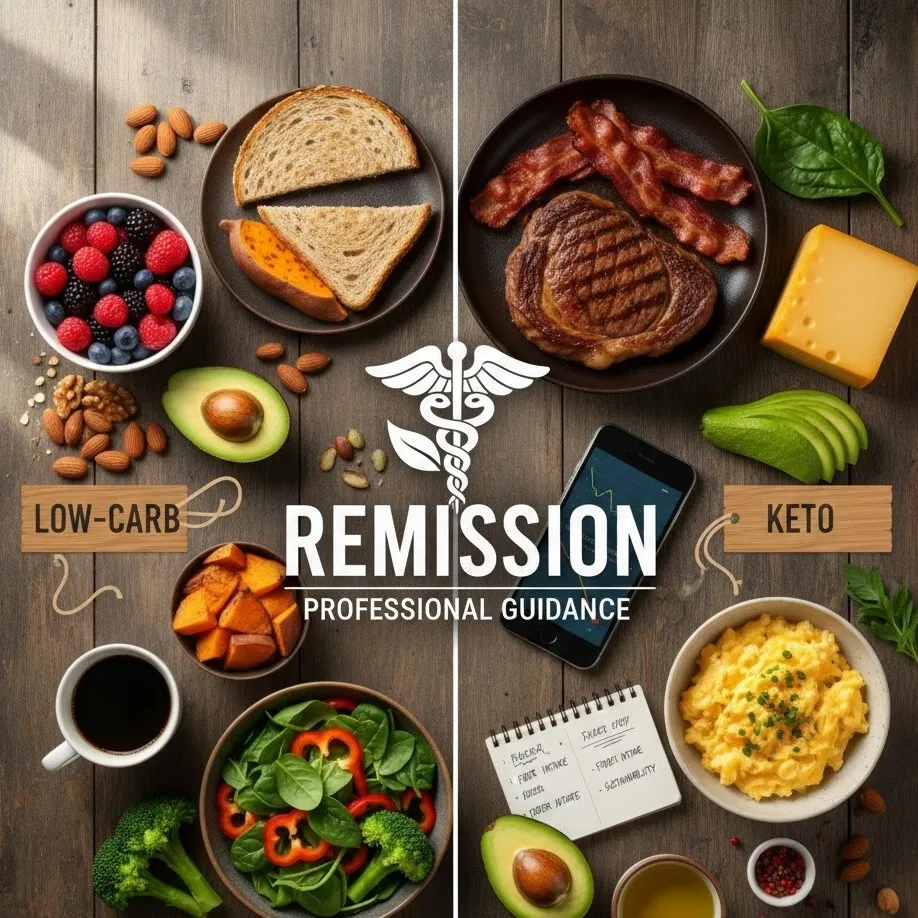
Before choosing a side, we must define the players. While both involve reducing sugar and starches, they differ in intensity and metabolic purpose.
- Low-Carb Diet: Generally defined as consuming less than 130g of carbohydrates per day. This approach allows for more flexibility, including small amounts of fruit, root vegetables, and whole grains.
- Ketogenic Diet (Keto): A more restrictive version where carbohydrates are limited to under 50g (often 20g–30g) to induce "nutritional ketosis." In this state, the body switches from burning glucose to burning dietary fat and stored body fat for fuel.
The Science of Remission
Remission is typically defined as achieving an HbA1c level below 6.5% for at least three to six months without the use of glucose-lowering medications. Evidence from major studies, such as the DiRECT trial and various Virta Health clinical trials, has shown that carbohydrate restriction is one of the most effective ways to achieve this. By reducing the glucose load entering the bloodstream, the body requires less insulin. Over time, this "rest" for the pancreas and the subsequent weight loss can reverse the insulin resistance that drives Type 2 Diabetes.
Why Keto Often Leads the Charge in Early Reversal
Keto is frequently cited as the faster route to keto for diabetes management and early remission. By keeping carbs extremely low, insulin levels drop significantly, which triggers rapid fat burning. Since visceral fat (fat around the organs) is a primary driver of insulin resistance, losing this fat through a ketogenic approach can lead to "near-instant" improvements in fasting glucose levels.
The Role of a Standard Low-Carb Diet
A standard low-carb diet is often the "goldilocks" zone for many. It is effective enough to lower HbA1c significantly but less restrictive than keto. Research suggests that for many, a moderate reduction in carbs—focusing on the quality of those carbs—is sufficient to achieve and maintain remission, especially if it leads to sustained weight loss.
Critical Components: Fat, Fiber, and Fuel
When you cut out carbohydrates, you must replace those calories. This is where the composition of the diet becomes vital.
1. Dietary Fat: The Misunderstood Fuel
On a ketogenic diet, dietary fat becomes your primary energy source. However, not all fats are equal. To support heart health while reversing diabetes, the focus should be on monounsaturated and polyunsaturated fats—think avocados, olive oil, nuts, and fatty fish.
2. Fiber Intake: The Secret Weapon
One common pitfall of low-carb living is a drop in fiber intake. Fiber is essential for gut health and helps blunt the glycemic response of the few carbs you do eat. A successful reversal diet must include high-fiber, non-starchy vegetables like broccoli, cauliflower, leafy greens, and chia seeds.
Sustainability: The Long-Term Challenge
The "best" diet is the one you can follow for the next ten years, not just the next ten days. Sustainability is the biggest hurdle for the ketogenic diet. While it offers rapid results, the strictness can lead to social isolation or "carb cravings" that result in a cycle of yo-yo dieting.
A low-carb diet often wins on the sustainability front because it allows for a wider variety of foods, making it easier to maintain during travel and holidays. Many experts suggest a "staircase" approach: starting with keto to "kickstart" remission, then transitioning to a slightly higher-carb, sustainable lifestyle.
The Necessity of Professional Guidance
Attempting a radical dietary shift while on diabetes medication can be dangerous. As your carbohydrate intake drops, your need for medication drops almost immediately. Without professional guidance, you risk severe hypoglycemia (dangerously low blood sugar).
A doctor or dietitian can help you adjust medications safely, monitor electrolytes, and ensure you are meeting your micronutrient needs.
Final Verdict: Which Is Best for You?
| Feature | Ketogenic Diet (Keto) | Low-Carb Diet |
|---|---|---|
| Primary Goal | Nutritional Ketosis | Blood Sugar Stability |
| Carb Limit | Under 50g per day | 50g – 130g per day |
| Speed of Results | Generally Faster | Moderate |
| Sustainability | Difficult for some | Higher |
| Remission Potential | High | High (with weight loss) |
The winner? It depends on your starting point. If you have high insulin resistance, keto for diabetes may be the most powerful tool to trigger remission. However, if you are looking for a lifestyle you can maintain forever, a well-formulated low-carb diet with high fiber intake and healthy dietary fat is likely the superior strategy.