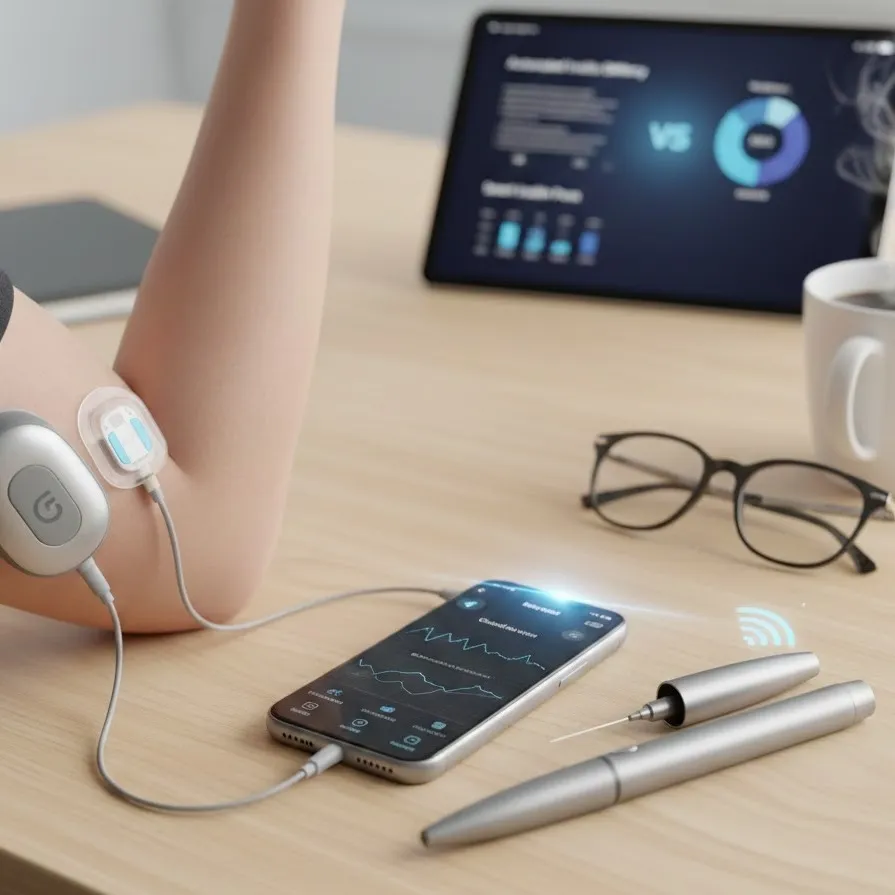
Find the best hybrid system for your lifestyle in our 2025 tech review.
The Tech Evolution: Insulin Pumps vs. Smart Pens
The landscape of diabetes management has shifted from manual calculations and "guesswork" to a sophisticated era of data-driven precision. In 2025, the debate for many living with Type 1 and insulin-dependent Type 2 diabetes is no longer just about insulin—it is about the delivery vehicle. On one side, we have the highly advanced closed-loop system (often referred to as an "artificial pancreas"), and on the other, the increasingly popular and discreet smart insulin pens.
Choosing between these technologies is a significant pump decision that involves weighing clinical outcomes against daily lifestyle preferences. This guide provides a comprehensive review of the latest automated insulin delivery (AID) systems and the newest generation of Bluetooth-connected smart pens to help you navigate modern diabetes tech.
Understanding the Closed-Loop System
The pinnacle of modern diabetes tech is the automated insulin delivery system. This setup creates a hybrid system where a continuous glucose monitor (CGM) and an insulin pump communicate via a complex algorithm to adjust insulin levels in real-time.
How the Hybrid System Works
A closed-loop system isn't fully "set it and forget it," which is why it is technically called a hybrid system. The technology automates basal (background) insulin and can often deliver "correction" boluses if it predicts your blood sugar will go too high. However, users still need to announce meals (carbohydrate counting) and adjust for exercise.
Leading Automated Insulin Delivery Systems in 2025
-
Tandem t:slim X2 & Mobi: Known for the Control-IQ technology, these systems are favorites for their aggressive correction boluses. The newer Tandem Mobi is significantly smaller than the t:slim and offers full smartphone control.
-
Omnipod 5: The only tubeless hybrid system currently on the market. It is a "patch pump" that adheres directly to the skin, eliminating the risk of snagging tubes. In 2025, it has expanded compatibility to include both Dexcom G7 and FreeStyle Libre sensors.
-
Medtronic MiniMed 780G: Often cited for having one of the most advanced algorithms (SmartGuard), it can perform "auto-corrections" every few minutes. It now pairs with the Simplera Sync sensor, which requires no fingerstick calibrations.
-
Beta Bionics iLet: Specifically designed to reduce the "mental burden" of diabetes, the iLet asks only for the size of the meal (e.g., "Normal for me") rather than exact carb counts.
The Rise of Smart Insulin Pens
For those who are not ready to wear a device twenty-four-seven or prefer the simplicity of Multiple Daily Injections (MDI), smart insulin pens have revolutionized the traditional injection experience.
Connectivity and Data
Unlike traditional pens, smart insulin pens use Bluetooth to log every dose automatically. They sync with mobile apps to track "insulin on board" (IOB), which prevents the dangerous "stacking" of doses.
Top Smart Pen Options
-
Medtronic InPen: The most feature-rich smart pen. It offers a bolus calculator, dose reminders, and integrated reports that look very similar to pump data. It can also monitor the temperature of the insulin to ensure it hasn't expired.
-
NovoPen 6 and NovoPen Echo Plus: These are durable, reusable pens that store hundreds of doses. They use NFC (Near Field Communication) to tap and upload data to apps like Glooko or FreeStyle LibreLink.
-
Lilly Tempo Pen: Part of a modular system where a "Smart Button" attaches to the top of the pen to capture and transmit dosing data to the TempoSmart app.
Head-to-Head: A Feature Comparison
| Feature | Automated Insulin Delivery (Pumps) | Smart Insulin Pens (MDI) |
| Automation | High: Adjusts basal insulin frequently. | None: User manually injects all doses. |
| Precision | Doses as small as micro-units. | Usually half or whole unit increments. |
| Hardware | Must be worn on the body constantly. | Carried in a pocket/bag; only used during dosing. |
| Mental Load | Low (Automatic corrections). | Medium (Requires manual logging/calc). |
| Cost | Generally higher (hardware monthly supplies). | Lower (reusable pen needles). |
The Pump Decision: Which is Right for You?
Making a pump decision isn't just about clinical "Time in Range" (TIR); it's about how you live your life.
Why Choose a Closed-Loop System?
-
Eliminating the "Dawn Phenomenon": Pumps are excellent at handling early morning spikes by increasing basal rates automatically.
-
Precision for Children: Because pumps can deliver micro-doses, they are often the gold standard for small children who are highly sensitive to insulin.
-
Reduced Hypoglycemia: The ability of the algorithm to "suspend" insulin before a low occurs is a life-saving feature for those with hypoglycemia unawareness.
Why Choose a Smart Pen?
-
Device Fatigue: Some people find wearing a device constantly (and the associated alarms) to be mentally taxing. Smart insulin pens offer "tech-lite" benefits without the "tethered" feeling.
-
Physical Activity: Athletes in contact sports often prefer pens to avoid the risk of a pump being ripped off or damaged.
-
Simplicity: If you already have excellent control with MDI, a smart pen adds the benefit of digital logging and bolus calculation without the learning curve of a pump.
Conclusion
The "Tech Evolution" in diabetes has created a world where "control" is no longer a full-time job. Whether you opt for the high-tech automation of a closed-loop system or the streamlined data of smart insulin pens, the goal of modern diabetes tech remains the same: to let you think less about your blood sugar and more about your life.
Consult with your endocrinologist to review your recent CGM data. Often, a "trial" of a patch pump or a smart pen can provide the clarity you need to make the right long-term pump decision.