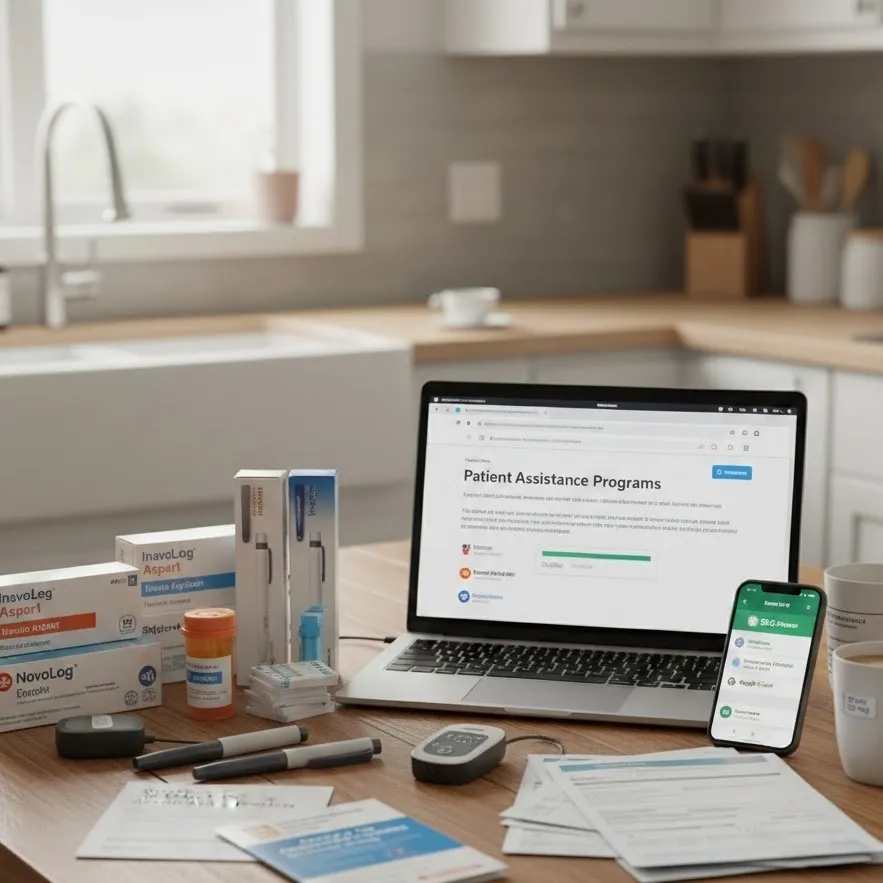
Learn about patient assistance programs, generic insulin, insurance hacks
Financial Hacks for Lowering Insulin Costs: A Practical Guide
Living with diabetes is a full-time job, and the "salary" often feels like it's being paid entirely back to the pharmacy. As of 2025, while legislative changes have made significant strides, the out-of-pocket burden for many remains a hurdle. Navigating the landscape of insulin prices, insurance formularies, and assistance programs requires more than just a prescription—it requires a strategy.
This guide explores the most effective financial hacks to reduce your insulin and supply costs, ensuring that your health remains the priority, not your bank balance.
Leverage Manufacturer Patient Assistance Programs (PAPs)
For many, patient assistance programs (PAPs) are the gold standard for cost reduction. These programs are offered directly by pharmaceutical manufacturers like Eli Lilly, Novo Nordisk, and Sanofi.
-
How they work: If you meet certain income requirements (typically up to 400% of the Federal Poverty Level), you may qualify to receive your insulin for free or at a heavily discounted rate.
-
The 2025 Landscape: Most major manufacturers now offer "Value Programs" where even those with insurance coverage can cap their monthly insulin costs at $35.
-
Action Step: Visit websites like NovoCare, Lilly Cares, or Sanofi Patient Connection. Even if you have been denied in the past, eligibility criteria often shift annually.
Switch to Generic Insulin and Biosimilars
The introduction of generic insulin and biosimilars has been a game-changer for the market. Unlike traditional generics for simple pills, insulin is a complex biologic, meaning its equivalents are called "biosimilars."
-
Interchangeable Biosimilars: Products like Semglee or Rezvoglar are interchangeable with Lantus. This means a pharmacist may be able to substitute them automatically to save you money, depending on state laws.
-
Pharmacy Brands: Retailers like Walmart offer their own "ReliOn" brand of insulin aspart (a rapid-acting analog) for as low as $25–$35 per vial without the need for insurance.
Maximize Your Insurance Coverage
Understanding your insurance coverage is the foundation of any cost-saving strategy. Formularies—the list of drugs your plan covers—change every year.
-
The "Preferred" Tier: Always check if your specific brand of insulin is on the "preferred" list. If your doctor prescribes a non-preferred brand, your co-pay could be double or triple.
-
The $35 Cap: Thanks to the Inflation Reduction Act and subsequent market shifts, most commercial and Medicare Part D plans now cap insulin at $35 per month. If you are paying more, contact your provider immediately to see if you are on a "non-covered" version.
-
90-Day Supplies: Ask your doctor to write a 90-day prescription. Many insurance plans charge two co-pays for a three-month supply, essentially giving you one month free.
Essential Cost-Saving Tips for Supplies
Insulin is only half the battle; pumps, continuous glucose monitors (CGMs), and test strips add up quickly.
-
Subscribe and Save: Many CGM manufacturers (like Dexcom or Abbott) offer subscription programs that bypass the pharmacy and ship directly to you at a lower "cash" price.
-
The "Durable Medical Equipment" (DME) Hack: Sometimes, supplies are cheaper when billed as DME rather than through your pharmacy benefit. Compare both options with your insurance representative.
-
Discount Cards: Sites like GoodRx or SingleCare can sometimes offer prices lower than your insurance co-pay, especially for "old-school" human insulins (NPH and Regular).
Join Advocacy Groups and Safety Nets
You don’t have to fight the system alone. Advocacy groups are at the forefront of the #Insulin4All movement, pushing for legislative caps and providing emergency resources.
-
T1International: Known for their global advocacy, they provide toolkits for navigating local crises and finding emergency insulin.
-
Beyond Type 1 / GetInsulin.org: This tool allows you to input your specific situation (location, income, insurance) and generates a custom "action plan" of the exact programs you qualify for.
-
State-Level Caps: As of late 2025, over 30 states have passed their own laws capping insulin costs for state-regulated plans. If your state isn't one of them, these groups can help you find out how to lobby your local representatives.
Conclusion
Lowering your diabetes expenses isn't just about finding a coupon; it's about an integrated approach of utilizing generic insulin, maximizing insurance coverage, and aggressively pursuing patient assistance programs. By following these cost-saving tips and staying connected with advocacy groups, you can ensure that insulin prices never stand in the way of your health.