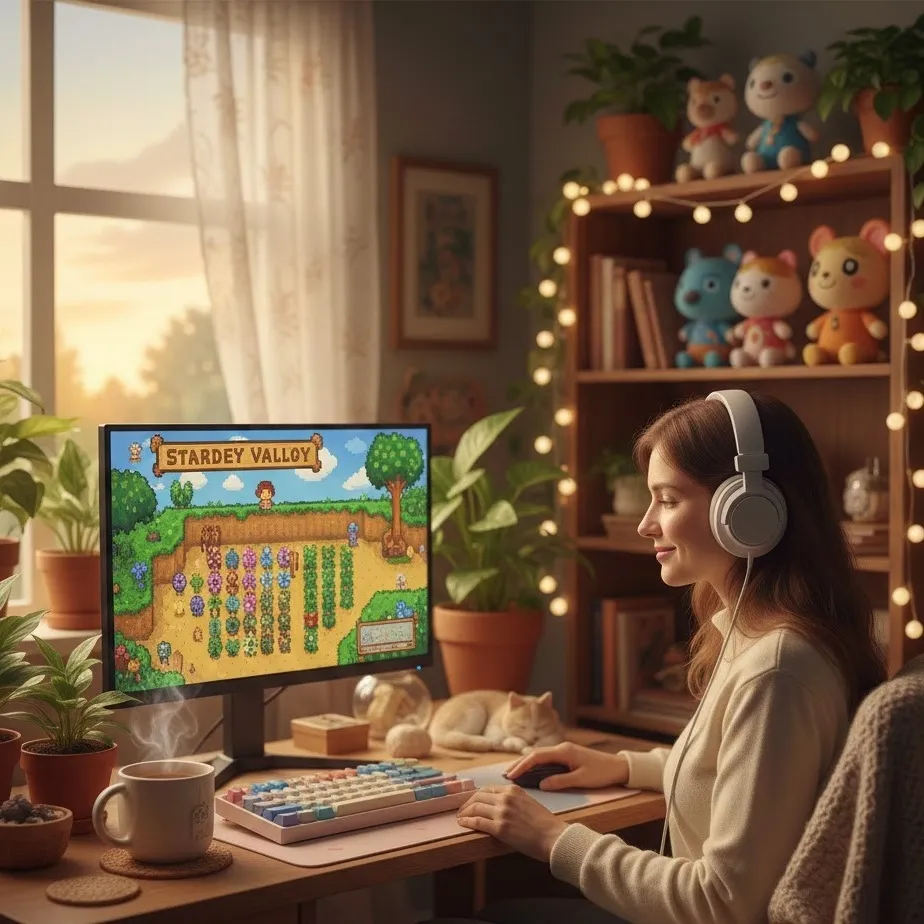
Discover how Stardew Valley and Animal Crossing are leading a low-stress revolution with major mental health benefits.
The Digital Blanket: Exploring the Rise of the "Cozy Gamer" Streamer
For decades, the image of a "gamer" was synonymous with high-octane intensity: the frantic clicking of a mouse during a Counter-Strike match, the sweat-soaked brow of an esports pro, or the booming voice of a streamer shouting over a narrow victory in Fortnite. However, as we move through 2026, a quiet revolution has taken over the screens of millions. The "sweaty" competitive era is being met with a soft, pastel-hued counter-movement. Enter the cozy gaming niche, a space where the goal isn’t to win, but to simply be.
The Shift from Combat to Calm
The meteoric rise of the cozy gamer streamer is more than just a passing fad; it is a cultural response to a world that feels increasingly loud and demanding. In an era of "doomscrolling" and high-pressure productivity, viewers are flocking to creators who prioritize low-stress gameplay.
While traditional gaming focuses on "loops of tension"—where the player must overcome a difficult obstacle to receive a reward—cozy gaming operates on "loops of comfort." This shift is most evident in the transition toward non-combat games. Instead of slaying dragons or outrunning a closing "storm" circle, players are tending to virtual gardens, decorating tiny cottages, or brewing tea for mythical creatures. The stakes are low, but the emotional engagement is incredibly high.
The Pioneers: Stardew Valley and Animal Crossing
You cannot discuss the cozy gaming niche without acknowledging its two most influential pillars. Stardew Valley, the indie masterpiece developed by ConcernedApe, provided the modern blueprint for the genre. It romanticized the "simple life"—leaving a soul-crushing corporate job to restore a grandfather’s dilapidated farm. For streamers, the game offers a perfect stream vibe: a repetitive, rhythmic cycle of planting, watering, and socialising that allows for deep, meaningful interaction with their chat.
Similarly, Animal Crossing: New Horizons became a global phenomenon, particularly during the 2020 lockdowns, acting as a digital sanctuary. It taught a new generation of content creators that a three-hour stream dedicated solely to terraforming a river or picking weeds could be just as captivating as a high-kill-count shooter. These games proved that "success" in gaming doesn't have to be defined by a leaderboard; it can be defined by the beauty of a well-organized virtual home.
More Than Just a Game: The Mental Health Benefits
One of the primary drivers behind the popularity of cozy streams is the undeniable mental health benefits they provide. Psychologists have noted that the "imaginary work" found in these titles—tasks that are productive but lack the consequences of real-world failure—can induce a flow state similar to meditation.
For the viewer, watching a cozy streamer is the digital equivalent of a weighted blanket. The stream vibe is typically curated to be as soothing as the gameplay itself. You’ll often find:
- Lo-fi beats or ambient nature sounds playing in the background.
- Soft, warm lighting (often fairy lights or sunset lamps) in the streamer's physical space.
- Gentle commentary that focuses on community building rather than hype-building.
This environment provides a "safe space" for viewers who may be struggling with anxiety or burnout. It’s a form of passive relaxation where the audience can decompress alongside the creator, making the stream a shared therapeutic experience.
The Aesthetic of Inclusivity
The rise of the cozy streamer has also democratized the gaming world. The cozy gaming niche has historically been more inclusive, attracting a higher percentage of women, LGBTQ creators, and "non-gamers" who felt alienated by the often-toxic atmosphere of competitive lobbies.
The focus on "soft aesthetics"—pastel palettes, cottagecore themes, and "kawaii" setups—has created a visual language for the genre that signals safety and welcoming. In 2026, "cozy" isn't just a category of game; it’s a lifestyle brand. Streamers aren't just playing games; they are curating a mood that celebrates vulnerability, kindness, and the joy of small things.
Conclusion: The Future of the Chill
As the gaming industry continues to evolve, the distinction between "hardcore" and "cozy" is blurring. Even major developers are now including "Zen modes" or "story modes" to cater to this growing demographic. The rise of the cozy gamer streamer has taught the industry a vital lesson: sometimes, the most radical thing a player can do in a fast-paced world is slow down.
Whether it’s the nostalgic charm of Stardew Valley or the creative freedom of Animal Crossing, the focus remains on the feeling of home. In the noisiest era of human history, the quietest streams are the ones making the most impact.