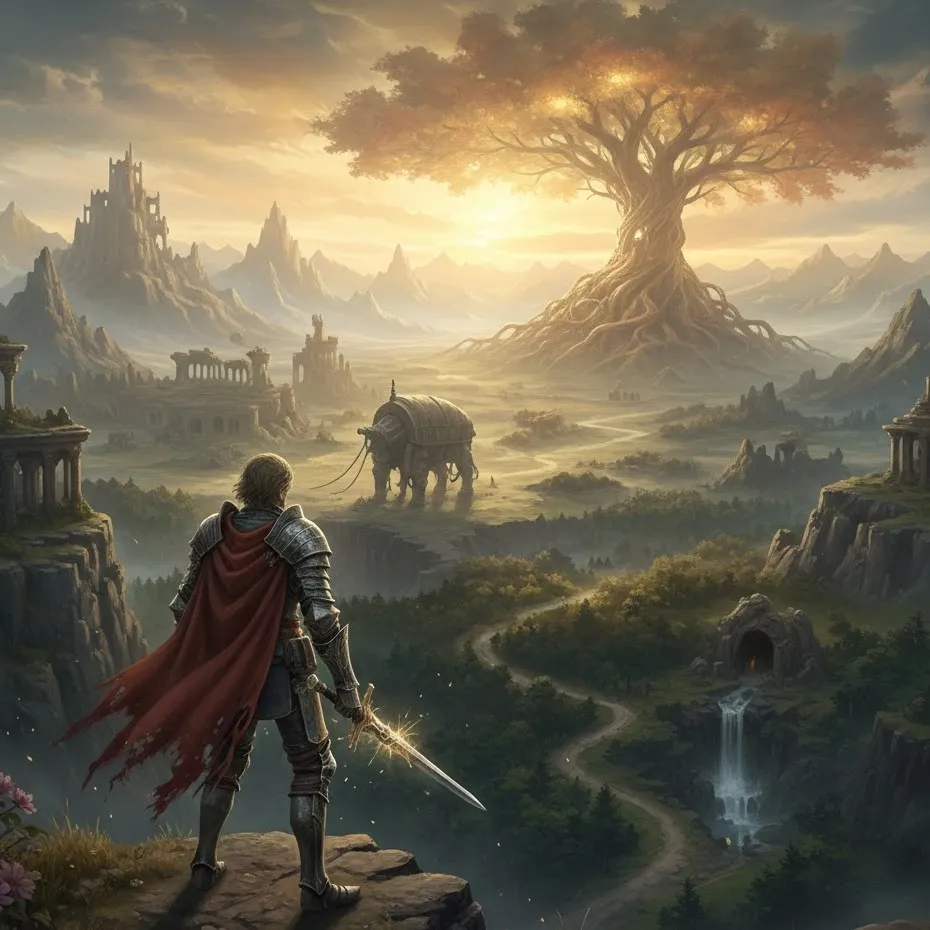
Discover how Elden Ring revolutionized the open-world genre through its anti-map philosophy
Elden Ring's Success: The Definitive Open World Fatigue Cure
For nearly a decade, the "open-world" genre was synonymous with a specific brand of exhaustion. Players would open a map only to be greeted by a sea of colorful icons—towers to climb, outposts to clear, and collectibles to mindlessly gather. This "checklist" style of gameplay led to a phenomenon known as open-world fatigue, where the sheer volume of busywork overshadowed the joy of play. Then came Elden Ring.
By rejecting the hand-holding tropes of modern AAA titles, FromSoftware didn't just create a successful game; they revitalized an entire genre. The secret to Elden Ring's success lies in its anti-map philosophy, a daring design choice that prioritized player agency and organic exploration over artificial guidance.
The Architecture of Curiosity: Organic Exploration
In most open-world games, you aren't exploring; you are commuting. You set a waypoint on a GPS-style map and move toward it, often ignoring the scenery in favor of a mini-map arrow. Elden Ring exploration operates on an entirely different frequency. From the moment you step into Limgrave, the game asks you to use your eyes rather than your icons.
The world is designed with "vistas of interest." You might see a distant, glowing tree, a crumbling ruin on a cliffside, or a massive, wandering mausoleum with bells for feet. Because there is no marker telling you what these things are, your brain switches from "task-completion mode" to "discovery mode." This sense of discovery is the heartbeat of the game. Every hill crested and every corner turned feels like a personal revelation because the game didn't tell you it was there—you found it.
Breaking the Icon Addiction: The Anti-Map Philosophy
The anti-map philosophy is perhaps FromSoftware’s most radical contribution to the genre. In Elden Ring, the map begins as a blank slate. You must find physical map fragments within the world to even see the topography. Even once revealed, the map remains remarkably clean. There are no quest logs, no dotted lines to follow, and no icons for "undiscovered locations."
This lack of clutter forces a deeper engagement with the environment. Instead of looking at a 2D interface, players look at the 3D world. You might notice a small path tucked behind a waterfall or a subtle change in the color of the soil that hints at a hidden subterranean entrance. By removing the "checklist," FromSoftware transformed the map from a to-do list into a tool for navigation, placing the power back into the hands of the player.
A Masterclass in FromSoftware Design: The Interconnected World
While the game is vast, it avoids the "wide as an ocean, deep as a puddle" trap by utilizing a sophisticated interconnected world layout. FromSoftware applied the vertical, looping logic of Dark Souls to a massive scale.
The Lands Between is not just a flat plane; it is a layered cake of secrets. You might spend ten hours exploring a forest only to find a well that leads to an entirely different map hidden beneath the earth. This layering ensures that the world feels dense and purposeful. The FromSoftware design ethos thrives on the "shortcut" moment—the relief of opening a door and realizing you’ve looped back to a familiar site of grace. This connectivity makes the massive world feel cohesive and intimate, rather than daunting and empty.
Balancing the Blade: Difficulty Balance as a Guide
A common critique of the "Soulsborne" series is its punishing nature, but in an open world, high difficulty serves a mechanical purpose. The difficulty balance in Elden Ring acts as a soft barrier that guides exploration without using invisible walls.
If you wander into Caelid too early, the terrifying enemies and oppressive atmosphere signal—loudly—that you might want to turn back. However, the game never stops you. This is where player agency shines. You can choose to struggle through a high-level area for a powerful late-game item, or you can head south to the Weeping Peninsula to hone your skills. The difficulty creates stakes; when everything is a threat, every discovery of a new weapon or a safe haven feels earned.
Why Player Agency Matters
The "cure" for open-world fatigue is simple: trust. Most developers are afraid that if they don't point a camera at a piece of content, the player will miss it. FromSoftware embraces the fact that you will miss things. In doing so, they make the things you do find feel incredibly special.
Your journey in Elden Ring is yours alone. Two players can spend 50 hours in the game and have completely different stories to tell based on the paths they took and the secrets they stumbled upon. This autonomy is what revitalized the genre. It moved the conversation away from "how many hours of content is there?" to "what did you find today?"
The Evolution of the Genre
Elden Ring's success has set a new benchmark for what players expect from an open world. By prioritizing the "ah-ha!" moment of finding a hidden path over the dopamine hit of clearing a map icon, it has reminded the industry that the greatest joy in gaming isn't finishing a task—it's embarking on an adventure where the destination is truly unknown.