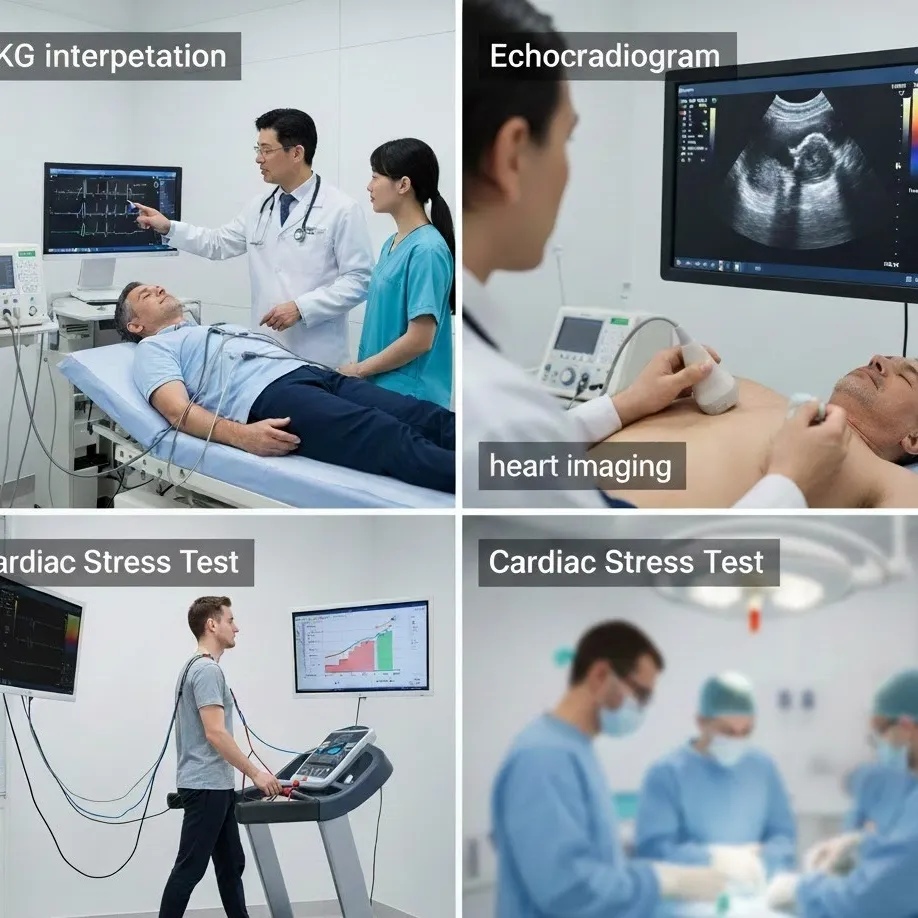
Learn about common heart tests. Understand EKG interpretation, echocardiograms, and cardiac stress tests to know how doctors assess your heart's health.
Understanding Your Heart: A Guide to EKGs, Echoes, and Stress Tests
When a doctor mentions you need a "heart test," it’s natural to feel a bit of pulse-quickening anxiety. However, diagnostic procedures for the heart are some of the most refined and painless tools in modern medicine. Whether you are experiencing palpitations, shortness of breath, or simply undergoing a routine check-up, understanding the tools used to evaluate your cardiovascular health can turn a stressful experience into a proactive step toward wellness.
To assess the heart properly, doctors look at three main things: its electrical system, its physical structure, and its performance under pressure. This is where the "Big Three"—the EKG, the Echo, and the Stress Test—come into play.
The Electrocardiogram (EKG): Reading the Electrical Map
The most common first step in any cardiac evaluation is the EKG interpretation. Your heart is powered by an internal electrical system that tells the chambers when to contract and relax. An EKG (or ECG) records these electrical signals as waves on a graph.
What Happens During the Test?
An EKG is a non-invasive, painless diagnostic procedure that usually takes less than 10 minutes.
Preparation: You will lie flat on an exam table. A technician will attach 10 to 12 small, sticky sensors (electrodes) to your chest, arms, and legs. The Recording: You must lie very still and breathe normally. For about 30 seconds, the machine captures the electrical activity. Sensations: You won't feel anything except the slight coolness of the electrode gel.
Why It’s Used
The primary goal of EKG interpretation is to check the heart’s rhythm and rate. It can detect:
- Arrhythmias: Irregular heartbeats like Atrial Fibrillation (AFib).
- Evidence of a Past Heart Attack: Changes in the wave patterns can show if the heart muscle has been damaged in the past.
- Current Ischemia: If the heart isn't getting enough oxygen at that very moment.
The Echocardiogram: Seeing the Heart in Motion
While an EKG tells us about the electricity, an echocardiogram tells us about the plumbing and the pump. This test uses high-frequency sound waves (ultrasound) to create live, moving images of your heart. It is the gold standard for non-invasive heart imaging.
What Happens During the Test?
Think of this as an ultrasound for your heart.
The Process: You will lie on your side. A sonographer applies a clear gel to your chest and moves a wand (transducer) over the area. The Visuals: The transducer sends sound waves that bounce off your heart's structures, creating a real-time video on a monitor. You might hear a "whooshing" sound—that is the machine amplifying the sound of blood flowing through your valves. Duration: It typically takes 30 to 60 minutes.
Why It’s Used
Doctors use an echocardiogram to assess the physical "house" of the heart. It provides critical data on:
- Valve Function: Checking if valves are leaking (regurgitation) or too narrow (stenosis).
- Ejection Fraction (EF): A measurement of how much blood the heart pumps out with each beat.
- Chamber Size: Seeing if the heart is enlarged, which could indicate heart failure or chronic high blood pressure.
The Cardiac Stress Test: Evaluating Performance Under Pressure
A heart might look and sound perfect while you are resting on an exam table. However, many cardiovascular issues only reveal themselves when the heart is working hard. This is the purpose of the cardiac stress test.
What Happens During the Test?
The goal is to make your heart work harder and beat faster while monitoring its reaction.
- Exercise Stress: You will walk on a treadmill or pedal a stationary bike. The intensity increases every few minutes.
- Pharmacological Stress: If you cannot exercise, a doctor will administer a medication that mimics the effect of exercise on the heart.
- Monitoring: Throughout the test, you are hooked up to an EKG, and your blood pressure is monitored constantly.
Why It’s Used
The cardiac stress test is used to diagnose Coronary Artery Disease (CAD). If the arteries that supply blood to the heart muscle are narrowed, the heart may get enough blood at rest, but not enough during exercise. This results in EKG changes or symptoms like chest pain that signal a problem.
Comparing the Tests: Which One Do You Need?
Each test serves a different purpose. Often, they are used together to give a complete picture of cardiac health.
Advanced Steps: Beyond the Non-Invasive
Sometimes, non-invasive tests don't provide a clear enough picture. If a stress test indicates a significant blockage, your cardiologist might move to a more direct diagnostic procedure known as cardiac catheterization.
Unlike the Echo or EKG, this is an invasive procedure. A thin, flexible tube (catheter) is threaded through a blood vessel in the arm or groin up to the heart. This allows for highly detailed heart imaging using contrast dye (angiography) and can even be used to open blocked arteries with a stent during the same session.
What Patients Should Know: Preparation and Recovery
Most of these tests require very little preparation, but here are a few tips to ensure accuracy:
- For an EKG: Avoid heavy oily body lotions, as they can prevent electrodes from sticking.
- For an Echo: Wear a two-piece outfit, as you will need to remove your shirt and wear a gown.
- For a Stress Test: Wear comfortable walking shoes. Avoid caffeine for 24 hours prior, as it can interfere with the heart rate data.
Summary: The "Why" Behind the Science
Modern cardiology relies on these tests because the heart is a multi-dimensional organ. An echocardiogram might show a strong muscle, but an EKG interpretation might reveal an electrical "short circuit." Conversely, a patient might have a perfect electrical rhythm but fail a cardiac stress test because their arteries cannot support physical exertion.
By combining these different methods of heart imaging and data collection, your medical team can build a comprehensive map of your cardiovascular health. Whether it's a routine diagnostic procedure or an investigation into new symptoms, these tests are designed to provide answers, ensure safety, and ultimately, save lives.
Would you like me to generate a summary of the semantic keywords or the SEO meta-information for this HTML content?