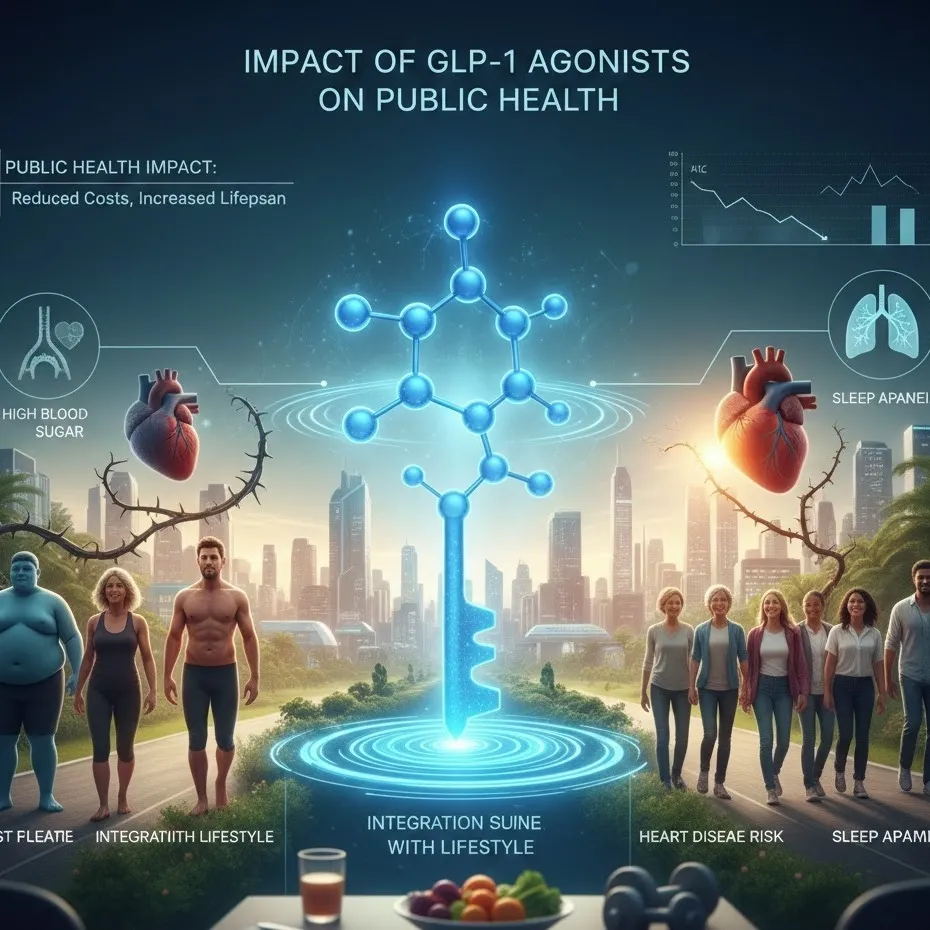
Explore how GLP-1 agonists like semaglutide (Ozempic) revolutionize diabetes treatment, weight management, and reduce heart disease risk and sleep apnea.
The Paradigm Shift: The Impact of GLP-1 Agonists on Public Health
In the last decade, few medical breakthroughs have captured the global zeitgeist quite like the rise of GLP-1 agonists. Originally designed as a specialized tool for diabetes treatment, these medications—most notably semaglutide, marketed under the brand names Ozempic and Wegovy—have transcended their initial clinical boundaries. Today, they represent a cornerstone of modern weight management and a powerful catalyst for changing the landscape of chronic disease.
The public health impact of these drugs is profound, offering a glimmer of hope in the fight against the twin epidemics of obesity and Type 2 diabetes. However, their influence extends far beyond the numbers on a scale. By targeting the underlying mechanisms of metabolic dysfunction, GLP-1 agonists are fundamentally altering the trajectory of "associated conditions," specifically addressing heart disease risk and obstructive sleep apnea.
Understanding the Mechanism: More Than Just "Diet in a Bottle"
Glucagon-like peptide-1 (GLP-1) is a naturally occurring hormone produced in the gut. It performs three critical functions: it stimulates insulin secretion, suppresses glucagon (which keeps blood sugar from spiking), and slows gastric emptying.
By mimicking this hormone, drugs like semaglutide allow patients to achieve a state of "food quiet." This neurological shift reduces the constant background noise of hunger, making sustainable weight management a biological reality rather than a test of sheer willpower. For the millions navigating the complexities of Type 2 diabetes, this represents a dual-action victory: stabilized blood glucose and significant weight reduction.
Reducing the Heavy Burden: Heart Disease Risk
One of the most significant findings in recent clinical history is the "cardioprotective" nature of these medications. The public health impact of reducing cardiovascular events cannot be overstated, as heart disease remains the leading cause of death globally.
Data from landmark trials, such as the SELECT study, have demonstrated that semaglutide 2.4 mg can reduce the risk of major adverse cardiovascular events (MACE)—including heart attack and stroke—by up to 20% in adults with overweight or obesity and established heart disease.
Why do GLP-1s protect the heart?
- Inflammation Reduction: These drugs appear to lower systemic inflammation, a key driver of atherosclerosis.
- Blood Pressure Management: Weight loss naturally reduces the strain on the heart, but GLP-1s also have direct effects on vascular health.
- Lipid Profiles: Users often see a marked improvement in cholesterol and triglyceride levels.
By tackling heart disease risk directly, Ozempic and its counterparts are evolving from simple metabolic regulators into essential tools for preventative cardiology.
Breathing Easier: The Link to Sleep Apnea
Obstructive Sleep Apnea (OSA) is often the "silent" companion of obesity. The mechanical pressure of excess adipose tissue around the neck can lead to airway collapse during sleep, resulting in chronic exhaustion, hypertension, and a further increase in heart disease risk.
Recent research has highlighted a dramatic synergy between weight management via GLP-1s and the severity of sleep apnea. Clinical observations show that as patients lose significant body mass, the "Apnea-Hypopnea Index" (AHI)—the metric used to measure the severity of OSA—often drops significantly. In some cases, the reduction is so substantial that patients no longer require CPAP machines. This improvement in sleep quality creates a positive feedback loop: better sleep leads to better metabolic health, further aiding in diabetes treatment and long-term vitality.
The Socioeconomic and Public Health Ripple Effect
While the clinical benefits are clear, the broader public health impact involves navigating challenges of access, cost, and equity.
| Aspect | Public Health Benefit | Emerging Challenge |
|---|---|---|
| Diabetes Treatment | Superior glycemic control and reduced complications. | Global supply shortages affecting high-risk patients. |
| Weight Management | Reduction in obesity-related cancers and joint surgeries. | High cost and lack of insurance coverage for "lifestyle" use. |
| Systemic Health | Lower hospitalization rates for heart failure and kidney disease. | Long-term "muscle wasting" concerns without proper exercise. |
As these medications become more accessible, we may see a significant decrease in the economic burden of chronic illness. If 10% of the population with obesity can successfully manage their weight and blood sugar, the downstream savings in emergency room visits and chronic care would be revolutionary.
The Path Forward: Integration with Lifestyle
Despite the "miracle drug" narrative, the medical community emphasizes that GLP-1 agonists are most effective when paired with lifestyle modifications. Sustainable health requires a foundation of nutrient-dense nutrition and resistance training to preserve lean muscle mass during rapid weight loss.
As we move further into 2026, the focus is shifting toward "precision metabolic health." We are no longer just treating a number on a scale; we are using GLP-1 agonists to recalibrate the human metabolism, protecting the heart, clearing the airways, and offering a higher quality of life to millions.