Learn how a human-AI team uses a hybrid service model to provide anticipatory service, instant query resolution
The Concierge 2.0: The Evolution of Human AI Support
The landscape of luxury hospitality and high-end service is undergoing a seismic shift. For decades, the "Golden Keys" of a concierge represented the pinnacle of human resourcefulness and personal connection. However, as traveler expectations evolve toward immediacy and 24/7 availability, the traditional model has hit a ceiling.
Enter Concierge 2.0. This isn't a replacement of the human element by machines; rather, it is a sophisticated hybrid service model that leverages the precision of artificial intelligence to amplify the warmth of human intuition.
Defining Concierge 2.0: The Power of the Hybrid Service Model
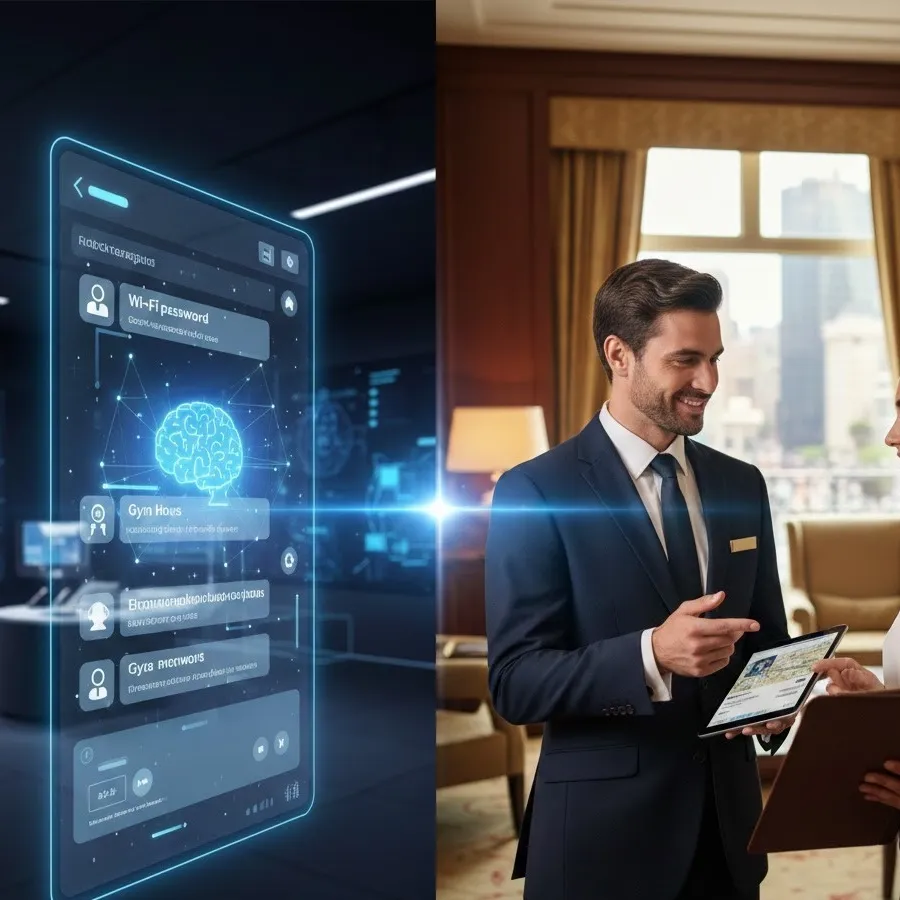
At its core, Concierge 2.0 is the strategic integration of generative AI and machine learning into the guest service workflow. In the old model, a concierge might spend 40% of their day answering repetitive questions: "What is the Wi-Fi password?" or "What time does the gym close?"
In the 2.0 era, a human-AI team operates in tandem. The AI acts as the first responder, providing instant query resolution for routine logistics. This allows the human staff to step away from the screen and back into the lobby, focusing on complex request handling that requires emotional intelligence, local networking, and creative problem-solving.
The Architecture of the Hybrid Model
-
The AI Layer: Handles data retrieval, multilingual support, and booking confirmations.
-
The Human Layer: Manages relationship building, crisis management, and bespoke "surprise and delight" moments.
-
The Data Loop: AI analyzes guest preferences to provide the human concierge with actionable insights before the guest even asks.
Anticipatory Service: Moving from Reactive to Proactive
One of the most significant advantages of Concierge 2.0 is the shift toward anticipatory service. Traditional service is reactive—a guest asks, and the concierge provides.
With AI-driven insights, the human-AI team can predict needs based on historical data and real-time context. If the AI detects a flight delay, it can automatically prompt the human concierge to arrange a late-night snack for the guest’s arrival or push a notification asking if they would like to move their dinner reservation. This proactive approach transforms a standard stay into a curated experience where the guest feels truly "known."
Instant Query Resolution vs. Complex Request Handling
The brilliance of the 2.0 model lies in its ability to categorize tasks by their "high-touch" requirements.
The Role of AI: Speed and Accuracy
For instant query resolution, AI is unmatched. It doesn't get tired, it speaks 50 languages, and it responds in milliseconds. Whether it’s requesting extra towels or checking the menu of the hotel bistro, AI ensures the guest never waits. This "zero-friction" service is now a baseline expectation for the modern traveler.
The Role of Humans: Empathy and Nuance
While AI can book a table at a restaurant, it cannot understand the "vibe" a guest wants for a 20th-anniversary dinner. Complex request handling—such as securing a sold-out ticket through a personal connection or organizing a last-minute marriage proposal—remains the domain of the human expert. By offloading the "simple" to the AI, humans have the time to perform these "miracles."
Why Modern Luxury Demands This Synergy
Luxury is no longer just about velvet curtains and fine dining; it is about the luxury of time.
-
Efficiency: Guests value their time. If they can get an answer in 5 seconds via a chat interface rather than waiting in line at a desk, they will choose the former.
-
Personalization: AI can track that a guest prefers oat milk and a room away from the elevator. The human concierge uses this data to ensure those preferences are met every single time, across any property in a global portfolio.
-
Scalability: A human-AI team allows a boutique hotel to offer "big brand" levels of technical support while maintaining its unique, personal charm.
Implementing Concierge 2.0: Key Pillars
| Feature | AI Component | Human Component |
| Availability | 24/7 Instant Responses | Dedicated "On-Call" Expertise |
| Knowledge | Global Database Access | Local "Hidden Gem" Knowledge |
| Execution | Automated Bookings | Quality Assurance & Customization |
| Tone | Consistent & Brand-Aligned | Empathetic & Adaptable |
The Future of High-Touch Support
As we look forward, Concierge 2.0 will continue to blur the lines between technology and hospitality. We are moving toward a world where the interface becomes invisible. Perhaps it is a voice assistant in the room or a seamless WhatsApp thread. Regardless of the medium, the goal remains the same: to create a feeling of being perfectly cared for.
By embracing this hybrid service model, businesses don't just improve their bottom line; they elevate the very definition of service. The machine provides the "what" and the "when," while the human provides the "why" and the "how." Together, they represent the future of luxury.