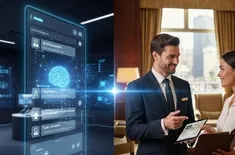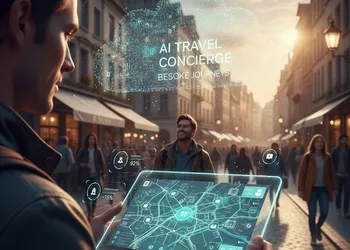
Experience IoT in luxury rooms, immediate service, and a digital concierge.
The Future is Listening: Personalized In-Room Voice Control in Luxury Hotels
The modern traveler no longer seeks mere accommodation; they demand an experience that is seamless, intuitive, and deeply personalized. As the hospitality industry races to meet these expectations, a powerful new technology is stepping into the spotlight: Personalized In-Room Voice Control. This innovation is transforming the guest experience, moving beyond clunky bedside buttons and confusing wall panels to usher in an era where the entire environment responds to a single, natural voice command. It is the defining characteristic of the new generation of smart suite hotels.
The Evolution of the Guest Room Experience
For decades, the luxury hotel room has been defined by high thread counts and ornate fixtures. While comfort remains paramount, the definition of luxury is expanding to include technological sophistication. The integration of the Internet of Things (IoT) has been the primary catalyst for this shift, particularly in the realm of guest room management.
Initially, hotels dabbled in digital controls, offering touchscreens that consolidated various functions. While an improvement, these interfaces often presented a steep learning curve or required multiple taps to complete a simple task. The true breakthrough arrived with advanced natural language processing (NLP) and the deployment of purpose-built voice-activated room controls.
These systems are not just smart speakers repurposed for a hotel setting; they are sophisticated, integrated platforms designed to handle complex, contextual requests while maintaining guest privacy and security. They represent the ultimate fusion of comfort, convenience, and cutting-edge technology, pushing the boundaries of what IoT in luxury rooms can achieve.
Seamless Control: The Core Capabilities
The core appeal of personalized in-room voice control lies in its ability to centralize and simplify the control of every environmental and entertainment element. Guests are empowered to interact with their room using simple, conversational language, creating a sense of effortless mastery over their temporary domain.
A. Environmental Mastery: Lighting and Climate
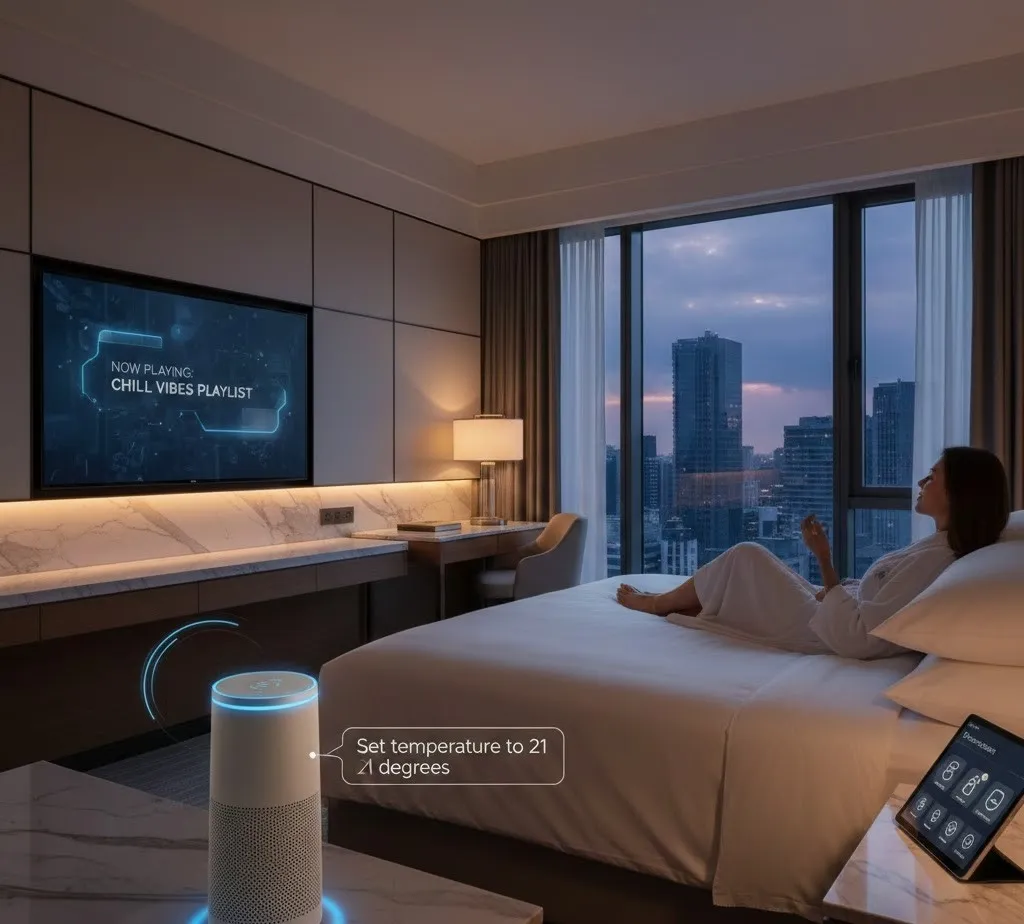
Imagine stepping into your room after a long flight and instantly setting the mood. With voice control, complex lighting scenes can be activated instantly. A guest can say, "Good evening, activate the reading scene," and the system will dim the main lights, brighten the bedside lamp to the perfect luminosity, and close the blackout shades. Conversely, they can simply command, "Set the temperature to 21 degrees and turn on the fan," achieving immediate climate adjustment without fumbling for a thermostat.
This level of personalized automation goes beyond simple on/off commands. The system learns and adapts, recognizing patterns and preferences. If a guest routinely asks for a specific temperature at 10 PM, the system can begin to anticipate and suggest this setting, demonstrating an unprecedented level of attentiveness.
B. Entertainment Integration: Audio and Visual
The modern guest brings their entire digital life with them, and the in-room entertainment system must keep pace. Voice control systems seamlessly integrate with the room’s television, soundbar, and streaming services. A guest can say:
- "Play my 'Chill Vibes' playlist on YouTube Music."
- "Change the channel to the local news."
- "Log me into Netflix and continue watching The Crown."
The ability to control these functions hands-free—especially when relaxing on the bed or preparing for the day—elevates the entertainment experience from passive viewing to interactive engagement.
C. The New Standard for Immediate Service
Perhaps the most significant impact of in-room voice control is its ability to facilitate immediate service requests. Traditional methods—a phone call to the front desk, waiting for a line to clear, and then verbally relaying a request—are slow and inefficient. Voice control bypasses these friction points entirely, acting as a direct link to the hotel's operational backend.
A guest can state:
- "Ask housekeeping for two extra pillows and a rollaway bed."
- "Order breakfast from the French menu for 7:30 AM."
- "Please confirm my check-out time and request a late departure."
The command is instantly converted into a ticket, prioritized by the property management system (PMS), and routed to the correct department. This drastically reduces response times and minimizes communication errors, ensuring that service is not only requested but delivered with exceptional speed and accuracy. This capability fundamentally transforms the service paradigm.
The Role of the Digital Concierge
In-room voice control systems are evolving into sophisticated digital concierges. They are no longer simple control interfaces but intelligent, conversational assistants that elevate the entire stay.
A. Information and Navigation
Guests frequently have simple questions about the hotel or the surrounding area. Instead of calling the front desk, which may be busy, the digital concierge provides instant, accurate information:
- "What time does the pool close?"
- "Where is the fitness center located?"
- "What is the Wi-Fi password?"
- "Give me directions to the nearest subway station."
By offloading these high-volume, low-complexity inquiries, the system frees up human staff to focus on critical, high-touch interactions, thereby improving overall operational efficiency and staff utilization.
B. Personalization and Preferences
The true magic of the digital concierge lies in its ability to remember and implement guest preferences. For repeat guests, the system can recall preferred lighting scenes, climate settings, and even preferred genres of background music. This data-driven personalization allows the room to anticipate the guest's needs even before they arrive. The concept of personalized automation is fully realized when a guest walks into their room, and the environment is already perfectly tailored to their known habits, creating a feeling of being genuinely welcomed home. This level of anticipatory service is the hallmark of ultimate luxury.
Security, Privacy, and the Path Forward
A crucial consideration for in-room voice control is the sensitive issue of security and guest privacy. Luxury travelers expect the highest level of discretion. Reputable systems are designed with privacy by default:
- Microphone Muting: Physical mute buttons that electronically disconnect the microphone are standard features.
- No Continuous Recording: The device is designed only to wake and listen when a specific "wake word" is spoken.
- Data Anonymization: Voice recordings are typically deleted immediately after processing, and any stored preference data is anonymized and secured on the hotel's private network.
By prioritizing privacy, hotels can ensure guest trust and maximize the adoption of these features.
The future of this technology lies in deeper integration. Soon, the voice control system will connect seamlessly with the booking platform, anticipating needs like pre-ordering a taxi for an early departure, or automatically adjusting the room environment based on the guest's daily itinerary retrieved from a linked calendar (with explicit guest consent).
This level of intelligent integration confirms that Personalized In-Room Voice Control is not a passing gimmick. It is the architectural foundation of the modern luxury hotel stay, delivering an effortless, hyper-personalized, and instantly responsive experience that guests will soon not just appreciate, but expect. The era of the truly intelligent room has arrived, and it is ready to listen.