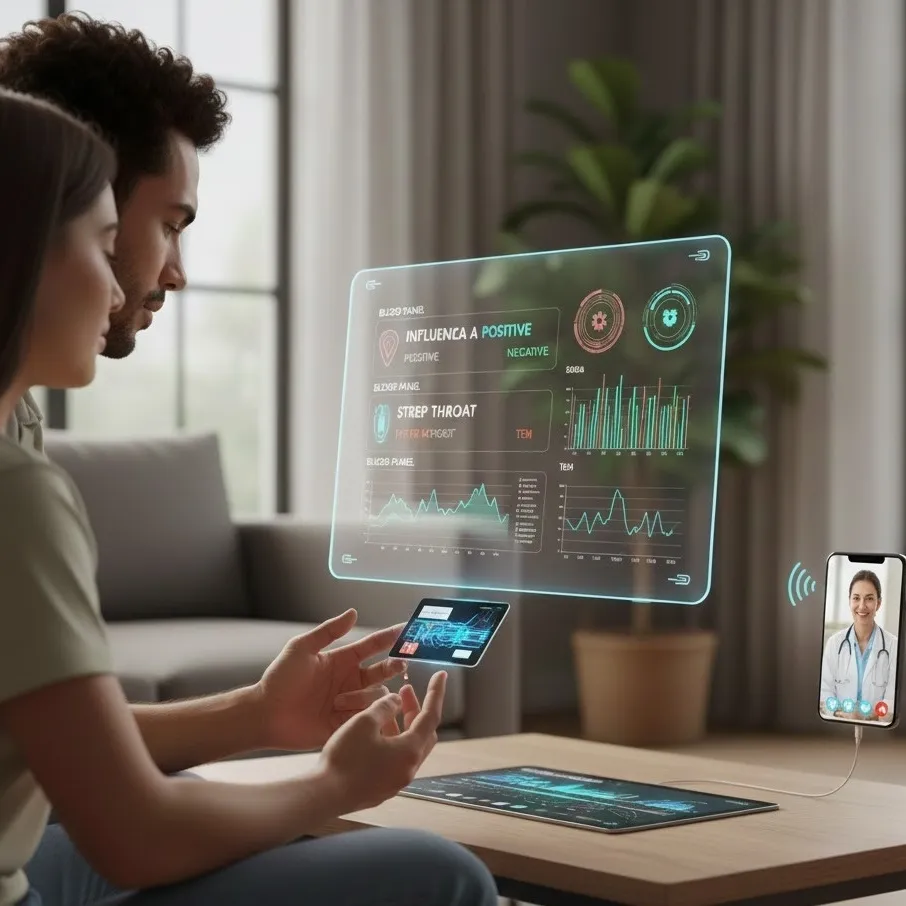
Explore how the miniaturization of lab tests brings rapid, accurate diagnostics for flu, strep, and blood panels into your home with point-of-care testing.
The Revolution of At-Home Diagnostics and Point-of-Care Testing: A Laboratory in Your Pocket
The healthcare landscape is undergoing a seismic shift, moving from centralized hospital laboratories to the palms of our hands. The convergence of microfluidics, digital connectivity, and biotechnology has birthed a new era of consumer health. Today, the miniaturization of lab tests is not just a scientific feat; it is a fundamental redesign of how we detect, monitor, and treat illness. By bringing point-of-care testing (POCT) directly into the living room, we are witnessing the democratization of high-complexity diagnostics.
The Rise of At-Home Diagnostics: Convenience Meets Clinical Rigor
For decades, getting a "blood panel" or a "strep test" meant scheduling an appointment, traveling to a clinic, and waiting days for a phone call. At-home diagnostics have eliminated these barriers. This shift is driven by the demand for rapid results—the ability to know within minutes, rather than days, whether a sore throat is viral or bacterial, or if a child has the flu.
The primary appeal of these technologies lies in their ability to offer "near-patient" testing. Whether it is a lateral flow assay (similar to a pregnancy test) or a sophisticated molecular device, these tools provide a level of autonomy that was previously unimaginable. Consumers can now screen for infectious diseases, track chronic conditions like diabetes, and even monitor hormone levels without leaving their homes.
Miniaturization of Lab Tests: How It Works
The magic behind modern point-of-care testing (POCT) is the "Lab-on-a-Chip" (LOC) technology. Engineers have successfully scaled down massive laboratory instruments into devices the size of a credit card. These systems use microfluidics to manipulate miniscule amounts of fluids—often just a single drop of blood or a swab of saliva—through etched channels to react with specific reagents.
This miniaturization of lab tests allows for:
- Reduced Sample Size: Only a finger-prick of blood is needed, rather than multiple vials.
- Integrated Processing: Sample preparation, chemical reaction, and detection all happen on a single disposable cartridge.
- Portability: Devices are battery-operated and rugged enough for travel or remote use.
Diagnostic Accuracy: Can You Trust the Results?
A common question regarding self-testing accuracy is whether a handheld device can truly match the precision of a multi-million dollar hospital analyzer. The answer is increasingly "yes," particularly for molecular tests.
While traditional antigen tests (like the common rapid COVID tests) are known for speed, newer at-home molecular tests use Isothermal Amplification (LAMP) or miniaturized PCR (Polymerase Chain Reaction). These technologies amplify the genetic material of a pathogen, allowing for a level of sensitivity that rivals gold-standard clinical labs.
To ensure self-testing accuracy, many modern devices are "CLIA-waived," meaning they are designed to be so simple and robust that the risk of an incorrect result—even when performed by a non-professional—is insignificant.
Key Use Cases: Flu, Strep, and Beyond
The current frontier for at-home diagnostics focuses on high-incidence respiratory and metabolic conditions.
1. Respiratory Panels (Flu, Strep, and COVID-19)
The "Triple-test" or multiplexed cartridges can now distinguish between Influenza A, Influenza B, and COVID-19 from a single nasal swab. For strep throat, which traditionally required a culture at a doctor’s office, new at-home kits use fluorescence-based detection to provide answers in under 15 minutes. This allows patients to consult with a telehealth provider and receive an antibiotic prescription almost immediately, preventing the spread of infection.
2. Comprehensive Blood Panels
We are moving beyond simple glucose monitoring. New POCT devices can now measure:
- Lipid Profiles: Total cholesterol, HDL, LDL, and triglycerides.
- Kidney Function: Creatinine and BUN levels.
- Metabolic Markers: Hemoglobin A1c and thyroid-stimulating hormone (TSH).
The Impact on the Healthcare Ecosystem
The widespread adoption of point-of-care testing (POCT) is not just a win for the individual; it is a strategic necessity for the healthcare system. By shifting low-acuity testing to the home, we reduce the burden on emergency rooms and urgent care centers.
Furthermore, the data generated by these devices can be seamlessly integrated into Electronic Health Records (EHR) via smartphone apps. This creates a "connected health" loop where a patient can take a test at 8:00 AM, and their physician can review the results and adjust their medication by 8:15 AM.
The Future: What’s Next for Home Testing?
As we look toward the next decade, the boundaries of consumer health will expand even further. We are seeing the development of "multi-omic" home tests that can analyze proteins and metabolites to detect early signs of cancer or autoimmune flare-ups. The goal is no longer just to treat illness when symptoms appear, but to use at-home diagnostics as a proactive tool for longevity and wellness.
The miniaturization of lab tests has turned the home into a clinical-grade diagnostic hub. With the promise of rapid results and the assurance of self-testing accuracy, we are finally putting the most powerful tool in medicine—information—exactly where it belongs: in the hands of the patient.