Discover the latest in Non-invasive CGM and needle-free glucose monitoring.
Non-Invasive CGM: The Future of Needle-Free Glucose Monitoring and Diabetes Tech
Living with diabetes has historically been a journey marked by the sting of needles. From the routine discomfort of fingerstick calibrations to the insertion of subcutaneous sensors, the "pinch" has been an unavoidable part of managing the condition. However, we are currently witnessing a seismic shift in diabetes tech. The dream of truly needle-free glucose monitoring is no longer a distant sci-fi concept—it is a rapidly maturing reality.
In this deep dive, we explore the cutting-edge world of Non-invasive CGM (Continuous Glucose Monitoring), focusing on the breakthroughs that allow for accurate blood sugar tracking without a single drop of blood. From smart tattoos that read your skin to contact lenses that analyze your tears, the landscape of metabolic health is being rewritten.
The Evolution of Glucose Tracking: From Pricks to Patches
For decades, the gold standard for glucose management was the finger-prick test. While effective, it provides only a "snapshot" of blood sugar levels, often missing the dangerous spikes and dips that happen between tests. The introduction of traditional CGMs (like the Dexcom G7 or FreeStyle Libre 3) revolutionized care by providing continuous data. However, even these "wearables" require a small filament to be inserted under the skin.
The next frontier—Non-invasive CGM—aims to eliminate this barrier entirely. By leveraging advanced sensors that utilize light, radio frequency, or interstitial fluid extraction without piercing the dermis, these devices offer a level of comfort and discretion previously unimaginable.
Breakthrough 1: Smart Tattoos – The Invisible Health Guardian
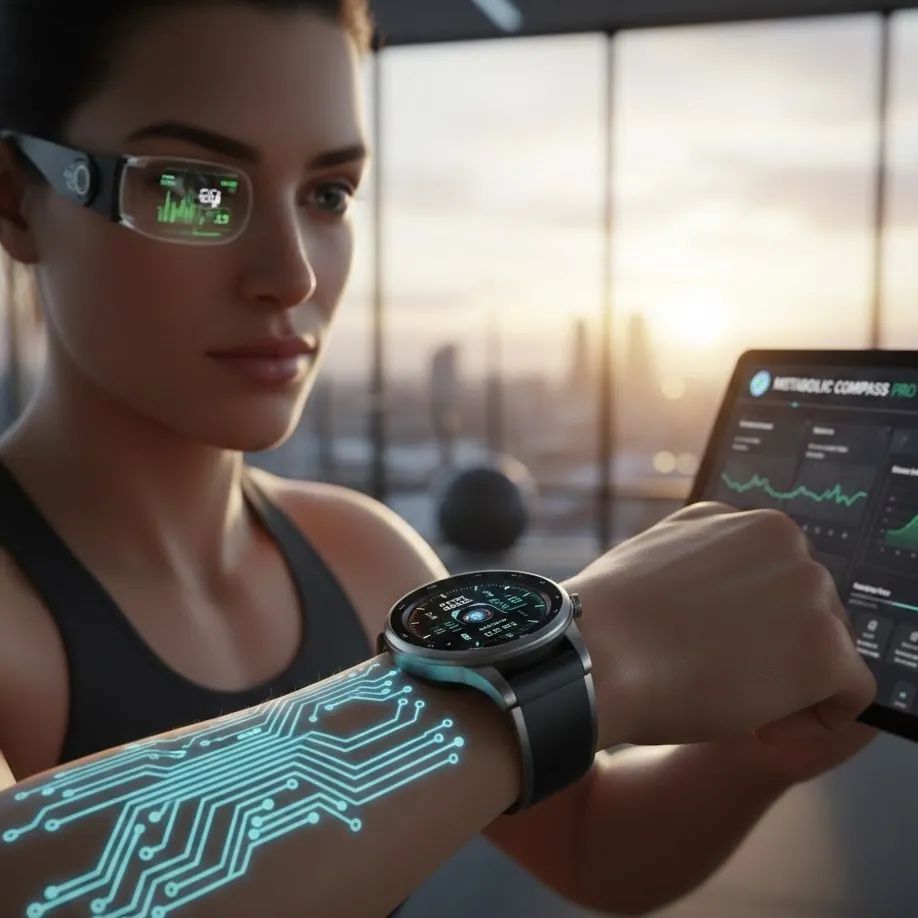
One of the most visually and technically stunning developments in diabetes tech is the emergence of smart tattoos. These aren't your typical ink-and-needle tattoos; rather, they are flexible, paper-thin electronic sensors or "dermal inks" that are applied to the skin.
How They Work
Smart tattoos function as biochemical sensors that change properties based on the concentration of glucose in the interstitial fluid (the fluid surrounding your skin cells).
-
Color-Changing Inks: Some prototypes use specialized inks that shift colors—for example, from blue to brown—as glucose levels rise or fall. This provides a direct, visual cue to the user.
-
Electronic "E-Skins": Others are essentially "electronic tattoos" that use tiny, flexible electrodes to sense glucose levels through the skin's surface and wirelessly transmit the data to a smartphone.
The primary benefit is the "set it and forget it" nature of the device. These sensors are designed to be waterproof, durable, and highly discreet, making blood sugar tracking as simple as glancing at your arm.
Breakthrough 2: Smart Contact Lenses – Tears as a Window to Health
The idea of using the eye as a diagnostic tool has gained significant momentum. Because glucose is present in tears (albeit at lower concentrations than in blood), contact lenses embedded with micro-sensors offer a unique, non-invasive pathway for monitoring.
The Technology Behind the Lens
Modern contact lenses for glucose monitoring are marvels of engineering. They integrate:
-
Miniature Glucose Sensors: Specifically designed to detect minute changes in tear-film glucose.
-
Wireless Power: Often powered by the same radio frequency (RF) used to transmit data, eliminating the need for bulky batteries.
-
Real-Time Transmission: Data is sent to an app or even a pair of smart glasses, providing a continuous stream of information.
While early attempts (notably by Google Verily) faced challenges regarding tear-to-blood glucose correlation, recent breakthroughs in 2024 and 2025 using "bimetallic electrodes" and "magneto-hydrodynamics" have significantly improved accuracy, bringing these devices closer to clinical approval.
Breakthrough 3: Optical Sensing and Raman Spectroscopy
Perhaps the most "high-tech" approach to needle-free glucose monitoring involves using light itself. Devices currently in development use Near-Infrared (NIR) or Raman spectroscopy to "see" through the skin.
By shining a specific wavelength of light through the tissue (usually at the wrist or fingertip), the device can measure how the light scatters or is absorbed by glucose molecules. This technique allows for a purely external device—resembling a smartwatch—to perform high-precision blood sugar tracking. Companies like GlucoTrack and Know Labs are leading the charge in making these sensors small enough to wear comfortably all day.
The Current Challenges: Accuracy and Regulation
Despite the excitement, the path to a 100% needle-free glucose monitoring world has hurdles.
-
The Lag Time: Glucose levels in tears or sweat can lag behind blood glucose levels by 10 to 15 minutes.
-
Environmental Factors: Sweat-based sensors can be affected by pH levels or ambient temperature.
-
FDA Approval: Because these are medical devices, they must meet the "MARD" (Mean Absolute Relative Difference) standards for accuracy.
However, with the integration of Artificial Intelligence (AI), these devices are becoming smarter. Machine learning algorithms can now "filter out" the noise caused by motion or temperature, making the readings from Non-invasive CGM systems more reliable than ever before.
Summary of Non-Invasive Technologies
| Technology | Delivery Method | Primary Benefit |
| Smart Tattoos | Dermal patches/inks | Discreet, continuous, no electronics required. |
| Contact Lenses | Ocular wear | Real-time, uses natural tear fluid. |
| Optical Sensors | Smartwatch/Wristband | No consumables, completely external. |
| MHD Sensors | Skin-surface suction | High accuracy without piercing skin. |
Conclusion: A New Era of Diabetes Tech
The era of the "constant sting" is coming to an end. As Non-invasive CGM technology matures, the barriers to effective blood sugar tracking are dissolving. Whether it is through a stylish smart tattoo, a high-tech contact lens, or a simple laser on your wrist, the future of needle-free glucose monitoring is bright, painless, and powerful.
By merging diabetes tech with everyday wearables, we are not just managing a disease; we are empowering millions to live more freely, informed by the very data their bodies provide.