Discover which luxury destinations are opening new resorts in 2026.
Future Horizons: Which Luxury Destinations Are Opening New Resorts?
The landscape of ultra-luxury travel is undergoing a dramatic transformation. As discerning travellers seek not just opulence, but genuine immersion, sustainability, and unparalleled privacy, the hospitality industry is responding with a wave of new 5-star resorts in both established havens and daring, emergent territories. The question of which luxury destinations are opening new resorts in the mid-2020s points directly to the biggest geopolitical and social shifts driving global tourism.
The year 2026 is shaping up to be a landmark period, with major brands staking claims in ambitious new regions, cementing several key luxury travel trends and predictions for 2026. This in-depth look explores the burgeoning regions, the most anticipated openings, and the underlying themes defining the next era of exclusive escapes.
Part 1: Luxury Travel Trends and Predictions for 2026
The new resorts coming online in 2026 are a physical manifestation of evolving traveller desires. Forget mere comfort; the luxury travel trends and predictions for 2026 highlight a demand for experiences that are intentional, restorative, and impactful.
1. The Rise of "Intentional" and Wellness Travel
Luxury travellers are prioritising trips with a defined purpose—be it heritage exploration, active adventure, or deep personal wellness. This shift is driving interest in destinations that offer genuine solitude and cultural depth. Resorts are moving beyond simple spas to offer holistic wellness centres, including traditional healing methods like the temazcal (sweat lodge) offered at the upcoming Amanvari in Mexico.
2. The Quest for "Coolcations" and Less-Crowded Destinations
A notable trend is the adjustment of travel plans due to climate change, leading to a growing interest in destinations with moderate weather or a preference for shoulder-season travel to popular spots. This quest for "coolcations" is putting places like Iceland, Norway, and Antarctica firmly on the luxury map, alongside the Azores and Scottish Highlands, which are opening nature-first retreats like Hope by Wildland.
3. Seamless and Hyper-Personalised Experiences
The ultra-luxe segment demands seamless, private journeys, often leading to resort buyouts or the desire for every detail to be pre-arranged, including private chefs and on-demand guides. Micro-luxury experiences—small, bespoke touches that connect guests to the local environment—are becoming the new standard.
4. The Influence of Film and Pop Culture
The 'White Lotus Effect' remains a powerful driver of destination choice, propelling places like the Mediterranean islands (Sicily, Mykonos) and Southeast Asia into the spotlight as travellers seek to emulate the stunning backdrops they see on screen.
Part 2: Identify Emerging "Hot" Regions
The most significant development in the luxury sector is the emergence of entirely new, government-backed "mega-destinations" designed for the affluent traveller. In answering which luxury destinations are opening new resorts, three regions stand out for their explosive growth and ambition:
1. Saudi Arabia’s Red Sea Project and AMAALA
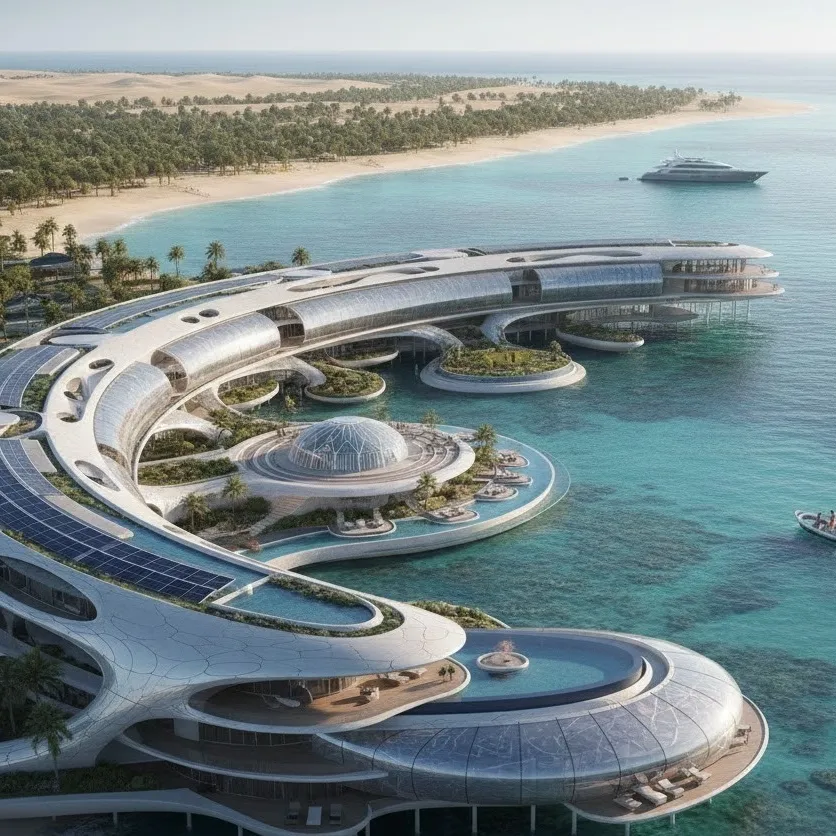
The Kingdom of Saudi Arabia is undertaking the most ambitious luxury tourism project globally. The Red Sea Project is a monumental effort to turn a pristine coastline into a sustainable, ultra-luxury destination. The focus here is on regenerative tourism, powered entirely by renewable energy and designed to enhance the natural environment.
-
Shura Island: This will be the main hub, designed by Foster Partners under the "Coral Bloom" concept. Following initial 2025 openings, Shura Island will see an accelerated expansion in 2026.
-
2026 Openings: The island will welcome the Four Seasons Resort and Residences Red Sea, offering 1.3km of swimmable shoreline and access to the Kingdom's first championship golf course, Shura Links. Fairmont The Red Sea is also slated to open in May 2026, featuring an overwater restaurant and a focus on sustainable development.
-
-
AMAALA: Positioned as an ultra-luxury wellness destination, AMAALA is also seeing its first major openings.
-
2026 Opening: The Nammos Resort Amaala, adapted from the cosmopolitan beach club in Mykonos, will debut in early 2026, overlooking the Red Sea coast.
-
2. Specific African Nations: Safari's New Frontier
Africa is repositioning itself from a traditional safari market to a hub for high-end, conservation-focused ecotourism. The new generation of luxury camps and lodges strongly emphasises community engagement and rewilding efforts, appealing to the intentional travel trend.
-
Botswana & Zambia: These nations are becoming synonymous with sustainable, high-value safari.
-
2026 Openings: Sediba Sa Rona (Botswana) is opening in March at the meeting point of the Okavango Delta and Moremi Game Reserve, offering 15 luxury tents overlooking the Khwai River. In Zambia, Anantara Kafue River Tented Camp will debut above the Kafue River in the nation’s largest national park.
-
-
Tanzania & Kenya: Major brands are moving into lesser-known parks. Ubuyu, Banyan Group's first safari resort, will launch with six eco-luxe villas in Ruaha National Park, Tanzania. In Kenya, Kitirua Plains Lodge is set to open in a private conservancy bordering Amboseli National Park, focusing on community-led experiences with the local Maasai.
3. New Islands in Southeast Asia and the Pacific
While the Maldives, Thailand, and Bali remain perennial favourites, new openings are pushing into quieter, more culturally immersive locales in Southeast Asia and the wider Pacific.
-
Samoa: The Pacific is seeing a rise in ultra-exclusive retreats, such as Moanalei Villas, which will open as Samoa’s first new 5-star resorts villa retreat in the forest-clad hills of Apia.
-
Laos and Vietnam: Focus is shifting to cultural immersion along rivers and within historic cities. The upcoming Avani Lanexang Vientiane on the Mekong River in Laos will merge local charm with contemporary design, appealing to travellers seeking culture served gently and authentically.
Part 3: List Major Brand Openings Predicted for 2026
The global list of new 5-star resorts opening in 2026 is extensive, highlighting a robust recovery and expansion of the luxury sector across all continents. These openings are where you will find the newest luxury travel deals as they compete for initial bookings.
Europe: Historic Rebirth and Island Glamour
Europe remains a cornerstone of luxury travel, but the focus is on boutique, hyper-localised properties and the meticulous restoration of historic landmarks.
| Destination | Major Brand Opening | Concept / Unique Feature |
| Venice, Italy | Orient Express Palazzo Donà Giovannelli | 47-room hotel in a 15th-century palazzo, arriving by private boat. A new 5-star resorts blend of historic elegance and modern luxury. |
| Venice, Italy | Danieli, A Four Seasons Hotel | Meticulous restoration of the historic Hotel Danieli under the Four Seasons brand. |
| Lake Como, Italy | The Lake Como EDITION | 148-room property in a 19th-century palazzo, featuring a picturesque pool floating in the lake. |
| London, UK | Waldorf Astoria London Admiralty Arch | Debut London property in the historic Admiralty Arch near Buckingham Palace, a monumental restoration. |
| Paros, Greece | Luura Cliff | 35 minimalist suites and villas with private pools, showcasing contemporary Cycladic style. |
| Mykonos, Greece | Four Seasons Resort Mykonos | Sprawling 15-acre haven with 94 Aegean Sea-facing rooms, many with plunge pools, above Kalo Livadi Bay. |
| Sicily, Italy | Villa Timeo Belmond | A historic noble residence transformed into an exclusive 21-room retreat, adjacent to the Grand Hotel Timeo. |
| Burgundy, France | Château La Commaraine | First official five-star hotel in the region, set within a historic estate with its own Premier Cru vineyard. |
Asia Pacific: Eco-Luxury and Cultural Depth
The APAC region continues its growth trajectory, with a strong focus on sustainability in island retreats and cultural immersion in Japan.
| Destination | Major Brand Opening | Concept / Unique Feature |
| Maldives (Raa Atoll) | Bvlgari Resort Ranfushi | Italian glamour on a nearly 50-acre island with 54 accommodations, including beach and overwater villas. |
| Kyoto, Japan | Capella Kyoto | The brand's signature quiet luxury and cultural depth in the Rakuchu district, focusing on serene sanctuaries. |
| Tokyo, Japan | 1 Hotel Tokyo | An eco-luxury anchor with Rank S CASBEE certification, integrating biophilic design and living walls into the urban landscape. |
| Phuket, Thailand | Chatrium Rawai Resort Phuket | A five-star hideaway on the quieter southern edge, with rooms designed to maximise sweeping Andaman Sea views. |
| Koh Phangan, Thailand | Kaia | A conscious approach to island luxury with open-air tented suites and a community-led program focused on nature-driven wellness. |
| Vientiane, Laos | Avani Lanexang Vientiane | Fusing local charm with modern comfort along the Mekong River, perfect for slow cultural travel. |
The Americas: Desert and Caribbean Gems
From secluded desert escapes to elevated Caribbean mainstays, the Americas continue to draw luxury visitors seeking sun and privacy.
| Destination | Major Brand Opening | Concept / Unique Feature |
| Baja California, Mexico | Amanvari | Aman’s beachfront debut, blending into the desert landscape with only 18 rooms, featuring a traditional temazcal spa. |
| Aruba | The Westerly at Hilton Aruba | A new 5-star resorts oceanfront tower offering an elevated boutique experience within the larger resort, with adults-only swim-up rooms available. |
| Nashville, USA | Tempo by Hilton Nashville Midtown/Downtown | Designed with wellness in mind, featuring the brand’s signature Power Up and Power Down zones in every room. |
Conclusion: The New Definition of Luxury
The future of luxury travel is defined by exclusivity, purpose, and discovery. The wave of new 5-star resorts opening in 2026 is concentrated in destinations that offer a meaningful narrative: the cultural depth of Japan, the conservation-led safaris of Africa, the stunning architectural ambition of the Red Sea Project, and the enduring charm of a re-imagined Europe.
For the luxury traveller, this proliferation of high-quality options means unparalleled choices. Whether seeking the cutting-edge modernity of Tokyo, the historic grandeur of Venice, or the untouched wilderness of Botswana, the answers to which luxury destinations are opening new resorts provide a clear itinerary for the most sophisticated escapes of the mid-decade. As these properties debut, savvy travellers should look out for introductory packages and newest luxury travel deals that will accompany these high-profile launches. Keeping an eye on luxury destination updates will be key to securing a place in these future horizons.