Learn about manned exploration, private tours, and ocean-restoration tourism.
The Final Frontier: Submarine Tourism and the New Age of Deep-Sea Exploration
The world’s oceans, covering over 70% of the Earth’s surface, hold mysteries far more profound than the terrestrial landscapes we have spent millennia charting. While the early days of underwater ventures were driven by military and scientific imperatives, the 21st century has heralded a new epoch: the rise of Submarine tourism and an ultra-exclusive, commercialized drive towards deep-sea exploration. This emerging sector is more than just a luxury trend; it represents a convergence of cutting-edge engineering, profound scientific curiosity, and the ultimate expression of bespoke, experiential travel. It is here, in the crushing silence and perpetual darkness of the abyssal zone, that the intersection of wealth and wonder is redefining the boundaries of the achievable.
The Small but Growing Niche: Ultra-Exclusive Deep-Sea Travel
The core of this market is the small but growing niche of ultra-exclusive travel focusing on manned submersible dives to deep-sea locations. Far removed from the glass-bottomed boat tours of coral reefs, this is a realm reserved for the super-yacht owner, the seasoned adventurer, and the individual who views a $100,000-plus-per-week experience as an investment in a once-in-a-lifetime memory.
The market for Manned Underwater Vehicles (MUVs) is significant and expanding, projected to grow steadily, driven by defense, scientific research, and, notably, a surge in commercial underwater tourism, indicating strong long-term industry momentum. Manufacturers like Triton Submarines, U-Boat Worx, and SEAmagine are the engineering titans of this space, crafting personal submersibles that are as much precision scientific instruments as they are objects of deep-sea luxury.
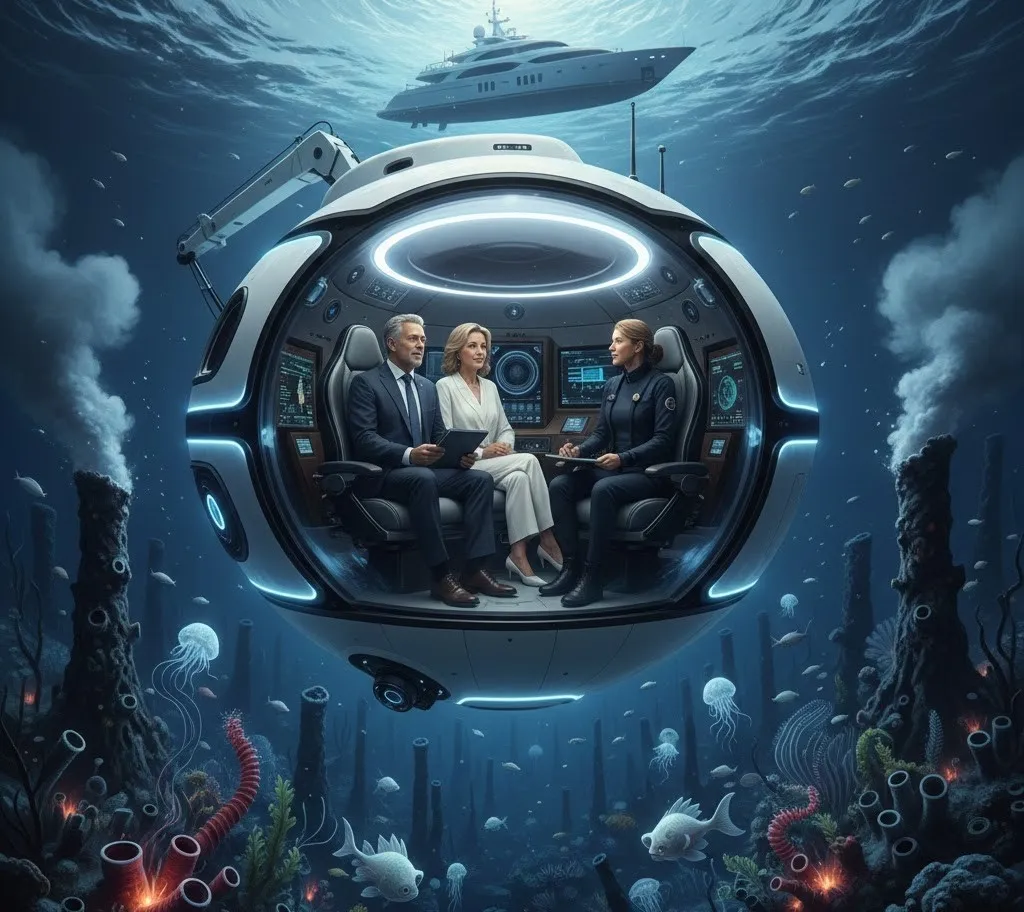
These state-of-the-art submersibles offer passenger capacities ranging from two to nine people, capable of descending to depths of 1,000 meters or more—a realm previously accessible only to government-funded research vessels. The experience is intimate, safe, and profoundly moving, providing a 360-degree panoramic view of the mysterious ocean world through robust, transparent acrylic pressure hulls. This is the ultimate form of exclusive marine exploration, where the destination might be an active hydrothermal vent, a sunken historical wreck like the Titanic, or a newly discovered bio-luminescent coral garden.
The vessels themselves are feats of engineering, designed to withstand the crushing pressure of the deep ocean (for example, 600 bar at 6,000 meters) using materials like high-strength titanium alloys and cutting-edge hull technologies. Advanced safety features, redundant life support, and certification by global assurance bodies like DNV are non-negotiable standards, ensuring the well-being of the passengers and crew.
The Economics of the Abyss: Private Submersible Charter
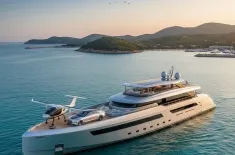
Access to this world is secured through an intricate and highly expensive infrastructure. For the ultra-wealthy, the dream is realized through a private submersible charter or, more often, through direct ownership and integration with a superyacht.
Acquisition and Charter Costs
- Purchase Price: A personal submersible starts at approximately $1 million for smaller, shallow-diving models, but custom, deep-dive vessels equipped with luxury interiors, robotic arms for sampling, and extended life support can easily reach $5 million to over $20 million. The propulsion system and the specialized crane required for safe launch and recovery often constitute a significant portion of the total cost.
- Charter Rates: For those who prefer to charter, rates for a deep-sea submersible expedition, including the pilot and surface officer support, can range dramatically. For example, a luxury submersible charter can cost around €55,000 to €70,000 per week for the submersible alone, with additional costs for the crew, permits, and the accompanying support vessel (which is often a large, highly capable superyacht or dedicated explorer vessel).
- Operating Logistics: Owning and operating a submersible is a complex logistical challenge. It requires a dedicated, highly trained crew (pilots and surface officers, often ex-Navy or professional mariners) and a capable support vessel to facilitate launch, recovery, battery charging, and maintenance. This continuous annual operating cost can add millions to the lifetime expense of the vessel.
The high barrier to entry ensures that this segment remains ultra-exclusive, creating a market for bespoke expeditions to remote locations like the Antarctic, Indonesia's deep trenches, and the historically significant sites of the North Atlantic. Companies that facilitate these adventures offer far more than a ride; they provide complete expedition management, including itinerary planning, crew training, and navigating complex international maritime and environmental regulations.
Deep-Sea Exploration: Beyond Tourism to Scientific Partnership
The line between Submarine tourism and genuine scientific research is often blurred in this niche. Many high-net-worth individuals who invest in submersibles are not merely seeking a thrill; they are becoming philanthropists of the deep. This is leading to a powerful trend: the privatization of oceanographic research.
The presence of a human observer in the deep ocean, as noted by scientists, provides an unparalleled perception that no Remotely Operated Vehicle (ROV) camera can yet match. The human eye and on-the-spot judgment fundamentally expand a mission's scientific reach. Luxury submersibles are therefore increasingly being deployed as platforms for:
- Citizen Science: Wealthy patrons fund expeditions where marine biologists and geologists are brought aboard to conduct research. The client gets an exclusive marine exploration experience; the scientist gets access to millions of dollars worth of equipment and support time they would not otherwise have.
- Underwater Archaeology: Dives to sunken cities and historical wrecks, often leveraging the submersible’s unique maneuverability and lighting capabilities for detailed observation and documentation.
- Marine Ecosystem Monitoring: Collecting environmental data, capturing high-definition video of newly discovered species, and documenting the effects of climate change at extreme depths.
Ocean-Restoration Tourism: The Ethical Imperative
The rapid expansion of deep-sea access has amplified concerns regarding environmental impact. The principle of ethical marine tourism—the precautionary approach—dictates that activities should cease if there is scientific uncertainty about their potential for irreversible environmental harm.
This growing consciousness is giving rise to a new concept: ocean-restoration tourism. This is not simply "eco-tourism," which focuses on minimizing harm, but rather a model striving for a net positive contribution to the marine environment.
Practical Application of Restoration Tourism:
- Hands-on Conservation: Guests aboard an exclusive marine exploration trip may participate in hands-on, immersive initiatives. For instance, in the Maldives, some luxury resort submersibles offer guests the unique opportunity to engage in data collection, document coral bleaching, or assist in the deployment of monitoring equipment under the guidance of marine biologists.
- Funding Mechanism: The extraordinary cost of these private submersible charters creates a powerful revenue stream. Ethical operators dedicate a significant portion of their expedition fees toward direct marine conservation projects, research funding, and supporting the establishment and monitoring of Marine Protected Areas (MPAs).
- Education and Advocacy: The experience itself becomes the most potent educational tool. Seeing a pristine deep-sea ecosystem—or, conversely, the evidence of human impact—inspires clients to become active, well-funded advocates for ocean conservation. This leverages the financial and political influence of the clientele to drive large-scale, positive change.
The industry is proactively adopting ethical guidelines, minimizing noise pollution from propulsion systems, and ensuring transparent operational standards. The deployment of reef-safe practices, responsible waste management, and the use of quiet, electric battery-powered vessels all contribute to a more sustainable model of Submarine tourism.
The Future of Deep-Sea Luxury and Exploration
The future of deep-sea luxury travel is one of increasing depth, endurance, and comfort. The trend is moving toward larger, multi-mission platforms that can serve as both scientific labs and opulent viewing platforms. Advances in artificial intelligence (AI) and hybrid systems are improving navigation and mission efficiency, allowing for longer, more precise deep-sea missions.
The global fascination with the unknown is the primary catalyst driving this growth. As the planet's surface becomes increasingly mapped and accessible, the ocean depths represent the last true frontier—a silent, dark world offering profound geological, biological, and historical discoveries.
The journey into exclusive marine exploration is more than a display of wealth; it is a pilgrimage to the Earth's final wilderness. It is an acknowledgment that in a world of limits, the greatest deep-sea luxury is access to the unexplored. By integrating private charter funding with essential marine science and establishing rigorous ethical standards, Submarine tourism has the potential to move beyond mere voyeurism, solidifying its place as a critical, albeit expensive, partner in the preservation and exploration of our planet's most vital resource.