Explore luxury EV travel, electric yachts, and private aviation
The environmental impact of traditional luxury transportation—from powerful, gas-guzzling supercars to massive, diesel-fueled superyachts and private jets—is disproportionately high. Luxury travel often involves higher consumption rates and, consequently, greater carbon emissions. The call for green mobility is not just a regulatory push but a consumer-driven demand from a new generation of high-net-worth individuals who value sustainability as much as exclusivity.
This shift involves the movement towards electric and hybrid-electric luxury vehicles and vessels to reduce the environmental footprint of high-end transit. This movement is multifaceted, encompassing all domains of luxury travel: land, sea, and air. By adopting electric powertrains, the industry is directly tackling two major pollutants: greenhouse gas emissions (primarily CO2) and local air pollutants (like nitrogen oxides and particulate matter). The immediate effect in urban centers and pristine natural environments, such as marine parks, is a dramatic improvement in air quality and a significant reduction in noise pollution, enhancing the travel experience itself.
Electrification on Land: EV Travel Experiences Redefined
The luxury automotive sector has been the first to embrace this electric revolution, transforming the status symbol of a powerful engine into the silent prestige of an electric powertrain. Luxury brands are now competing on metrics like instantaneous torque, silent cabin isolation, and sophisticated charging ecosystems, rather than just horsepower and top speed.
Electric vehicles (EVs) in the luxury segment are no longer a niche; they are a dominant force. They offer a driving experience characterized by superior refinement and exhilarating performance. The heavy battery pack, often a challenge in mass-market vehicles, becomes an advantage in the luxury context, providing a low center of gravity for improved handling and acting as an excellent sound dampener, contributing to unparalleled cabin quietness. This enables unique EV travel experiences, where the journey itself becomes a tranquil, guilt-free pleasure, whether navigating a bustling metropolis or cruising through scenic, protected landscapes.
Hybrid-Electric Bridges
While battery technology advances, hybrid-electric drivetrains serve as a crucial bridge, particularly for high-performance supercars and large SUVs where weight and range remain technical hurdles. These systems dramatically reduce emissions compared to their pure internal combustion engine (ICE) counterparts, offering a zero-emission range for city driving and relying on a highly efficient ICE for extended, high-speed excursions. They offer the best of both worlds—uncompromised performance coupled with a verifiable commitment to green mobility.
Taking to the Seas: Electric Yacht Charter and Vessels
The marine sector presents a more significant challenge for electrification due to the high energy density required for long-range cruising and high-speed travel. However, the movement is strong, particularly in the private yacht and charter market.
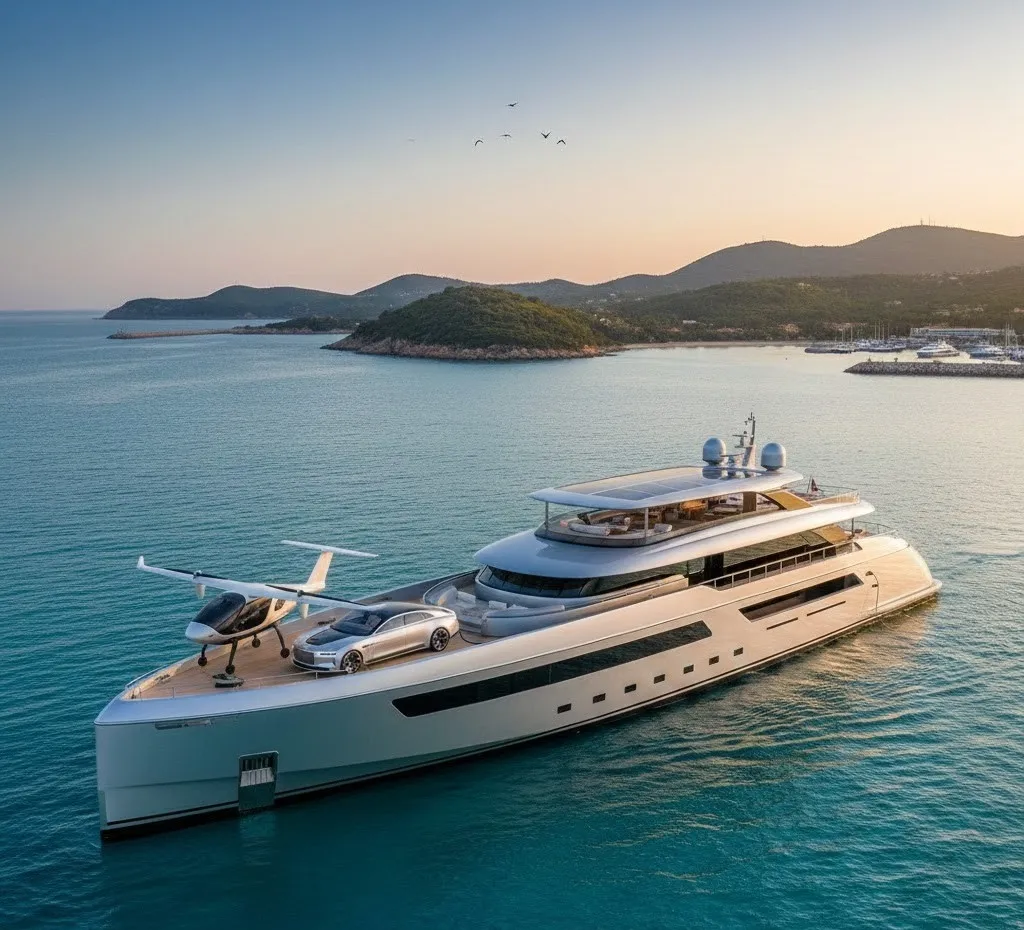
An Electric yacht charter offers guests a truly tranquil and environmentally responsible sailing experience. Electric propulsion systems eliminate the noise and vibration associated with diesel engines, allowing passengers to enjoy the sounds of the sea and the true serenity of nature. This is a game-changer for yachts cruising in ecologically sensitive areas, as they virtually eliminate exhaust discharge and minimize their acoustic impact on marine life.
- Hybrid Superyachts: For the largest vessels, a hybrid-electric configuration is currently the most practical and popular solution. These systems use a bank of batteries and electric motors for maneuvering, docking, and slow cruising, significantly reducing fuel consumption and emissions in port or at anchor. The diesel generators are reserved for long-distance crossings, maximizing efficiency and minimizing the environmental footprint.
- Day and Coastal Cruisers: Smaller yachts and tenders are rapidly becoming fully electric. Charging infrastructure in high-end marinas is developing to support this growing fleet, making fully electric day cruising a viable and increasingly sought-after form of low-impact transit. This segment is a perfect showcase for a fully sustainable transport lifestyle on the water.
Soaring High: The Future of Electric Private Aviation
The final frontier for luxury electrification is the skies. Electric private aviation and hybrid-electric aircraft are in advanced stages of development, promising to revolutionize regional and private air travel. The challenges are enormous—batteries must be significantly lighter and more energy-dense to lift a luxury cabin and its occupants high into the air.
- eVTOLs (Electric Vertical Take-Off and Landing): These are perhaps the most immediate and disruptive application. Envisioned as luxury air taxis, eVTOLs will facilitate near-silent, zero-emission urban and regional journeys. They offer a transformative solution for congested city-to-city or airport-to-resort transfers, turning air travel into a form of low-impact transit that is both faster and kinder to the environment. The commercialization of these aircraft will fundamentally alter the perception of what is possible in short-haul EV travel experiences.
- Hybrid Regional Jets: For longer distances, hybrid-electric powertrains offer a viable interim solution. They can reduce fuel burn by a significant percentage, providing a cleaner, more sustainable transport option for private jets without compromising the necessary range or speed for intercontinental travel. Research into alternative fuels, such as sustainable aviation fuel (SAF) and green hydrogen, is also advancing rapidly, complementing the push for electric private aviation.
Infrastructure, Challenges, and the Road Ahead
The widespread adoption of this luxury green mobility depends not just on the vehicles and vessels themselves, but on the supporting infrastructure.
The Charging Ecosystem
A robust, premium charging infrastructure is paramount. For luxury vehicles, this means exclusive, fast-charging hubs at high-end destinations, hotels, and resorts, all powered by verifiable renewable energy sources. For yachts, this translates to high-speed charging berths in luxury marinas globally. The energy powering these modes of transport must also be green to truly deliver on the promise of sustainable transport. If the electricity used to charge an EV or e-yacht comes from a coal-fired power plant, the overall environmental footprint is merely shifted, not eliminated. The solution requires a commitment to sourcing power from solar, wind, and hydro projects.
Overcoming Technical and Material Hurdles
The primary technical challenges lie in battery technology: energy density, charging speed, and long-term degradation. Luxury applications, particularly in aviation and large marine vessels, require performance levels that push the boundaries of current lithium-ion technology.
Another critical challenge is the sustainability of the supply chain. The ethical sourcing and responsible recycling of critical battery minerals (lithium, cobalt, nickel) must be a non-negotiable part of the luxury electric narrative. The affluent consumer demands not just a cleaner vehicle but a product with a transparent and low-impact transit lifecycle. Manufacturers are responding by focusing on circular economy principles, maximizing material reuse, and prioritizing battery chemistries that reduce reliance on highly contested minerals.
The New Luxury Value Proposition
The movement towards electric luxury is not merely a technological upgrade; it is a fundamental shift in the value proposition of luxury. The new luxury is defined by discretion, silence, and a palpable sense of responsibility.
- Discretion and Performance: Electric motors deliver immediate, silent torque, translating to a more refined and superior performance experience. The silence of the journey is the ultimate form of discretion, an attribute highly valued by the world's most affluent individuals.
- The Status of Sustainability: Ownership of an electric supercar, booking an electric yacht charter, or flying in a nascent form of electric private aviation signals a commitment to a larger, global good. The high-end consumer is buying not just a product, but a share in a positive future. This transition perfectly embodies low-impact transit as a status symbol.
- Wellness and Experience: The quiet, vibration-free environment of an electric luxury conveyance enhances passenger wellness. It transforms travel from a stressful necessity into a restorative part of the overall EV travel experiences. This holistic benefit is a core component of the new green mobility paradigm.
The commitment of global brands to this future—from electric Rolls-Royce models and silent, zero-emission foiling yachts, to ambitious hybrid-electric aircraft programs—validates the permanent nature of this shift. Luxury Transportation Electrification is not a trend; it's the dawning of a new, environmentally conscious era of elite travel, ensuring that exclusivity and environmental stewardship are intertwined for generations to come. The goal is clear: to maintain the exquisite pleasure of high-end transit while simultaneously securing a cleaner, quieter planet for all.