Leverage AI wine pairing, QR code menus, and allergy tracking software for personalized recommendations.
The world of fine dining is undergoing a profound technological transformation, moving beyond paper menus and traditional service to embrace a new era of personalized, information-rich experiences. At the heart of this revolution is the synergy between high-tech Digital Menu platforms and sophisticated AI wine pairing systems, culminating in the rise of the Digital sommelier. This powerful combination is not just a passing trend; it is the definitive future of hospitality, driving higher revenue, enhancing operational efficiency, and creating a truly memorable and interactive dining experience for every guest.
The Foundation: Beyond Paper with QR Code Menus
The initial leap into digital dining was catalyzed by the simplicity and necessity of QR code menus. Born from a need for contactless service, they quickly proved their worth far beyond hygiene. No longer are restaurants beholden to the cost and logistical nightmare of printing new menus for daily specials, price changes, or seasonal updates. The convenience of a quick scan on a smartphone provides an instantaneous gateway to a world of dynamic, beautifully presented information.
This transition to digital is fundamentally about control and real-time agility. Restaurateurs can adjust pricing to optimize for peak hours, instantly remove out-of-stock items, and even A/B test different menu layouts and descriptions to see which drive the highest sales—a level of data-driven personalized recommendations that was impossible with static paper. But the true power of this digital shift is best demonstrated when it intersects with the complexities of the wine list.
Introducing the Digital Sommelier: Expertise in Your Hands
Wine service has historically been the domain of the professional sommelier—a highly trained expert whose knowledge enriches the meal. However, a human sommelier cannot be at every table simultaneously, and their expertise is an expensive resource. This is where the Digital sommelier steps in, democratizing and amplifying that expertise to provide a world-class wine experience to every patron, instantly.
Using Tablets and AI to Provide Rich Information
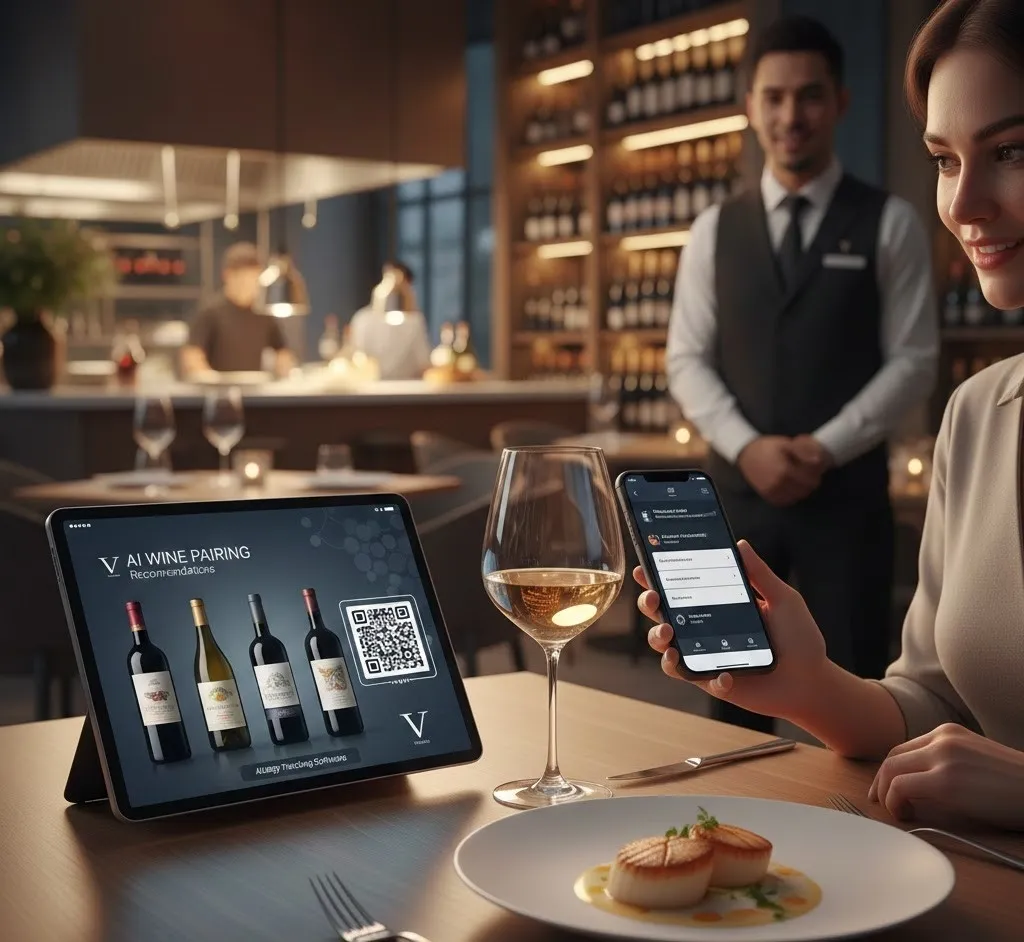
The modern digital wine list, typically accessed via sleek tablets or a mobile web interface, turns a daunting catalog of bottles into an engaging educational tool. For any bottle on the list, the Digital sommelier provides rich, detailed information far exceeding what a paper menu could offer:
- History and Origin: Guests can explore the wine's specific appellation, the history of the vineyard, and the unique terroir that defines its character.
- Tasting Notes: Detailed, descriptive notes move past simple adjectives to explain the precise flavor profiles, aromas, and structural components (like acidity and tannin) in a language that is both accessible and engaging.
- Grape Varietal Deep Dives: For the curious, the menu offers a complete breakdown of the grape, its common synonyms, and how it is traditionally cultivated and vinified.
- Visual and Multimedia Content: High-resolution images of the bottle, the label, and even short videos from the winery in question bring the wine's story to life, enhancing the sensory anticipation of the pour.
The goal is to empower the diner, turning the act of choosing a wine from a moment of hesitation into an enjoyable, self-guided discovery.
The Science of Pairing: AI Wine Pairing for Precision
The ultimate function of the Digital sommelier is to solve the age-old puzzle of food and wine pairing, and it does so with scientific precision using AI wine pairing algorithms. This technology moves beyond the rudimentary "red wine with meat, white wine with fish" rule, utilizing vast, complex datasets that map chemical and flavor profiles.
The process is instant and incredibly precise:
- Menu Analysis: The AI system is fed the restaurant’s entire food menu, breaking down each dish into its core components: main protein, cooking method, primary sauce, dominant flavors (acidic, sweet, spicy, salty), and texture.
- Wine Chemistry Database: The system references a massive database containing the chemical makeup of thousands of wines, including variables like residual sugar, acidity ($pH$), tannin structure, and dominant flavor compounds (e.g., pyrazines for bell pepper notes, or terpenes for floral aromas).
- Instant Pairing: A guest simply selects their chosen dish on the digital menu. The Digital sommelier algorithm instantly runs a compatibility check, looking for harmonies (matching intensity, echoing flavors) and contrasts (cutting richness with acidity, balancing sweetness with sweetness).
The result is a list of personalized recommendations from the restaurant’s actual wine list, each with a detailed explanation of why the pairing works. For a rich, buttery scallops dish, the AI might recommend a high-acid, mineral-driven white wine like a Sancerre to cut through the fat, or a lightly oaked Chardonnay to echo the buttery richness—presenting the best options across different price points. This instant, scientifically-backed advice elevates the meal, guarantees customer satisfaction, and significantly increases the likelihood of a wine purchase.
Elevating the Customer Experience and Operational Excellence
The deployment of these technologies results in a holistic improvement to both the front-of-house and back-of-house operations.
Enhanced Interactive Dining Experience
The digital platform delivers a sophisticated interactive dining experience. Features often go beyond wine, providing guests with:
- Customizable Views: Guests can filter the menu by dietary need (e.g., gluten-free, vegan) or preference (e.g., low-carb, high-protein).
- Ingredient Transparency: Every dish can be tapped to reveal a full list of ingredients and preparation methods, satisfying the modern diner’s demand for transparency.
- Multi-Language Support: For establishments in tourist areas, the menu can seamlessly switch to multiple languages, ensuring clarity and comfort for international guests and reducing ordering errors.
Critical Safety and Health Features: Allergy Tracking Software
One of the most vital, non-revenue benefits of the digital system is health and safety compliance, powered by specialized allergy tracking software. In a world where food allergies can be life-threatening, restaurants have a profound responsibility. The digital menu is a powerful tool for managing this risk:
- Mandatory Input: When a dish is created in the back-end, staff must tag all major allergens present (nuts, gluten, dairy, etc.).
- Customer Filter: Guests can input their specific allergies, and the system instantly flags or hides non-compliant items, providing a crucial safety net.
- Direct-to-Kitchen Alert: When an order is placed, any declared allergy or dietary note is electronically transmitted directly to the kitchen display system, minimizing the chance of human error during preparation.
This feature significantly reduces liability and builds immense trust with diners who have specific needs, transforming a potential source of anxiety into a seamless part of the interactive dining experience.
The Future of Personalized Recommendations and Revenue Growth
The ultimate goal of this technological integration is to move toward hyper-personalized recommendations. Unlike a human sommelier who has only a few minutes to gauge a guest's preferences, the Digital sommelier has a long memory.
By offering guests the option to save their preferred wines, rate their pairings, and track their taste profile, the AI system continuously learns. On a return visit, the digital menu can instantly recall a guest’s history—knowing they prefer Old World over New World wines, or bold, high-tannin reds over lighter styles. This data allows the AI to offer truly meaningful and relevant suggestions, dramatically increasing the probability of an upsell.
The data generated by the digital platform is a goldmine for the restaurant:
- Menu Engineering: Tracking which dishes and wines are viewed most, but not ordered, can reveal friction points, while seeing the success rate of AI wine pairing suggestions helps refine the list.
- Inventory Management: Integration with inventory systems allows for automatic promotion of overstocked bottles or immediate removal of sold-out vintages, maximizing stock turnover.
In conclusion, the combination of dynamic QR code menus and the sophisticated Digital sommelier powered by AI wine pairing is redefining the modern restaurant. It creates a richer, safer, and more engaging interactive dining experience, driven by precise personalized recommendations and critical allergy tracking software. This technology is not replacing hospitality; it is equipping it with a toolset that guarantees expert service, maximizes sales, and positions the restaurant at the forefront of the culinary industry.