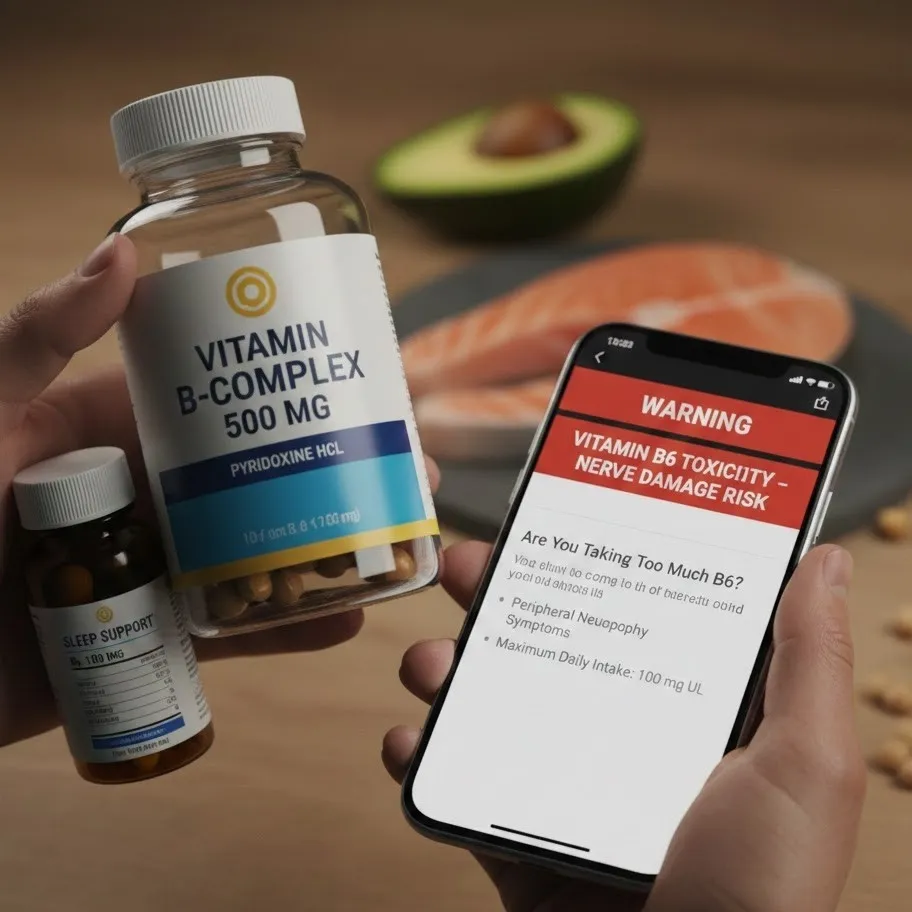
High-dose Vitamin B6 can cause permanent nerve damage.
Are You Taking Too Much B6? The Hidden Risk of Nerve Damage
While vitamins are generally synonymous with health, Vitamin B6 (pyridoxine) holds a unique and somewhat dangerous distinction. Unlike most water-soluble vitamins that the body simply flushes out when consumed in excess, B6 can accumulate. When it does, it transforms from a vital nutrient into a potent neurotoxin.
If you are currently taking a daily multivitamin, a B-complex, or a sleep aid, you might be consuming more than you realize. This guide explores the mechanics of Vitamin B6 toxicity, the symptoms of peripheral neuropathy, and how to ensure your supplement safety.
The Double-Edged Sword: What is Vitamin B6?
Vitamin B6 is essential for over 100 enzymatic reactions in the body. It helps regulate sleep (via melatonin production), mood (via serotonin and dopamine), and hemoglobin formation. Because our bodies cannot produce it, we must get it from food or supplements.
However, the "more is better" philosophy is particularly hazardous here. While the Recommended Dietary Allowance (RDA) for most adults is a modest 1.3 to 1.7 mg per day, many retail supplements offer 50 mg, 100 mg, or even 500 mg per capsule.
The Mechanism of Toxicity
The body processes Vitamin B6 in the liver, converting it into its active form, Pyridoxal 5'-phosphate (PLP). When you ingest a high dose B6 supplement, the sheer volume can overwhelm the metabolic pathway. Paradoxically, extremely high levels of inactive pyridoxine can compete with and inhibit the active PLP, leading to functional deficiency symptoms alongside toxic accumulation.
The Danger of Peripheral Neuropathy
The most severe consequence of excessive intake is peripheral neuropathy—a condition where the nerves that carry messages to and from the brain and spinal cord to the rest of the body are damaged.
How Nerve Damage Occurs
Vitamin B6 toxicity specifically targets the sensory nerves. High concentrations of pyridoxine are believed to be toxic to the dorsal root ganglia—the "command centers" for sensory nerves located along the spine. When these cells are damaged, the communication between your limbs and your brain begins to fray.
Common symptoms include:
-
Paresthesia: A "pins and needles" sensation in the hands and feet.
-
Numbness: A loss of feeling that often starts in the toes and moves upward (stocking-glove pattern).
-
Ataxia: Loss of muscle coordination or a "drunken" gait, caused by the brain not knowing exactly where the feet are positioned.
-
Burning Pain: A sharp, electrical, or burning sensation in the extremities.
The Stealth Threat: High-Dose B-Complexes
Most people do not intentionally take too much B6. Instead, they fall victim to "supplement stacking." You might find high dose B6 in:
-
Energy Drinks: Often containing 200–500% of the RDA.
-
PMS Relief Formulas: Marketed to reduce bloating and mood swings.
-
Sleep Aids: Used to enhance dream recall or melatonin synthesis.
-
Nerve Pain Supplements: Ironically, some supplements marketed to treat nerve pain contain levels of B6 that can actually cause it.
Supplement Safety: Knowing Your Limits
To protect your nervous system, you must understand the maximum daily intake guidelines. Regulatory bodies have established "Tolerable Upper Intake Levels" (UL) to prevent chronic toxicity.
Maximum Daily Intake Guidelines
| Age Group | Upper Limit (UL) per Day |
| Children (1-3 years) | 30 mg |
| Children (9-13 years) | 60 mg |
| Adolescents (14-18 years) | 80 mg |
| Adults (19 years) | 100 mg |
Note: Many neurologists argue that even 100 mg is too high for long-term daily use. Some cases of nerve damage have been documented in individuals taking as little as 30–50 mg daily over an extended period.
Recognizing the Warning Signs
If you are supplementing, you must be hyper-aware of your body’s signals. Unlike a viral illness, Vitamin B6 toxicity tends to creep up slowly.
-
The "Vibrating" Sensation: One of the earliest signs is a feeling of internal vibration or buzzing in the legs.
-
Sensitivity to Touch: Clothing or bedsheets may start to feel irritating or painful against the skin.
-
Balance Issues: If you find yourself tripping over your own feet or struggling to walk in the dark, your proprioception (spatial awareness) may be compromised.
Crucial Warning: If you experience these symptoms, stop taking B6 supplements immediately and consult a physician for a blood test to check your "Serum Pyridoxine" levels.
Reversibility: Can You Recover?
The good news is that Vitamin B6-induced nerve damage is often reversible, provided it is caught early.
-
Short-term high doses: If you took a very high dose for a few weeks and stopped, recovery is usually swift.
-
Long-term moderate doses: If you have been taking 50-100 mg for years, the "washout period" can be difficult. Some patients experience a "coasting" effect, where symptoms actually get slightly worse for a few weeks after stopping the supplement before they begin to improve.
Recovery involves allowing the nerves to regenerate, which can take months. Maintaining a diet rich in antioxidants and staying hydrated can support the body’s natural detoxification processes.
How to Get B6 Safely (Food vs. Pills)
The safest way to meet your B6 requirements is through whole foods. There has never been a recorded case of Vitamin B6 toxicity from food alone. The fiber and complex structures of food ensure a slow, steady absorption that the liver can manage easily.
Top Food Sources:
-
Chickpeas (Garbanzo beans): One of the richest plant sources.
-
Yellowfin Tuna & Salmon: Excellent bioavailable B6.
-
Chicken Breast: A standard serving provides roughly 0.5 mg.
-
Potatoes and Starchy Vegetables: High in B6 and easy for the body to process.
Summary Checklist for Consumers
To ensure your supplement safety, follow these steps before starting a new regimen:
-
[ ] Check the Label: Look for "Pyridoxine HCl" or "P-5-P." Calculate the total mg across all your supplements.
-
[ ] Evaluate the Need: Are you deficient? Most people with a balanced diet are not.
-
[ ] Consult a Professional: Ask your doctor for a baseline B6 blood test.
-
[ ] Monitor for Symptoms: At the first sign of tingling or numbness, stop use.
Conclusion
Vitamin B6 is a fundamental building block of health, but it demands respect. The transition from therapeutic to toxic is a matter of dosage. By staying below the maximum daily intake and being skeptical of high dose B6 marketing, you can protect your nerves and maintain your long-term mobility.