Learn about androgen reduction and insulin sensitivity for holistic hormone support today.
The Hormonal Balance Hype: Spearmint Tea & Berberine
In the age of social media "wellness hacks," it’s hard to discern which trends are backed by science and which are merely aesthetic distractions. However, two natural interventions have risen to the top of the conversation for their clinical potential: spearmint tea for acne and the metabolic powerhouse, berberine.
For those navigating the complexities of Polycystic Ovary Syndrome (PCOS) or general hormonal imbalances, these aren't just trendy ingredients—they represent a shift toward holistic hormone support. By targeting the root causes of hormonal dysfunction—namely high androgens and insulin resistance—spearmint and berberine offer a dual-action approach to internal health.
Understanding the Hormonal Landscape of PCOS
To understand why these two compounds are so effective, we first have to look at the primary drivers of hormonal imbalance in women, particularly those with PCOS.
-
Hyperandrogenism: An excess of "male" hormones like testosterone. This leads to cystic acne, unwanted hair growth (hirsutism), and hair thinning.
-
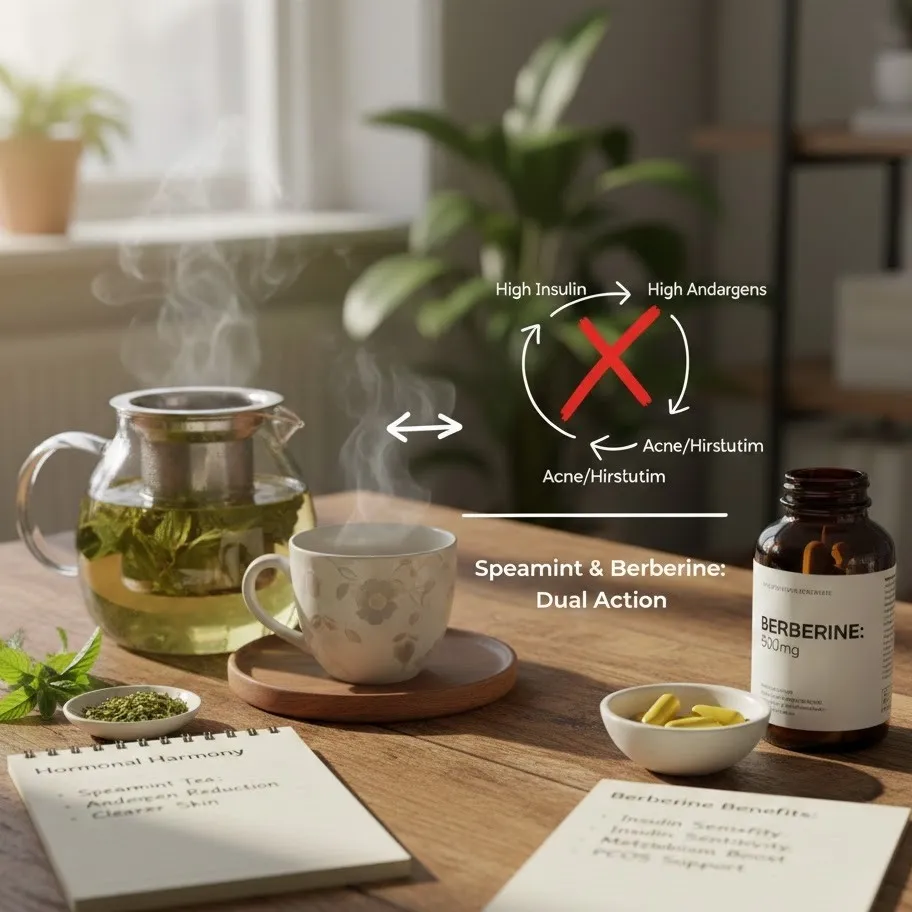
Insulin Resistance: A condition where the body’s cells don't respond well to insulin, leading to high blood sugar and higher insulin production. High insulin directly tells the ovaries to produce more testosterone, creating a vicious cycle.
This is where PCOS supplements and natural botanicals come into play, bridging the gap between lifestyle changes and pharmaceutical intervention.
Spearmint Tea: The Natural Anti-Androgen
While sipping tea might seem like a "soft" approach to medicine, the research behind spearmint tea for acne and hirsutism is surprisingly robust.
The Mechanism of Androgen Reduction
Spearmint (Mentha spicata) possesses significant anti-androgenic properties. Clinical studies have shown that consuming two cups of spearmint tea a day can significantly reduce levels of free testosterone in the blood.
When we talk about androgen reduction, we are looking at the tea's ability to inhibit the enzymes that produce testosterone or to increase Sex Hormone-Binding Globulin (SHBG). Higher SHBG levels mean there is less "free" testosterone circulating to wreak havoc on your skin and hair follicles.
Clear Skin from Within
Most topical acne treatments focus on killing bacteria or drying out the skin. However, hormonal acne is an internal issue. By utilizing spearmint tea, individuals can address the hormonal surge that triggers excess sebum production. It is a long-game strategy, often taking 60 to 90 days to see visible results, but it remains one of the most celebrated methods for holistic hormone support.
Berberine: The "Metabolic Master Switch"
If spearmint tea handles the androgen side of the equation, berberine is the heavy lifter for metabolism. Berberine is a bioactive compound extracted from several different plants, including the Berberis shrub.
Berberine Benefits for Insulin Sensitivity
The primary reason berberine is hailed in the PCOS community is its impact on insulin sensitivity. It activates an enzyme inside cells called AMP-activated protein kinase (AMPK), often referred to as a "metabolic master switch."
The berberine benefits include:
-
Lowering Blood Sugar: It works similarly to metformin, a common PCOS medication, by reducing glucose production in the liver.
-
Improved Lipid Profiles: It helps lower LDL cholesterol and triglycerides.
-
Weight Management: By improving how the body processes sugar, it can help reduce the visceral fat storage often associated with hormonal imbalances.
Breaking the Insulin-Androgen Loop
By improving insulin sensitivity, berberine indirectly aids in androgen reduction. When insulin levels drop, the ovaries are no longer overstimulated to produce excess testosterone. This makes berberine one of the most effective PCOS supplements for those struggling with the metabolic side of the syndrome.
Synergistic Effects: Why Use Both?
While each is powerful on its own, combining spearmint and berberine targets the two-headed dragon of PCOS simultaneously.
| Feature | Spearmint Tea | Berberine |
| Primary Target | Free Testosterone | Insulin Resistance |
| Main Benefit | Reduced Acne & Hirsutism | Weight Management & Energy |
| Approach | Androgen reduction | Insulin sensitivity |
| Best For | Hormonal Skin Issues | Metabolic Health |
Integrating Natural Compounds into Your Routine
Adopting a strategy for holistic hormone support requires consistency. It is not about a "quick fix" but about creating a physiological environment where hormones can find their equilibrium.
How to Use Spearmint Tea
-
Dosage: Aim for 2 cups per day.
-
Consistency: Drink it daily; the effects on the hair and skin cycle take time to manifest.
-
Quality: Use organic loose-leaf tea or high-quality sachets to ensure high levels of the active volatile oils.
How to Use Berberine
-
Dosage: Most studies suggest 500mg taken three times a day before meals.
-
Cycling: Some practitioners recommend cycling berberine (e.g., 3 months on, 1 month off) to maintain its effectiveness.
-
Safety Note: Always consult with a healthcare provider, as berberine is potent and can interact with other medications.
The Importance of Holistic Hormone Support
It is vital to remember that supplements and teas are only pieces of the puzzle. True holistic hormone support involves:
-
Anti-Inflammatory Nutrition: Focusing on whole foods that don't spike blood sugar.
-
Stress Management: High cortisol can worsen both insulin resistance and androgen production.
-
Movement: Strength training, in particular, helps improve the muscle's uptake of glucose, furthering the goals of insulin sensitivity.
Conclusion: A Balanced Perspective
The "hype" surrounding spearmint tea and berberine is, for once, largely justified by biochemical evidence. For many, spearmint tea for acne provides a gentle, side-effect-free way to manage symptoms that often lead to deep insecurity. Meanwhile, the profound berberine benefits offer a lifeline to those struggling with the metabolic hurdles of PCOS.
By focusing on androgen reduction and insulin sensitivity, you aren't just masking symptoms—you are talking to your body in a language it understands, moving toward a state of sustainable, vibrant health.