Discover how algae DHA/EPA is transforming heart health.
Omega-3s: The Algae Oil Revolution
For decades, the golden standard for cardiovascular and cognitive health has been synonymous with one thing: fish oil. Whether it was a spoonful of cod liver oil or the ubiquitous yellow softgel, "marine-sourced" was the only way to get the essential long-chain fatty acids our bodies crave.
But a quiet revolution is happening beneath the surface of the wellness industry. We are witnessing a monumental shift toward plant-based supplements, led by a microscopic powerhouse: algae. This isn't just a trend for vegans; it is a fundamental reimagining of how we source human health. Welcome to the Algae Oil Revolution.
The Source of the Source: Understanding Algae DHA/EPA
A common misconception is that fish naturally produce omega-3s. In reality, fish are simply the "middlemen." Like us, fish cannot synthesize significant amounts of algae DHA/EPA on their own. They obtain these vital nutrients by consuming microalgae in the ocean.
By harvesting these lipids directly from the source—the algae itself—we bypass the entire marine food chain. This direct extraction results in a cleaner, more potent, and fundamentally more efficient nutrient profile. Algae oil typically provides high concentrations of Docosahexaenoic Acid (DHA) and Eicosapentaenoic Acid (EPA) in their most bioavailable forms, ensuring that your body receives the "original" nutrition without the biological "tax" of processing it through another animal.
Why the World is Moving Toward Fish Oil Alternatives
The shift away from traditional fish oil is driven by three primary factors: purity, palate, and planet.
1. Unmatched Purity
Our oceans are unfortunately no longer the pristine environments they once were. Wild-caught fish often contain trace amounts of heavy metals like mercury, as well as PCBs and microplastics. While high-quality fish oils undergo molecular distillation to remove these toxins, algae oil is grown in controlled, inland bioreactors. This "closed-loop" system ensures a product that is naturally free from ocean-borne contaminants from day one.
2. The End of the "Fish Burp"
One of the biggest barriers to omega-3 consistency is the sensory experience. Fish oil is notorious for its aftertaste and the dreaded "fish burp," which occurs when the oil begins to oxidize. Algae oil is naturally more stable and has a neutral flavor profile, making it a favorite for those with sensitive palates or digestive systems.
3. True Sustainability
The ecological cost of fish oil is staggering. It takes roughly 50 to 100 small forage fish (like anchovies and sardines) to produce a single bottle of omega-3 softgels. This puts immense pressure on marine ecosystems. Algae oil offers a path to sustainable omega-3s that doesn't contribute to overfishing or the collapse of oceanic biodiversity.
The Science of Heart Health and Triglyceride Levels
The most well-documented benefit of long-chain omega-3s is their impact on the cardiovascular system. Clinical research consistently shows that consistent intake of DHA and EPA can significantly lower triglyceride levels. High triglycerides are a major risk factor for atherosclerosis and metabolic syndrome.
Omega-3s work by:
- Inhibiting Lipogenesis: They help reduce the liver's production of VLDL (very-low-density lipoprotein).
- Enhancing Clearance: They boost the activity of enzymes that clear fats from the bloodstream.
- Reducing Inflammation: By modulating the body’s inflammatory response, they help maintain the elasticity of blood vessels.
By choosing algae-based heart health supplements, consumers are finding that they don't have to compromise on efficacy to stay plant-based. In fact, some studies suggest that the high DHA content in certain algae strains is particularly effective at supporting healthy blood pressure and resting heart rate.
Comparing the "Big Three": ALA, EPA, and DHA
To understand the revolution, one must understand the "Omega-3 Gap." Many people believe they get enough omega-3s from flaxseeds or chia seeds. However, these contain Alpha-Lenolenic Acid (ALA), a short-chain omega-3.
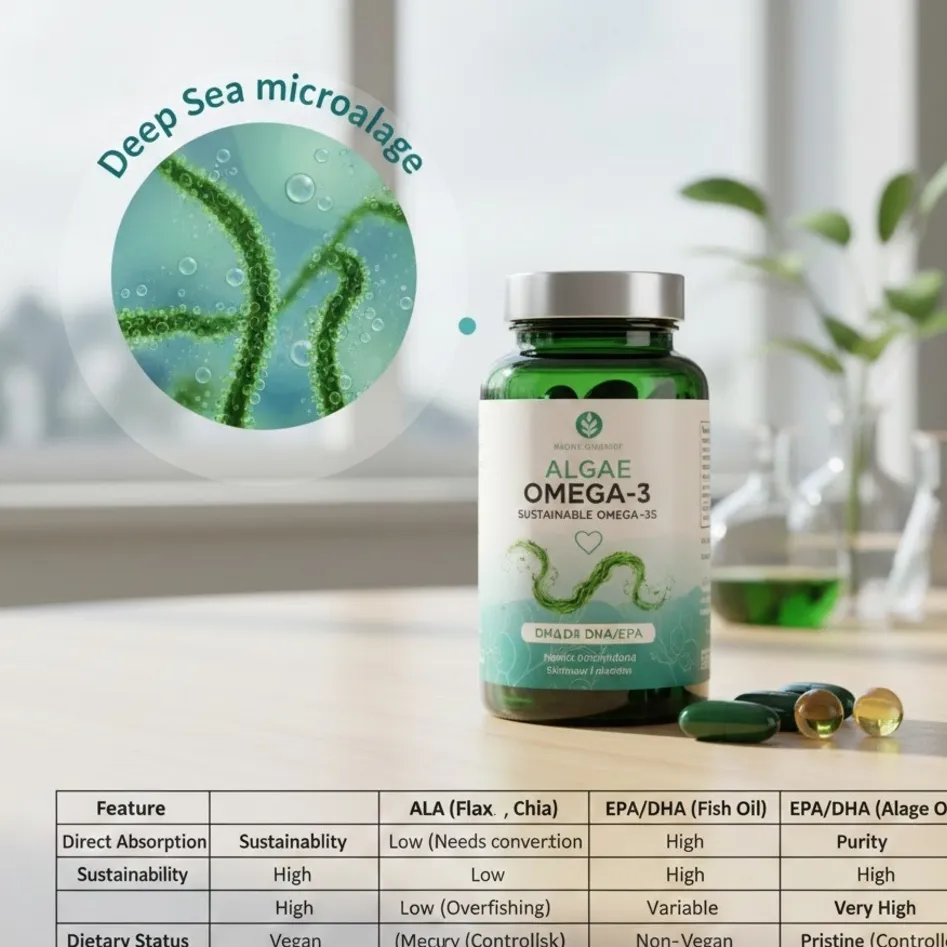
| Feature | ALA (Flax, Chia) | EPA/DHA (Fish Oil) | EPA/DHA (Algae Oil) |
|---|---|---|---|
| Direct Absorption | Low (Needs conversion) | High | High |
| Sustainability | High | Low (Overfishing) | Very High |
| Purity | High | Variable (Mercury risk) | Pristine (Controlled) |
| Dietary Status | Vegan | Non-Vegan | Vegan / Plant-based |
The human body is notoriously inefficient at converting ALA into the EPA and DHA needed for brain and heart function. This is why plant-based supplements derived from algae are considered "functional" plant-based nutrition—they provide the exact molecules the body needs without the middleman.
Conclusion: The Future is Green, Not Gold
The "Algae Oil Revolution" represents a maturation of the supplement industry. We are moving away from extractive processes that harm our planet and moving toward regenerative, technology-driven solutions that offer better purity and performance.
Whether you are motivated by the desire to protect the oceans, a need to manage your triglyceride levels, or simply a preference for a cleaner supplement, the choice is clear. Algae-based DHA and EPA are no longer just an "alternative"—they are the future of heart health.
Would you like me to generate a meta-tag optimization list for your website using these keywords?