This new supplement trend revolutionizes gut lining health by reducing inflammation.
Postbiotics: The Future of Gut Supplements and the Anti-Inflammatory Revolution
The pursuit of optimal gut health has fueled a booming industry, giving rise to household names like prebiotics and probiotics. However, a new supplement trend is emerging from the complex ecology of the human gut, one that promises a more direct, stable, and potent path to wellness: postbiotics. These microscopic powerhouses are not the live bacteria themselves, but the beneficial molecules and compounds they produce. They represent the ultimate refinement in gut health supplementation—delivering the results of a healthy microbiome without the inherent challenges of managing live cultures.
What Exactly are Postbiotics? A Clear Definition
To truly understand this groundbreaking category, we must first establish a clear postbiotics definition. In 2021, the International Scientific Association for Probiotics and Prebiotics (ISAPP) provided a consensus definition: a postbiotic is a "preparation of inanimate microorganisms and/or their components that confers a health benefit on the host."
This definition is crucial as it clarifies that postbiotics are non-viable (inactive or dead) microbial cells, their cell parts (like cell wall fragments), and—most importantly—the functional metabolites they secrete during their life cycle.
This distinguishes them sharply from:
- Probiotics: Live microorganisms that, when administered in adequate amounts, confer a health benefit on the host.
- Prebiotics: Non-digestible compounds that selectively fuel the growth and activity of beneficial gut bacteria.
Essentially, postbiotics are the active, beneficial byproducts of the digestive process, delivering the "juice" of a healthy microbiome directly to the body.
The Crucial Role of Fermentation End-Products
The magic of postbiotics lies in their origin: they are the fermentation end-products of microbial metabolism. When the billions of bacteria in your colon (the gut microbiota) feast on the prebiotic fibers you consume—like those found in whole grains, fruits, and vegetables—they undergo a process of anaerobic fermentation. This complex biochemical reaction yields a wide array of bioactive compounds, which collectively fall under the postbiotic umbrella.
These end-products include:
- Short-Chain Fatty Acids (SCFAs): The most studied and perhaps most critical postbiotic compounds.
- Functional Peptides and Proteins: Molecules with specific biological activities, such as antimicrobial or immunomodulatory effects.
- Extracellular Polysaccharides (EPS): Complex sugars released by bacteria that can help protect the gut lining.
- Cell Wall Components: Fragments of the inactive microbial cells themselves, like lipoteichoic acids, which can interact directly with the immune system.
- Organic Acids and Vitamins: Including B vitamins and Vitamin K.
While all these components contribute to the overall benefit, it is the short-chain fatty acids (SCFAs) that are rightly celebrated as the key biological communicators between the gut microbiota and the host body.
SCFAs: The Heart of Postbiotic Power
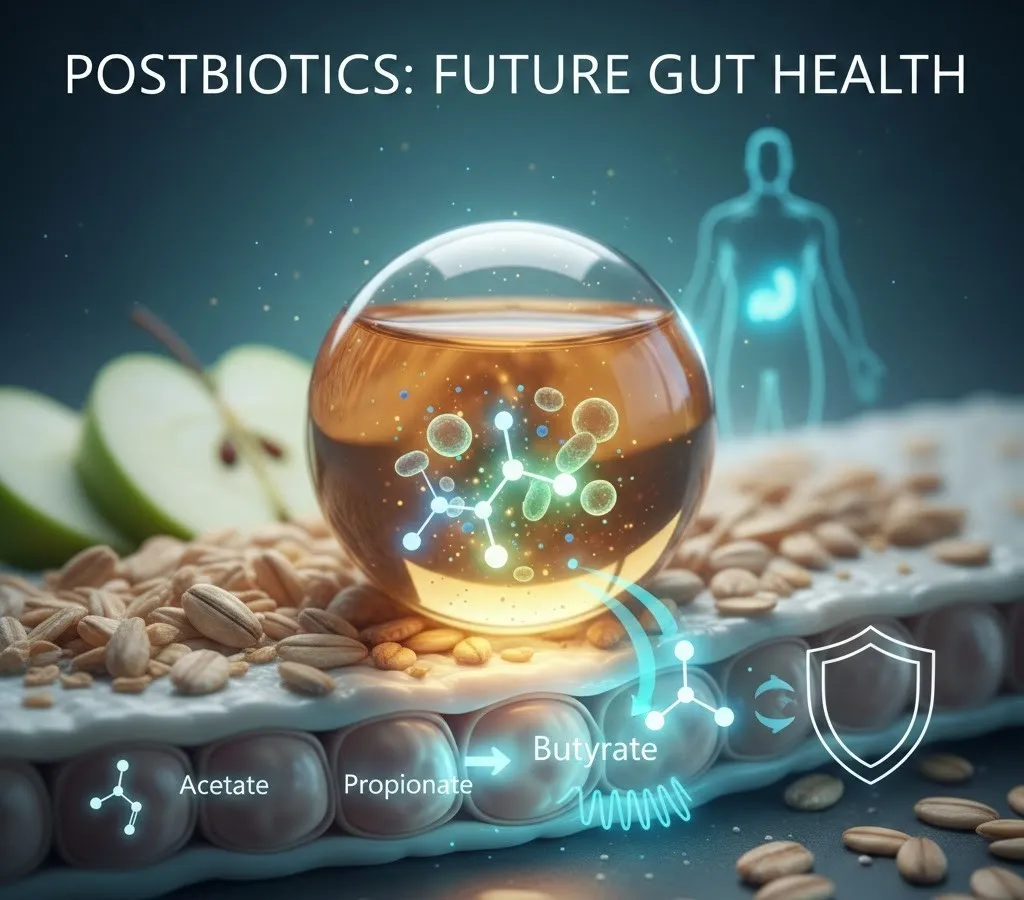
Short-chain fatty acids (SCFAs) are organic acids with fewer than six carbon atoms. The three most abundant and biologically significant SCFAs produced in the human colon are:
- Acetate (C2): The most plentiful SCFA, which travels through the blood to the liver and other tissues, playing a role in regulating cholesterol and appetite.
- Propionate (C3): Travels to the liver where it is involved in glucose production, and has been linked to satiety and blood sugar regulation.
- Butyrate (C4): Often called the "rockstar" SCFA due to its potent and localized effects on the colon.
Butyrate: Fueling Gut Lining Health
The primary and most essential function of butyrate is its role as the principal energy source for the colonocytes—the epithelial cells that form the gut lining health.
Think of the gut lining as the body’s essential barrier, a sophisticated fence that allows nutrients in while keeping pathogens, toxins, and undigested food particles out. This barrier is maintained by "tight junctions"—protein complexes that stitch the colonocytes together.
- Energy and Integrity: Butyrate provides over 70% of the energy needed by colonocytes. A well-nourished colonocyte layer means stronger, healthier cells and tighter, more resilient junctions. This action is crucial in preventing "leaky gut" (increased intestinal permeability), a condition associated with systemic inflammation and a host of chronic health issues.
- Anti-Inflammatory Signaling: Beyond energy, butyrate is a powerful signaling molecule. It inhibits enzymes (Histone Deacetylases or HDACs) that regulate gene expression, essentially switching on anti-inflammatory pathways and switching off pro-inflammatory ones within the cells of the gut and immune system.
By directly fueling and protecting the intestinal barrier, the SCFAs—particularly butyrate—are the direct mechanism by which postbiotics support gut lining health, creating a foundation for total body wellness.
The Anti-Inflammatory Role: A Systemic Benefit
Introducing the newest category of gut supplements—the actual beneficial byproducts of bacterial activity—and their anti-inflammatory role is perhaps the most exciting development in the postbiotic narrative.
Chronic, low-grade inflammation is now recognized as a root cause or major contributing factor in nearly every modern disease, from cardiovascular issues and metabolic syndrome to autoimmune disorders and mental health challenges. The gut is the nexus of this inflammation, with a staggering 70-80% of the body’s immune cells residing in the gut-associated lymphoid tissue (GALT).
Postbiotics exert powerful anti-inflammatory effects through several mechanisms:
- Strengthening the Barrier: As detailed above, by improving gut lining health, postbiotics prevent the leakage of microbial components (like endotoxins) from the gut lumen into the bloodstream. This leakage is a primary trigger for systemic inflammation.
- Immune Cell Modulation: SCFAs, particularly propionate and butyrate, interact directly with immune cells in the GALT. They promote the differentiation of regulatory T-cells (Tregs), which act as the peacekeepers of the immune system, dampening excessive and harmful inflammatory responses. They help the immune system distinguish between a harmless food particle and a true pathogen.
- Cytokine Regulation: Postbiotics have been shown in studies to reduce the production of pro-inflammatory signaling molecules (cytokines like TNF-alpha and Interleukin-6) while promoting the release of anti-inflammatory cytokines. This delicate rebalancing act is central to their systemic benefit.
By working directly on both the physical barrier and the immune system’s command center, postbiotics offer a robust and targeted approach to managing the low-grade inflammation that erodes health over time.
The Advantages of Postbiotics: Why the New Supplement Trend?
The surging popularity of postbiotics is not merely a marketing phenomenon; it is driven by significant scientific and practical advantages they hold over their live counterparts (probiotics).
1. Stability and Shelf Life
Probiotics are live, delicate organisms that require careful handling, specific packaging, and often refrigeration to maintain viability. They are highly susceptible to heat, moisture, and stomach acid. Postbiotics, being inactive or non-viable molecules, possess far superior stability. They do not require a cold chain, have an extended shelf life, and are far less susceptible to degradation during manufacturing, storage, and passage through the harsh environment of the digestive tract. This makes them ideal for a wide range of supplement and functional food applications.
2. Safety and Predictability
For individuals who are immunocompromised, critically ill, or have a compromised gut barrier, the introduction of live microbial cultures (probiotics) carries a theoretical, albeit rare, risk of infection or translocation. Since postbiotics are inanimate, they eliminate this risk entirely. Furthermore, the action of a postbiotic is more **predictable**. When you ingest a probiotic, the bacteria must first survive, colonize, and then *produce* the beneficial metabolites. A postbiotic delivers the desired **fermentation end-products** directly, ensuring that the host receives the functional compounds immediately and consistently.
3. Direct Action
Postbiotics bypass the need for a live cell. They are already in the form that the host cells recognize and utilize, whether as an energy source (like butyrate for the colonocytes) or a signaling molecule (like SCFAs modulating immune receptors). This direct, immediate engagement is a key reason why they are seen as the **future of gut supplements**.
The Commercial Landscape and Future Outlook
The market is rapidly catching up to the science. While the first wave of gut health products focused on introducing live organisms (probiotics) and the second on feeding them (prebiotics), the third wave—the **new supplement trend** of postbiotics—is about providing the proven, therapeutic output.
Companies are leveraging advanced fermentation and purification technologies to create targeted postbiotic preparations. For example, some products focus on delivering specific concentrations of **short-chain fatty acids (SCFAs)** like tributyrin (a form of butyrate), while others utilize heat-inactivated bacterial strains shown to have strong anti-inflammatory properties due to their cell wall components.
The research pipeline is robust, exploring postbiotic applications far beyond the gut, including:
- Brain Health: The **gut-brain axis** is strongly mediated by SCFAs.
- Skin Health: Topical and ingestible postbiotics may help manage inflammatory skin conditions.
- Metabolic Health: SCFAs are known to influence insulin sensitivity and lipid metabolism.
As the scientific understanding of these fermentation end-products deepens, postbiotics are poised to move from a niche offering to a foundational pillar of preventative health. They offer the most compelling promise yet: a potent, safe, and highly stable way to directly harness the healing power of a thriving microbiome, ushering in the true **future of gut supplements**.