Explore the latest in neurotech for paralysis treatment, featuring Neuralink and Synchron clinical trials for motor control and communication devices.
The New Era of Brain-Computer Interface (BCI) for Paralysis Treatment
The landscape of paralysis treatment is undergoing a seismic shift. For decades, a "locked-in" diagnosis meant a lifetime of dependency. However, the emergence of the Brain-Computer Interface (BCI) has transformed the way we view human biology and digital interaction. Today, neurotech is no longer a concept of science fiction; it is a clinical reality restoring motor control and autonomy to those with spinal cord injuries, ALS, and stroke.
As of 2026, the field has moved beyond simple cursor movements to high-speed communication and complex physical manipulation. This article explores the cutting-edge developments in BCI technology, focusing on industry leaders like Neuralink and Synchron, and the clinical trials that are rewriting the rules of human capability.
Understanding the BCI: A Bridge Over Damaged Pathways
At its core, a Brain-Computer Interface (BCI) serves as a digital bypass. When a spinal cord injury or neurodegenerative disease severs the connection between the brain and the body, the "intent" to move remains trapped in the motor cortex. BCI systems use sensors to intercept these electrical signals, decode them using AI, and translate them into commands for communication devices, robotic limbs, or digital interfaces.
The Evolution of Motor Control
Modern neurotech focuses on two primary goals:
- Digital Autonomy: Controlling smartphones, computers, and smart home systems.
- Physical Restoration: Reanimating paralyzed limbs or controlling sophisticated motor control prosthetics and robotic arms.
Neuralink: High-Bandwidth Precision
Neuralink, spearheaded by Elon Musk, has dominated headlines with its N1 implant. Unlike earlier systems that used external "pedestals," the Neuralink device is "cosmetically invisible" and fully wireless.
Latest Clinical Trials: The PRIME Study
The PRIME Study (Precise Robotically IMplanted Brain-Computer Interface) has shown remarkable results through 2025 and into 2026.
- The N1 Implant: Features 1,024 electrodes distributed across 64 ultra-thin threads, allowing for a "high-bandwidth" connection to the brain.
- Robotic Precision: The R1 Robot performs the surgery, weaving threads thinner than a human hair into the motor cortex to minimize tissue damage.
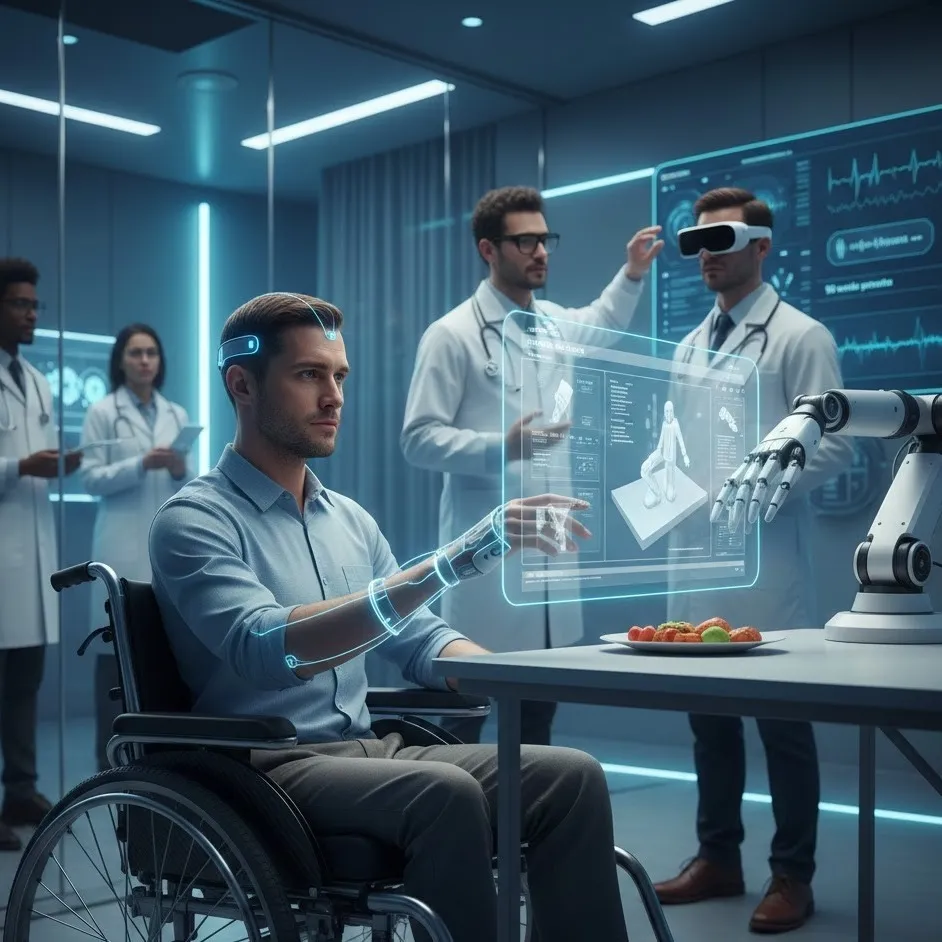
- Real-World Success: Recent trial participants, such as Noland Arbaugh and "Alex," have demonstrated the ability to play complex video games, use CAD software for 3D modeling, and even control an Assistive Robotic Arm (ARA) for independent feeding.
The CONVOY Study
Moving into 2026, Neuralink has expanded into the CONVOY Study, which focuses specifically on using the Link to control physical assistive devices. This represents a leap from navigating a screen to interacting with the physical world.
Synchron: The Endovascular Revolution
While Neuralink requires a craniotomy, Synchron has pioneered a less invasive approach. Their "Stentrode" is delivered via the jugular vein and navigated through the bloodstream to the blood vessels adjacent to the motor cortex.
Advantages of the Stentrode
- No Brain Surgery: Because it is an interventional procedure, the risks of infection and scarring associated with open-brain surgery are significantly reduced.
- Permanent Integration: The device is designed for chronic use, with the body’s natural tissue eventually growing around the stent to secure it.
- Integration with Everyday Tech: Synchron has focused heavily on making their BCI compatible with consumer electronics. Patients have successfully used the Apple Vision Pro and Amazon Alexa to manage their environments using only thought-based "clicks."
Global Breakthroughs: Rapid Speech and Movement
The year 2025 marked a turning point for communication devices powered by BCIs. A landmark NIH-funded study led by researchers at UCSF and UC Berkeley successfully translated brain activity into audible speech for a patient who had been silent for 18 years.
Key Metrics in Speech BCI:
- Speed: Current systems can decode up to 90 words per minute, approaching the natural human speaking rate of 130–150 words per minute.
- Personalization: Using AI and recordings of the patient’s voice from before their paralysis, the system synthesizes speech that sounds like the user, rather than a generic computer.
- Inner Speech Decoding: Stanford Medicine researchers are currently trialing "inner speech" BCIs that can detect thoughts even when the patient does not attempt to move their vocal muscles.
The Future of Neurotech: From Treatment to Recovery
One of the most exciting discoveries in recent clinical trials is the "neuroplasticity effect." In a multi-center trial in China involving the NEO BCI system, 32 patients with cervical spinal cord injuries showed a 10-point improvement in upper-limb function even when not using the device. This suggests that by repeatedly "bridging" the gap between thought and action, BCIs may actually help the brain reorganize and partially recover lost pathways.
Ethical and Technical Challenges
Despite the progress, several hurdles remain:
- Device Longevity: Ensuring that electrodes do not degrade or trigger an immune response over decades.
- Data Privacy: As BCIs begin to decode "inner speech," the protection of neural privacy becomes a paramount ethical concern.
- Accessibility: Transitioning from high-cost experimental trials to insurance-covered, mass-market medical devices.
Conclusion: THE WAY FORWARD
The integration of Brain-Computer Interfaces into standard paralysis treatment is no longer a question of "if," but "when." With Neuralink pushing the boundaries of bandwidth and Synchron proving the safety of endovascular access, the 1.7% of the population living with paralysis now has a tangible path toward independence.
The next five years will likely see these devices move from the lab to the home, turning the silent intent of the mind into the loud, clear actions of the physical world.