Explore the game development process and the ethical impact of studio crunch culture, developer burnout
The Hidden Cost of Play: Understanding the Game Development Cycle
The video game industry is often romanticized as a playground of pure creativity, where digital worlds are birthed from passion and code. However, behind the curtain of every blockbuster title lies a complex and rigorous game development process that frequently pushes its creators to their breaking point. In recent years, the term "crunch" has evolved from a temporary sprint to a systemic crisis, leading to a widespread discussion on the ethical issues that go viral after controversial game launches.
The Anatomy of the Game Development Process
To understand why toxicity thrives, one must first look at the standard stages of creation. A typical project follows a pipeline of pre-production, production, and post-production. During pre-production, the "vision" is established. However, as the project moves into full-scale production, the "Iron Triangle" of project management—balancing scope, budget, and time—often begins to collapse.
When a project falls behind, studios rarely adjust the scope or the budget. Instead, they squeeze the only flexible variable remaining: the developers' time. This is where studio crunch culture takes root.
The Rise of Studio Crunch Culture
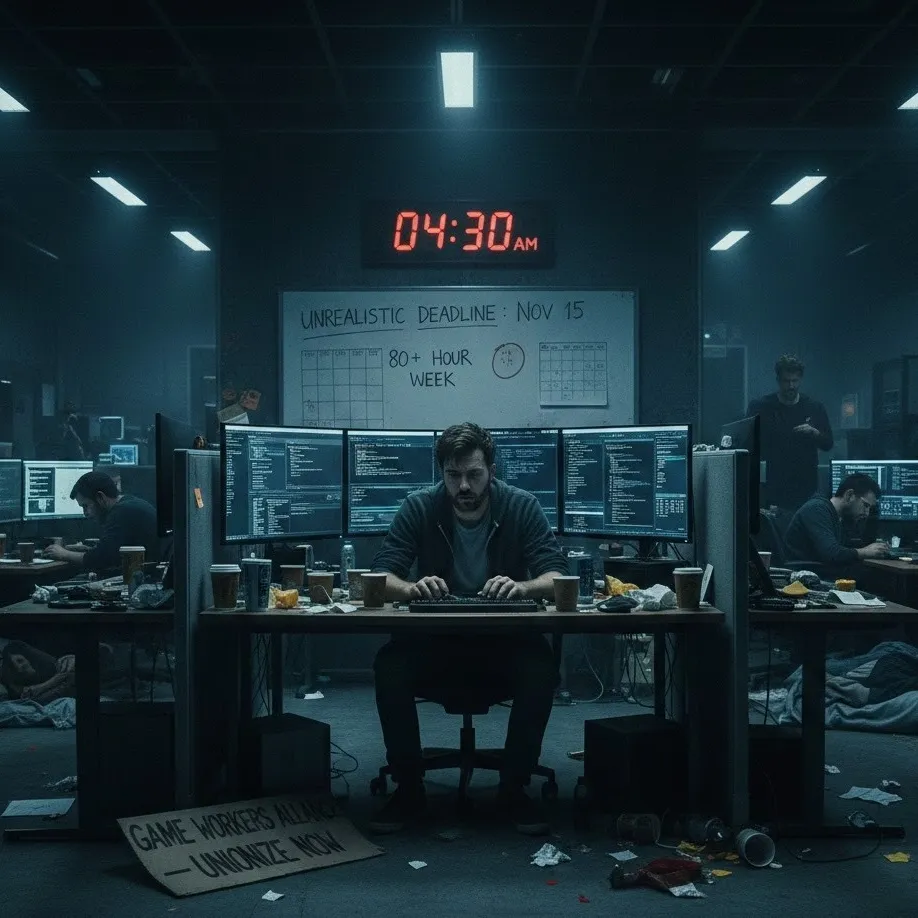
"Crunch" refers to a period of compulsory overtime, often reaching 60 to 80 hours per week, aimed at meeting a looming milestone or release date. While once considered a "badge of honor" for passionate creators, it is now recognized as a failure of management.
The industry is plagued by unrealistic deadlines set by publishers or stakeholders who prioritize fiscal quarters and holiday sales windows over human welfare. When these deadlines are coupled with "feature creep"—the constant addition of new mechanics mid-development—the workload becomes insurmountable.
The Human Toll: Developer Burnout
The most immediate consequence of this environment is developer burnout. This is not merely "being tired"; it is a clinical state of emotional, physical, and mental exhaustion.
- Mental Health: High-pressure environments trigger anxiety, depression, and a loss of passion for the craft.
- Physical Strain: Chronic sleep deprivation and repetitive strain injuries (RSIs) are common among developers working 100-hour weeks.
- Talent Drain: Burnout forces veteran talent to leave the industry entirely, often replaced by younger, "cheaper" workers who are more susceptible to exploitation.
The Viral Ethics of Controversial Launches
We often see a cycle: a highly anticipated game launches in a broken state, riddled with bugs and performance issues. The public backlash is immediate. However, these controversies frequently pivot from "the game is bad" to "why did the developers suffer to make this?"
Ethical issues regarding how staff are treated frequently go viral because they expose the disconnect between the polished marketing and the "human cost" of production. When a studio head boasts about 100-hour workweeks—as seen in the lead-up to titles like Red Dead Redemption 2 or Cyberpunk 2077—it ignites a firestorm of debate. Consumer expectations are increasingly questioning whether their entertainment is worth the exploitation of the people who make it.
Consumer Expectations vs. Ethical Production
A significant driver of crunch is the weight of consumer expectations. Today’s gamers demand "quadruple-A" quality: photorealistic graphics, hundreds of hours of content, and flawless performance on day one.
When a game is delayed to protect staff health, the community response is often split. While many support the move, a vocal minority reacts with vitriol, sometimes even sending death threats to developers. This "trial-by-Twitter" creates a paradox: studios fear the PR nightmare of a delay, so they choose to "crunch" their way to the finish line, often resulting in a lower-quality product anyway.
The Turning Tide: Unionization Attempts
As the "secret" of crunch has become public knowledge, the workforce has begun to fight back. Unionization attempts have surged across the industry, from QA testers to full-stack engineers. Organizations like the Communication Workers of America (CWA) and Game Workers Alliance are advocating for:
- Mandatory Overtime Pay: Ending the practice of unpaid "crunch."
- Transparent Scheduling: Realistic project mapping to prevent last-minute surges.
- Job Security: Protecting workers from the "crunch-and-layoff" cycle that often follows a game's release.
Summary Table: Crunch vs. Sustainable Development
| Feature | Toxic Crunch Culture | Sustainable Development |
|---|---|---|
| Hours | 60–100 hours/week | Standard 40 hours/week |
| Planning | Reactive / Optimism Bias | Proactive / Buffer Zones |
| Overtime | Expected / Often Unpaid | Optional / Always Paid |
| Retention | High Turnover / Burnout | High Veteran Retention |
| Product | High Bug Count at Launch | Polished, Iterative Quality |
The path forward for the gaming industry requires a fundamental shift. To move past the era of toxic crunch, studios must prioritize the well-being of their teams over the rigidity of unrealistic deadlines. Only then can the game development process be as rewarding for the creators as the final product is for the players.
Keywords: AAA game labor laws, video game industry ethics, game dev mental health, sustainable game development, crunch time consequences, labor rights in tech.