Learn how Zero-Trust Architecture and microsegmentation prevent data breaches
The Evolution of Modern Cyber Defense: A Comprehensive Guide to Zero-Trust Security Model Adoption
In an era where the traditional network boundary has dissolved, the mantra of trust but verify has become a dangerous relic. As organizations migrate to the cloud and embrace remote work, the security perimeter collapse has forced a fundamental shift in how we protect digital assets. Enter the Zero-Trust Architecture: a strategic initiative that prevents data breaches by eliminating the concept of trust from an organization’s network architecture.
What is the Zero-Trust Security Model?
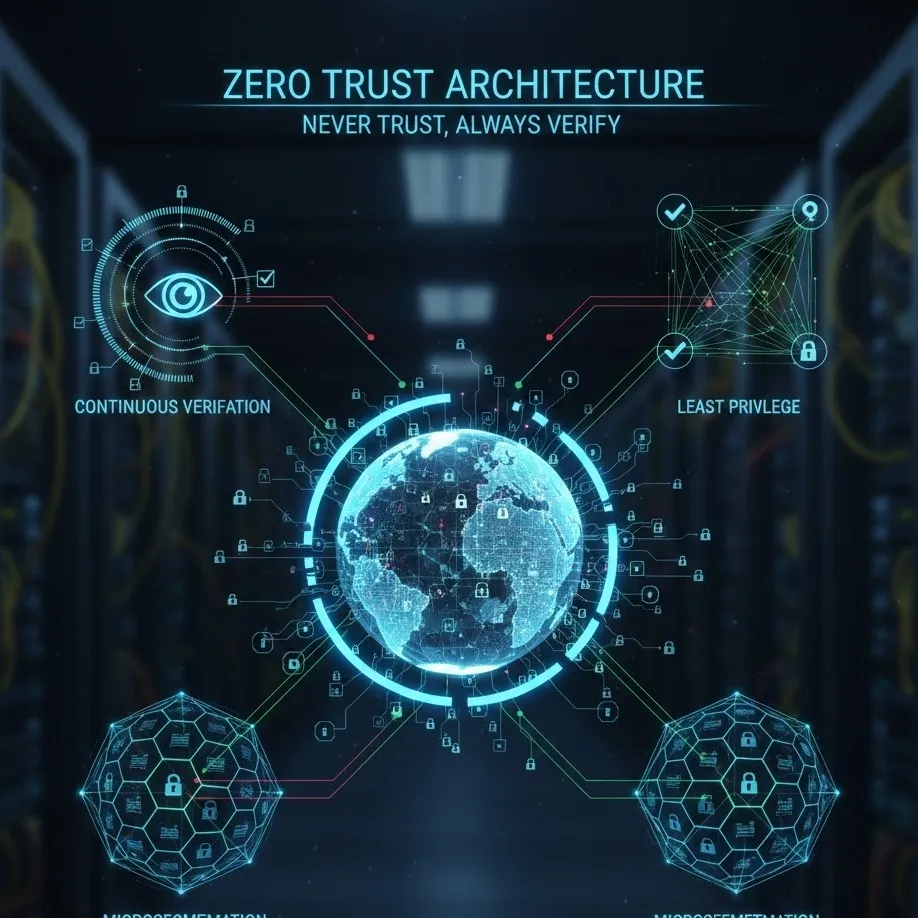
At its core, Zero-Trust is a viral security principle built on a simple, albeit radical, premise: never trust, always verify. In traditional security models, anyone inside the castle walls (the corporate network) was granted broad access. However, modern threats often originate from compromised internal credentials or lateral movement by attackers who have already breached the perimeter. Zero-Trust addresses this by assuming that no user or device—whether located inside the office or at a remote coffee shop—can be trusted by default.
The Core Pillars of Zero-Trust Adoption
Adopting a Zero-Trust model isn’t a one-time software purchase; it is a holistic journey involving technology, culture, and policy. To build a robust modern cyber defense, organizations must implement several key technical pillars:
1. Continuous Verification
In a Zero-Trust environment, access is not a one-and-done event. Continuous verification means that the system constantly evaluates the risk profile of the user and the device. Even if a user is logged in, a sudden change in location, an unrecognized device ID, or suspicious behavior will trigger a re-authentication requirement or block access entirely.
2. The Principle of Least Privilege (PoLP)
The concept of least privilege ensures that users are only given the minimum level of access necessary to perform their specific job functions. By restricting administrative rights and broad folder access, organizations significantly reduce their attack surface. If an account is compromised, the damage is limited to only the small slice of data that specific user was authorized to see.
3. Microsegmentation
If the network is a large building, microsegmentation is the act of putting a biometric lock on every single door inside. Instead of one large network, the environment is broken down into small, isolated zones. This prevents lateral movement—the technique hackers use to hop from a low-security entry point to high-value databases.
Why the Security Perimeter Collapse Changed Everything
For decades, the moat and castle approach worked. Firewalls protected the office, and everything inside was safe. However, three major shifts led to the security perimeter collapse:
- SaaS and Cloud Migration: Data no longer lives on-premise; it lives in AWS, Azure, and Google Cloud.
- The Remote Work Revolution: The network now extends to thousands of home Wi-Fi routers.
- IoT Proliferation: Every smart printer and sensor is a potential backdoor that sits inside the old perimeter.
Because the perimeter no longer exists, identity has become the new perimeter. Zero-trust architecture moves the defense away from the network edge and places it directly on the data, the application, and the user identity.
Implementation Strategy: How to Start Your Journey
Transitioning to Zero-Trust is often a multi-year process. Here is a roadmap for successful adoption:
Phase 1: Identify the Protect Surface. You cannot protect what you don't know. Identify your most DAAS elements: Data, Applications, Assets, and Services. Focus your initial Zero-Trust efforts on the crown jewels of your organization.
Phase 2: Map Transaction Flows. Understand how data moves across your network. By mapping these flows, you can determine where to place microsegmentation boundaries to ensure that only authorized traffic moves between specific services.
Phase 3: Architect the Network. Design a zero trust architecture that utilizes identity-aware proxies and software-defined perimeters (SDP). This layer acts as the gatekeeper that validates every request before a connection is even established.
Phase 4: Create Policy. Drafting policies is the most critical human element. Define who should have access to what, under what conditions.
Phase 5: Monitor and Maintain. Use AI and machine learning to inspect all traffic in real-time. This allows for the continuous verification of telemetry data to spot anomalies that human eyes might miss.
Conclusion: The Future is Zero-Trust
The shift toward a Zero-Trust model is no longer optional for the modern enterprise. As threats become more sophisticated and the network becomes more fragmented, the only way to ensure resilience is to assume that threats are already present. By leveraging continuous verification, enforcing least privilege, and utilizing microsegmentation, you can build a modern cyber defense that is proactive rather than reactive.