Discover how modular laptops and user repairability are fighting e-waste and proprietary designs.
The Return of Modular PCs: How Framework is Leading the Hardware Revolution
For over a decade, the tech industry has been locked in a "thin-and-light" arms race. While this resulted in sleek, portable devices, it came at a staggering cost to the consumer: the death of the screwdriver. Manufacturers began soldering RAM to motherboards, gluing batteries into chassis, and using proprietary screws to keep users out.
However, the tide is turning. Led by pioneers like Framework, the modular laptop is making a massive comeback, signaling a shift from a "throwaway" economy to a sustainable upgrade culture.
The Rebellion Against "Soldered-Down" Design
The modern obsession with planned obsolescence has reached a breaking point. When a single $8.00 chip fails on a $2,000 laptop, and the manufacturer tells you the entire motherboard must be replaced, it feels less like a service and more like a ransom.
The return of modular PCs is a direct rebellion against these proprietary designs. Consumers are increasingly seeking out user repairability as a primary feature, not an afterthought. This movement isn't just about enthusiasts wanting to tinker; it’s about regaining ownership of the tools we use every day.
Why Framework Changed the Game
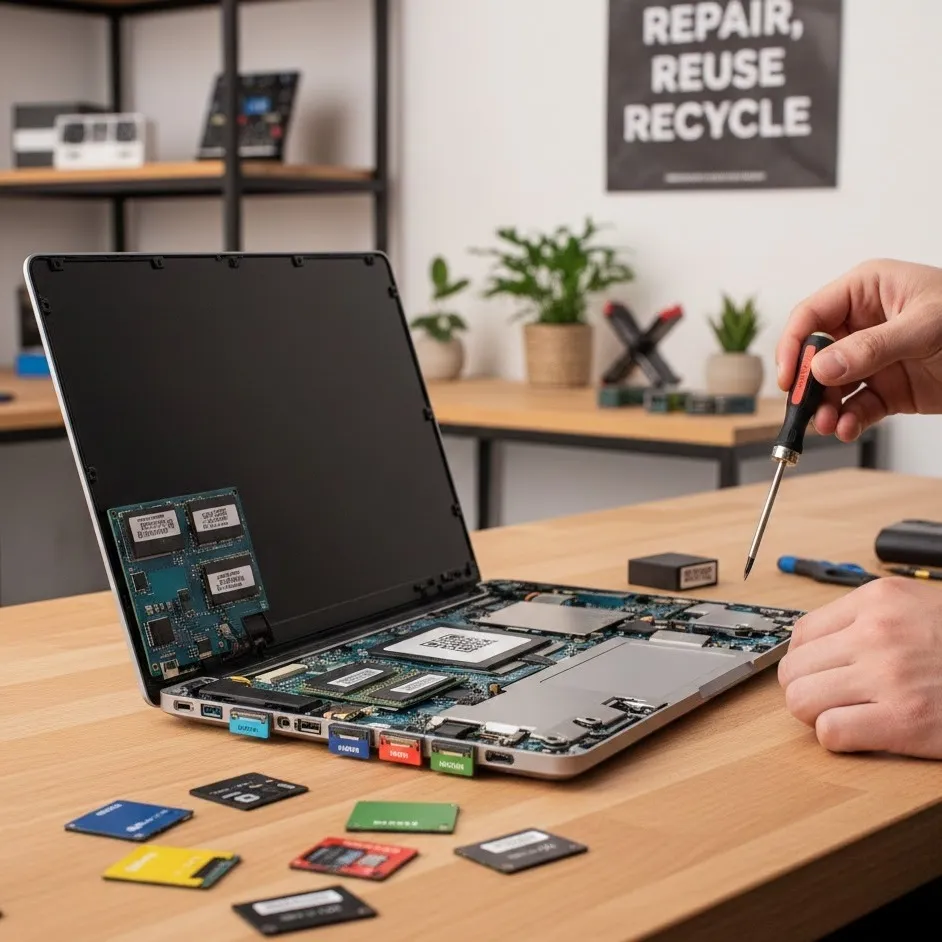
Framework didn't just build a laptop; they built an ecosystem. By focusing on component standardization, they’ve ensured that the ports on your laptop are no longer permanent. Want four USB-C ports today and an HDMI port tomorrow? You just swap a module.
The Pillars of the Modular Movement
1. User Repairability: The End of the Genius Bar
True user repairability means having access to the same tools and parts as the manufacturer. Framework provides QR codes on every internal component that lead directly to guides and replacement stores. This transparency removes the "fear factor" of opening a laptop.
2. Upgrade Culture vs. Disposable Culture
In an upgrade culture, you don’t replace your laptop because the processor is three years old. You replace the mainboard. This allows the screen, keyboard, and chassis—parts that don't "age" as quickly—to live through multiple generations of computing power.
3. E-waste Reduction: The Environmental Mandate
The tech industry is a leading contributor to global refuse. By extending the lifecycle of a device from three years to ten, we see a massive e-waste reduction. Modularity ensures that only the broken or obsolete part enters the recycling stream, rather than the entire device.
4. The Right to Repair Movement
The success of modular PCs is the "smoking gun" for the right to repair movement. It proves that high-performance, thin, and attractive hardware can be repairable. It strips away the excuses used by tech giants who claim that repairability compromises security or aesthetics.
Technical Feasibility: The Role of Component Standardization
The biggest hurdle for modularity has always been the lack of component standardization. In the desktop world, ATX and PCIe standards allowed for a thriving DIY market. In the laptop world, every motherboard was a snowflake.
Framework is pushing for a future where:
- Expansion Cards: Ports are hot-swappable.
- Uniform Screws: Using a single T5 Torx driver for the entire assembly.
- Open Sourced Firmware: Allowing the community to maintain the hardware long after the company stops.
The Economic Impact of Modularity
While a modular laptop might have a slightly higher upfront cost, the Total Cost of Ownership (TCO) is significantly lower.
| Feature | Traditional Laptop | Framework / Modular PC |
|---|---|---|
| RAM Upgrade | Often Impossible (Soldered) | Easy (SO-DIMM Slots) |
| Storage | Limited/Proprietary | Standard M.2 NVMe |
| Port Repair | Requires Soldering/New Board | $9 Expansion Card Swap |
| Lifespan | 3–5 Years | 7–10 Years |
The Future: Beyond the Laptop
The success of the Framework Laptop has sparked interest in modularity for other form factors. We are seeing the early stages of:
- Modular Smartphones: Building on the legacy of Fairphone.
- Modular Tablets: Solving the "glued-in battery" crisis.
- Sustainable Servers: Allowing data centers to upgrade CPUs without tossing racks of steel.
Conclusion: A New Standard for Tech
The return of modular PCs isn't just a nostalgic trip back to the 90s; it’s a sophisticated response to a global sustainability crisis. By prioritizing user repairability and component standardization, companies like Framework are proving that the most "innovative" thing a tech company can do is give the power back to the person who bought the device.