We review OLED hinge mechanisms, screen creasing, and productivity gains vs. durability risks and the high price point.
The Practicality of Foldable Screen Laptops: A 2026 Critical Review
The dream of a "chameleon computer"—a device that shrinks to fit a small bag but expands to provide a desktop-class canvas—has finally moved from sci-fi prototypes to retail shelves. As we navigate 2026, the tech industry is embroiled in a fierce price point debate regarding the newest generation of foldable laptops. While early adopters herald them as the future of mobile computing, skeptics point to lingering durability concerns and the question of whether these machines offer genuine utility or just expensive novelty.
This review explores the current state of foldable display technology, evaluating whether the latest designs from industry leaders like Lenovo and ASUS have truly solved the trade-offs of the past.
The Evolution of Foldable Display Technology
At the heart of every foldable laptop is a sophisticated foldable display technology that relies on Plastic OLED (P-OLED) panels. Unlike the rigid glass found in traditional clamshells, these displays are constructed using a polyimide substrate that can withstand thousands of bending cycles.
In 2026, we have seen a significant leap in panel resilience. Manufacturers have moved beyond the "first-gen" feeling of soft, plastic-like screens. New hybrid materials now mimic the tactile smoothness of glass while maintaining the flexibility required for a 180-degree bend. However, the core challenge remains: the physics of folding a material under tension.
The OLED Hinge Mechanism: Engineering the Perfect Bend
The unsung hero of the foldable form factor is the OLED hinge mechanism. A poorly designed hinge doesn't just feel "cheap"—it can physically destroy the expensive OLED panel by applying uneven pressure or allowing debris to enter the folding gap.
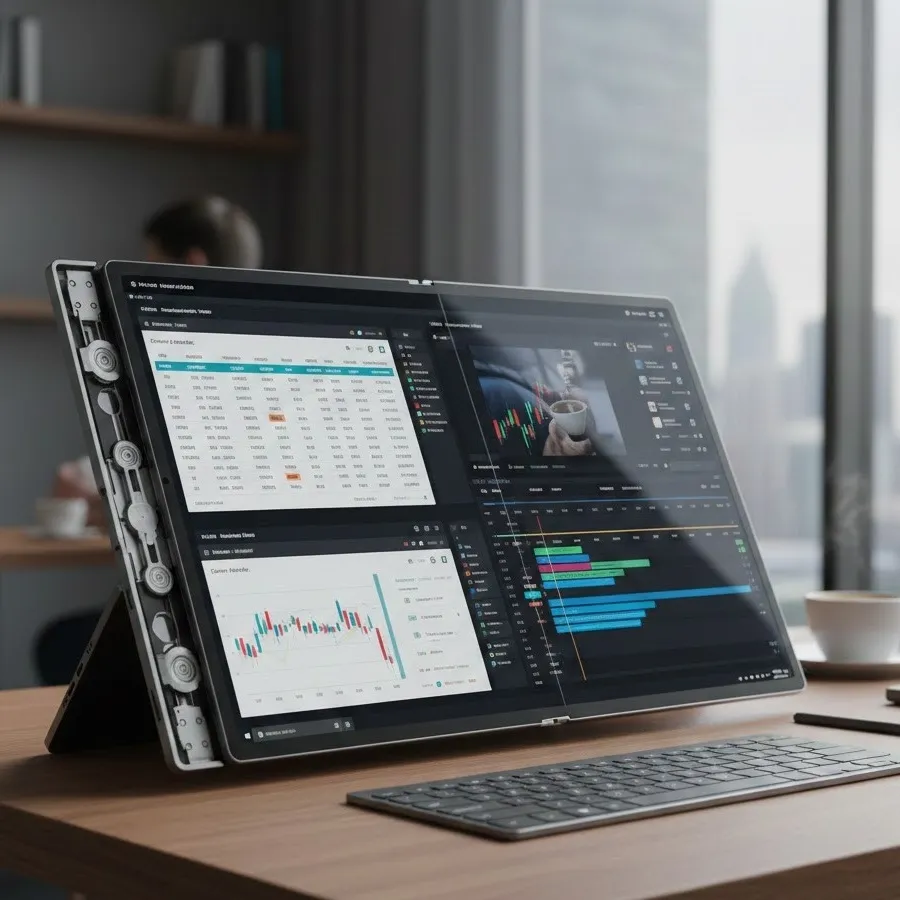
The latest 2026 models, such as the refined Lenovo ThinkPad X1 Fold series and the ASUS Zenbook 17 Fold, utilize multi-link "teardrop" hinges. This design allows the screen to curve in a radius that prevents sharp screen creasing, while simultaneously pulling the two halves of the chassis flush together.
- Synchronized Movement: Modern hinges now use gears to ensure both sides of the screen move at the exact same rate.
- Debris Protection: Internal brushes and gaskets have been added to the hinge gaps to prevent dust from getting behind the panel.
Addressing the Elephant in the Room: Durability Concerns
Despite these engineering feats, durability concerns continue to haunt the segment. When a consumer spends upwards of $3,000 on a laptop, they expect it to last five years, not eighteen months.
1. Screen Creasing
No matter how advanced the hinge, screen creasing remains a physical reality. While invisible when looking at the screen head-on, the "dip" is often noticeable under overhead lighting or when using a stylus. In 2026, "Crease-Free" branding has become a marketing battleground.
2. The Fatigue Factor
Every fold introduces microscopic stress to the OLED layers. While most manufacturers now rate their hinges for 30,000 to 50,000 folds, the long-term impact on color accuracy at the fold line is still being documented by long-term users.
Productivity Use Cases: Is it Actually Useful?
The primary justification for the foldable form factor is its versatility. But do these productivity use cases translate to real-world efficiency?
- The Traveler’s Desktop: The ability to carry a 17-inch monitor in a 12-inch footprint. For data analysts or video editors, having a massive vertical workspace that folds in half is a game-changer.
- The Book Mode: Folding the device slightly like a hardcover book allows for a dual-page reading experience, ideal for researchers reviewing long documents.
- The Clamshell Hybrid: You can fold the screen to 90 degrees and place a magnetic keyboard on the bottom half, turning it into a standard 12-inch laptop.
Critical Insight: While these modes are impressive, they often require setup time. For many, a traditional 14-inch laptop is still faster for "open and type" workflows.
The Price Point Debate: Value vs. Innovation
We currently sit in the middle of a heated price point debate. In early 2026, a high-end foldable laptop still retails for significantly more than a top-tier traditional ultrabook.
| Feature | Foldable Laptop (2026) | Traditional High-End Ultrabook |
|---|---|---|
| Price Range | $2,499 - $3,999 | $1,299 - $2,299 |
| Screen Real Estate | Up to 17.3" (Foldable) | 13" - 16" (Fixed) |
| Weight | 1.5kg - 1.8kg | 1.1kg - 1.6kg |
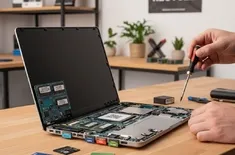
| Repairability | Very Low | Moderate |
For a creative professional, the extra screen real estate might justify the $1,500 premium. However, for the average user, the ROI is difficult to calculate when a traditional laptop offers better battery life and higher durability for half the price.
Conclusion: A Niche Necessity or a Passing Fad?
The latest foldable laptop designs are a marvel of human engineering. They have moved past the "fragile prototype" stage and into the "luxury professional tool" category. However, until the screen creasing becomes truly invisible and the price point debate settles into a more accessible range, they will remain niche.
If you are a mobile professional who lives and dies by screen real estate, the productivity gains are genuine. For everyone else, the traditional clamshell isn't going anywhere just yet.