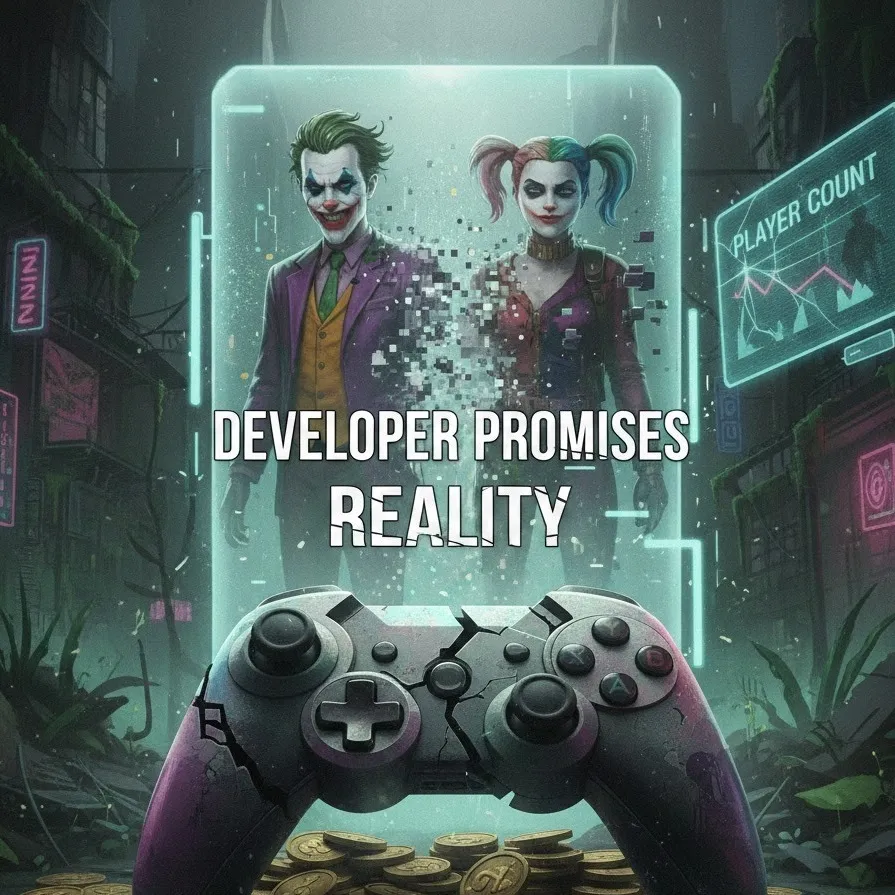
Explore why AAA live service games struggle, featuring a deep dive into the Suicide Squad flop
The GaaS Crisis: Why the Live Service Gold Rush is Ending
For nearly a decade, the "Golden Goose" of the gaming industry has been the Live Service model. Inspired by the astronomical success of Fortnite and Destiny, publishers shifted their focus from "one-and-done" premium experiences to "Games as a Service" (GaaS).1 The goal was simple: create a persistent world that generates revenue for years.
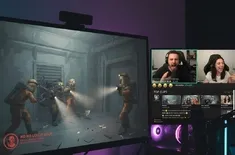
However, 2024 and 2025 have proven that this dream is becoming a nightmare for many AAA studios. The most high-profile example of this live service flop is Rocksteady’s Suicide Squad: Kill the Justice League. Despite being developed by the masters of the Arkham trilogy, the game struggled to maintain a player base, leading to a reported $200 million loss for Warner Bros.
This isn't an isolated incident. From Anthem to Babylon’s Fall and Redfall, the industry is littered with the corpses of "Destiny-killers."To understand why, we must look at the fundamental engagement model failure and the widening gap between developer promises vs reality.
The Design Paradox: Homogenization vs. Identity
One of the primary reasons for the live service flop in the AAA space is the sacrifice of unique gameplay mechanics for the sake of standardized "looter-shooter" systems.
The "Gun Problem" in Suicide Squad
In the Arkham games, Rocksteady designed bespoke combat systems for Batman. In Suicide Squad, however, every character—from the 500lb King Shark to the nimble Harley Quinn—primarily uses firearms. This was a design choice necessitated by the live service model: it is significantly easier to balance and monetize a loot pool of 1,000 guns than it is to create unique, deep melee systems for every character that must remain viable through years of updates.
This leads to a "graying" of gameplay. When every character plays similarly to facilitate a gear-score system, the game loses its soul. Players realize that the "service" is dictating the "game," rather than the other way around.
Engagement Model Failure: The Job-ification of Gaming
The modern engagement model failure stems from a misunderstanding of why people play games. Publishers today treat "engagement" as a metric of time spent rather than enjoyment felt.
Behavioral Loops vs. Fun
Live service games often rely on:
-
Daily/Weekly Bounties: Tasks that feel like chores.
- FOMO (Fear Of Missing Out): Time-limited events that punish players for taking breaks.
- Battle Passes: Progression systems that require hundreds of hours to complete.
When a game starts feeling like a second job, players experience player monetization burnout. They aren't logging in because they are excited to see what's new; they are logging in because they feel they have to in order to get their money's worth. Once that psychological tether snaps, they rarely return.
The Content Drought: The Treadmill Developers Can't Sustain
The most common reason for a live service game’s death is the content drought. Modern AAA development is incredibly slow and expensive.9 It can take a studio six months to create a meaningful narrative expansion that a hardcore player base will consume in six hours.
In the case of Suicide Squad, the post-launch seasons were criticized for being "more of the same." Adding a new character (like the Joker) is a massive undertaking, but if the missions that the character plays remain the same repetitive rooftop skirmishes, the novelty wears off instantly. When the "service" part of the live service fails to deliver fresh experiences, the community migrates to the next "big thing."
Developer Promises vs Reality: The Trust Deficit
Perhaps the most damaging aspect of these failures is the gulf between developer promises vs reality. Marketing campaigns often promise "evolving worlds" and "infinite stories."
-
The Promise: A living, breathing Metropolis that changes with every season.
-
The Reality: Static maps with minor cosmetic changes and recycled boss fights (e.g., fighting different "elemental" versions of Brainiac).
This transparency gap breeds cynicism. When players feel they were sold a platform for future content rather than a complete game at launch, the relationship between the developer and the community becomes adversarial.
The Business Logic Failure: Market Saturation
The industry’s "Gold Rush" ignored a simple mathematical truth: Time is a finite resource.10 A player can only have one or two "main" live service games. Between Fortnite, Warframe, Destiny 2, and Final Fantasy XIV, the market is saturated. For a new title like Suicide Squad to succeed, it doesn't just have to be "good"—it has to be good enough to make a player abandon a game they have already invested 500 hours and $200 into.
Why AAA Studios Struggle with Agility
Indie and AA studios (like the creators of Helldivers 2) often succeed where AAA giants fail because they are agile.11 They can pivot based on player feedback. AAA games, with their $200M budgets and "toxic positivity" management cultures, are like massive oil tankers; they cannot turn quickly when they see an iceberg ahead.
Conclusion: The Path Forward
The failure of Suicide Squad serves as a cautionary tale. The industry is reaching a breaking point where the cost of maintaining the "service" outweighs the revenue from the "monetization."
For a live service game to survive in 2025 and beyond, it must prioritize:
-
Fun over Retention: If the game is fun, the metrics will follow.
-
Respect for Player Time: Ending the reliance on "chore-based" engagement.
-
Unique Identity: Moving away from the homogenized "looter-shooter" template.
The era of the "low-effort" live service cash grab is over. Players are now demanding premium quality for their premium time.