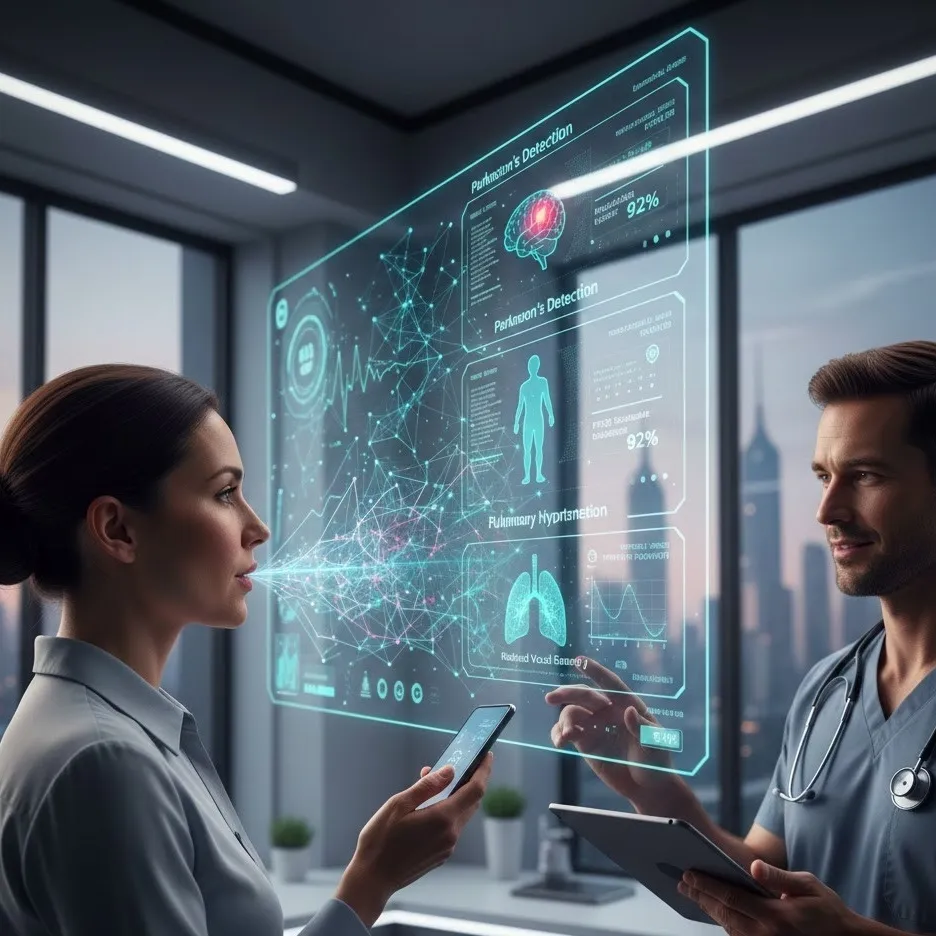
Discover how voice biomarkers and AI voice analysis enable early Parkinson's detection
The Future of Medicine: Harnessing Voice Biomarkers for Disease Detection
For centuries, clinicians have used their ears to gauge a patient’s health—listening for the wheeze of asthma or the labored breath of a heart condition. Today, we are entering a new era of digital diagnostics where the human voice is no longer just a medium for communication, but a powerful biological data point.
Voice biomarkers—quantifiable vocal features that correlate with specific medical conditions—are revolutionizing how we detect, monitor, and treat diseases. By leveraging AI voice analysis, researchers and healthcare providers can now identify subtle patterns in speech that are invisible to the human ear, offering a non-invasive window into our neurological, psychological, and physical well-being.
What are Voice Biomarkers?
A voice biomarker is a signature or feature derived from an audio signal that indicates a clinical outcome. When we speak, we engage a complex coordination of the lungs, vocal folds, tongue, and brain. Any disruption in these systems—whether caused by a neurodegenerative decay, a mental health crisis, or a respiratory obstruction—leaves a unique "vocal fingerprint."
Using advanced machine learning algorithms, AI voice analysis deconstructs a person's speech into thousands of data points. The most critical features analyzed include:
- Pitch (Fundamental Frequency): Variations in the speed of vocal cord vibration.
- Tone and Prosody: The rhythm, intonation, and emotional "color" of speech.
- Tremor and Jitter: Micro-fluctuations in frequency that often signal neuromuscular instability.
- Shimmer: Changes in the amplitude (loudness) of the voice.
- Speech Rate and Latency: The speed of articulation and the length of pauses between words.
Breakthrough Applications in Modern Healthcare
The integration of voice technology into clinical workflows is transforming several key areas of medicine.
1. Parkinson's Detection: The Sound of Neurological Change
Parkinson's detection via voice is one of the most mature applications in this field. Because Parkinson’s affects motor control, it frequently impacts the muscles involved in speech long before significant limb tremors appear.
How it works: AI identifies "hypokinetic dysarthria"—a pattern characterized by a monotonous pitch, breathiness, and a reduced range of volume.
The Impact: Studies have shown that AI models can achieve over 90% accuracy in identifying early-stage Parkinson's, potentially allowing for intervention years earlier than traditional methods.
2. PTSD Screening: Uncovering Hidden Trauma
Mental health remains one of the hardest areas to diagnose objectively. PTSD screening through voice analysis offers a solution to the subjectivity of self-reporting.
How it works: Individuals with Post-Traumatic Stress Disorder often exhibit "flat affect" or specific speech latencies and tonal shifts that reflect cognitive load and emotional suppression.
The Impact: For veterans and trauma survivors, a 30-second voice clip could provide an objective "stress score," alerting clinicians to the need for deeper psychological support without the patient having to relive their trauma through lengthy questionnaires.
3. Pulmonary Hypertension and Respiratory Health
The voice is a direct product of the respiratory system. Conditions like pulmonary hypertension (high blood pressure in the lung arteries) or COPD alter the "power source" of our voice.
How it works: AI monitors the duration of sustained vowels and the "breathiness" of speech. In patients with pulmonary hypertension, the reduced lung capacity and vascular strain lead to distinct changes in vocal energy and spectral contrast.
The Impact: Remote monitoring through smartphones allows patients to track their respiratory quality of life daily, detecting "exacerbations" or worsening conditions up to a week before symptoms become severe.
The Role of AI and Digital Diagnostics
The "magic" of digital diagnostics lies in the scale and precision of the algorithms. While a doctor might notice a patient sounds "tired," AI voice analysis can measure the exact millisecond of a tremor or the decibel-level shift in a vowel.
These tools are typically deployed through:
- Smartphones and Wearables: Making health tracking as simple as talking to a virtual assistant.
- Telemedicine Platforms: Enhancing virtual visits with objective data that was previously only available in person.
- Ambient Listening: Low-profile devices in clinics that analyze doctor-patient conversations (with consent) to flag potential health risks automatically.
Challenges and the Road Ahead
Despite the promise, the field of voice biomarkers faces hurdles. To become a global standard, the industry must address:
- Standardization: Developing "vocal norms" across different languages, accents, and age groups.
- Privacy: Ensuring that voice data—which is as unique as a fingerprint—is stored and processed with the highest ethical standards.
- Regulatory Approval: Moving from "wellness tools" to FDA-cleared medical devices.
As we move toward 2026 and beyond, the market for vocal biomarkers is expected to grow by over 14% annually. We are approaching a future where your phone might notice you are becoming ill before you even feel a symptom.