Discover the science of the HEPA standard, PM2.5 removal, and how to spot a true HEPA filter from cheap alternatives.
The Truth About HEPA Filters and Air Purifiers: A Decisive Guide
In an era where we spend nearly 90% of our time indoors, the air we breathe has never been more scrutinized. Between seasonal wildfires, urban smog, and common household allergens, the air purifier has shifted from a niche wellness gadget to a household essential. However, the market is flooded with marketing jargon like "HEPA-type," "HEPA-like," and "99% effective."
If you are looking for genuine allergy relief and a significant boost in your indoor air quality review, you need to look past the shiny plastic exteriors. This guide peels back the layers of air filtration science to reveal the truth about the HEPA standard, the mechanics of PM2.5 removal, and why some "bargain" purifiers might actually be doing more harm than good.
Defining the Gold Standard: What is a True HEPA Filter?
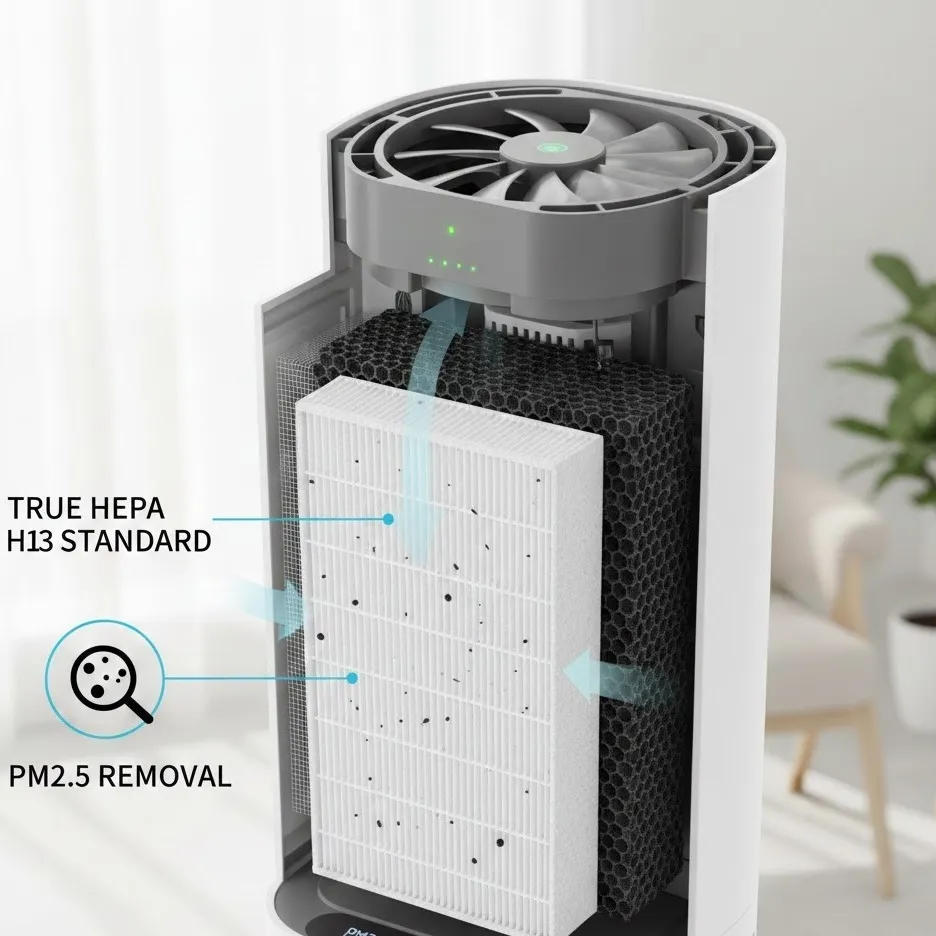
The term HEPA stands for High-Efficiency Particulate Air. Contrary to popular belief, HEPA is not a brand or a specific material; it is a strict performance HEPA standard originally developed by the U.S. Department of Energy during the Manhattan Project to capture radioactive particles.
True HEPA vs. Marketing "HEPA-type"
To officially meet the HEPA standard in the United States, a filter must be able to remove at least 99.97% of particles that are 0.3 microns in diameter. Many budget manufacturers use the term "HEPA-type" or "HEPA-like." These are almost always unregulated imitations. While they may look similar to the naked eye—often featuring the same pleated white paper—their air filtration effectiveness is significantly lower. A "HEPA-type" filter may only capture 85% to 90% of particles, allowing millions of microscopic triggers to pass straight through the machine and back into your lungs.
The Classification Table
| Filter Grade | Efficiency (at 0.3 microns) | Common Use Case |
|---|---|---|
| HEPA-Type | 85% - 95% | Low-cost consumer gadgets |
| True HEPA (H13) | 99.97% | Residential standard, Hospitals |
| Medical Grade (H14) | 99.995% | Clean rooms, Surgery centers |
The Science of PM2.5 Removal: How It Actually Works
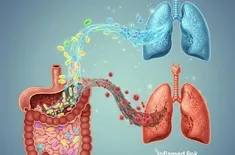
When we talk about air pollution, we often focus on PM2.5 removal. PM2.5 refers to fine particulate matter with a diameter of 2.5 micrometers or less—about 30 times smaller than a human hair. These particles are particularly dangerous because they are small enough to bypass the nose and throat, penetrating deep into the lungs and even entering the bloodstream.
You might assume a HEPA filter works like a simple net or a sieve, where small particles just slip through the holes. However, the physics of air filtration effectiveness is far more complex. HEPA filters utilize four distinct physical mechanisms:
- Sieving (Straining): Large particles are simply too big to fit through the gaps in the glass fibers and get stuck.
- Inertial Impaction: Mid-sized particles follow the airflow but are too heavy to make the sharp turns around the fibers. They crash into the fibers and stick.
- Interception: Smaller particles follow the "airstream" lines but pass close enough to a fiber to be snagged by its edge.
- Diffusion (Brownian Motion): This is the "magic" of HEPA. The smallest particles (under 0.1 microns) don’t travel in a straight line; they zig-zag randomly due to collisions with gas molecules. This erratic path makes them much more likely to hit a fiber and get trapped.
This is why the HEPA standard tests for 0.3 microns—it is the "Most Penetrating Particle Size" (MPPS). Particles both larger and smaller than 0.3 microns are actually easier for a True HEPA filter to catch.
The Hidden Danger: Ozone Output and "Ionic" Features
While searching for the perfect device, you will likely encounter "Ionic," "Plasma," or "Ozone Generator" features. Manufacturers often market these as "active" cleaning technologies that "seek out" pollutants. The truth is much bleaker. Many of these technologies produce ozone output as a byproduct. Ozone is a known lung irritant that can exacerbate asthma and cause permanent lung damage at high concentrations. According to various indoor air quality review studies, the ozone produced by some purifiers can actually react with household chemicals (like those in cleaning sprays) to create new pollutants like formaldehyde.
The Golden Rule: If an air purifier claims to "freshen" the air with a "crisp, rain-like scent," it is likely producing ozone. For the safest allergy relief, stick to mechanical filtration (True HEPA Activated Carbon) and ensure the device is CARB certified (California Air Resources Board) for low ozone emissions.
Why Cheap Alternatives Fail the Test
You might see an air purifier on a major retail site for $40 that claims to be "HEPA." Why pay $200 for a reputable brand? The difference lies in three critical areas:
- Seal Integrity: A filter is only as good as its seal. Cheap purifiers often have gaps around the edges of the filter. This leads to "air bypass," where the air takes the path of least resistance and flows around the filter rather than through it.
- CADR (Clean Air Delivery Rate): Air filtration effectiveness depends on how many times per hour the machine can cycle the air. A cheap unit might have a True HEPA filter but a motor so weak it would take five hours to clean a standard bedroom once.
- Surface Area (The Pleat Count): True HEPA filters are thick and heavily pleated. Cheap alternatives use thin, sparse material that clogs quickly, forcing you to buy replacement filters every few weeks, which negates the initial "savings."
Maximizing Your Allergy Relief
For those seeking allergy relief, simply owning a purifier isn't enough. You must understand how to integrate it into your environment for maximum PM2.5 removal.
- The 5-ACH Rule: For allergy sufferers, you want at least 5 Air Changes per Hour (ACH).
- Placement Matters: Don't tuck your purifier in a corner. It needs at least 1–2 feet of clearance on all sides to pull in air effectively.
- Keep Windows Closed: Running a purifier with the windows open will overwhelm the filter and significantly decrease its lifespan.
Conclusion: Investing in Your Health
When it comes to the air you breathe, the "truth" is that there are no shortcuts. High-quality indoor air quality review data consistently shows that only mechanical filtration—specifically the HEPA standard—provides the consistent PM2.5 removal and allergy relief necessary for a healthy home.