Learn deep breathing exercises to improve your score.
In the modern pursuit of health, we meticulously track steps, heart rate, sleep cycles, and caloric intake. Yet, one of the most vital signs of overall well-being often goes overlooked: respiratory strength and the efficiency of our lungs. The capacity of your lungs, or your lung capacity test, is a direct indicator of cardiorespiratory health, physical fitness, and even longevity. It measures the total amount of air your lungs can hold.
How well are your lungs performing? Are they keeping up with the rest of your fitness regimen? It’s time to put them to the test with a fun, engaging, and simple challenge—the Respiratory "Fitness Challenge" Test. This isn't just a clinical measurement; it's a simple home test you can perform right now to gauge your pulmonary fitness.
Viral Video Concept: The Ultimate Breath-Hold Challenge
To transform a purely clinical idea into an engaging, shareable piece of content, we need a viral-ready format. The breath-hold challenge offers a compelling, easy-to-replicate test that translates perfectly into a short, impactful video.
The Challenge Format:
A short, high-energy video (e.g., 60-90 seconds) opens with an energetic host challenging the viewer: "Think you're fit? Test your lungs right now!"
-
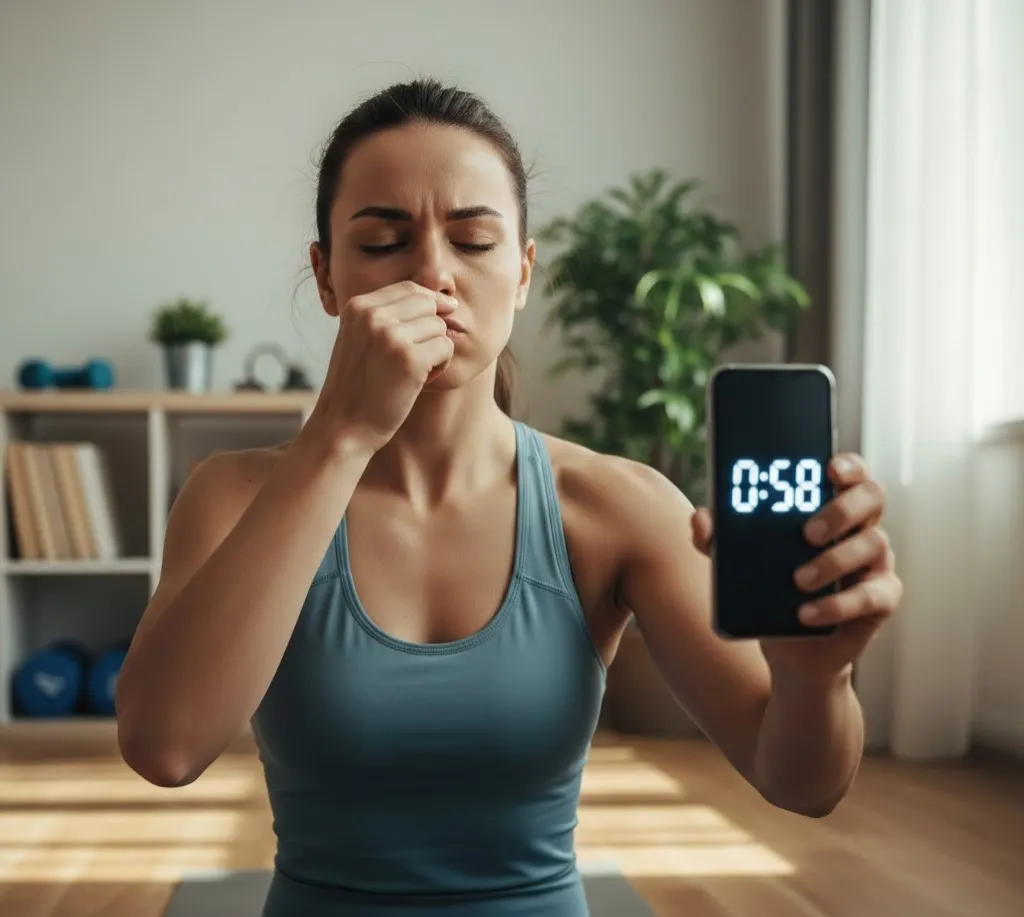
Preparation (10 seconds): The host quickly explains the simple steps. "All you need is a timer—your phone will do."
-
The Technique (20 seconds): The host demonstrates the proper technique for measuring maximum breath-hold.
-
Sit or stand up straight.
-
Take a maximum, slow, deep inhalation (deep breathing exercise), filling the lungs completely.
-
Start the timer immediately after sealing the lips and holding the breath.
-
Hold the breath until the absolute maximum, resisting the urge to breathe.
-
Stop the timer the instant the need to exhale or gasp for air becomes overwhelming.
-
-
The Score (15 seconds): The host reveals their own "score" (e.g., 75 seconds) and immediately sets the "try this" call-to-action.
-
Interpretation and Safety (15 seconds): A quick voiceover emphasizes safety ("Stop immediately if you feel dizzy. Do not attempt while driving or underwater.") and provides a simple, fun benchmark (e.g., 30 seconds = Good, 60 seconds = Excellent, 90 seconds = Pro-level endurance).
-
Call to Action (10 seconds): "Post your score and tag a friend to challenge them!"
This format ensures high engagement, a clear mechanism for participation, and a quantifiable result that viewers are eager to share and compare. It's a fun way to approach a complex topic like lung capacity test results.
Understanding the Simple Home Test
The maximum voluntary breath-hold challenge serves as a crude, yet effective, proxy for assessing certain aspects of pulmonary health and respiratory strength. While not a replacement for spirometry, it is a readily accessible simple home test to gauge conscious control, oxygen efficiency, and endurance of the respiratory muscles.
The Mechanics of the Breath-Hold
When you hold your breath, two primary changes occur in your blood:
-
Oxygen Levels Decrease (Hypoxemia): Your body continues to use oxygen, causing the concentration in your blood to drop.
-
Carbon Dioxide Levels Increase (Hypercapnia): Carbon dioxide $\text{CO}_2$ is a waste product of metabolism, and since you are not exhaling, it builds up in the blood.
It is this build-up of $\text{CO}_2$, not the lack of $\text{O}_2$, that typically triggers the overwhelming urge to breathe. $\text{CO}_2$ is sensed by chemoreceptors in the brain and arteries, which signal the diaphragm to contract, forcing an inhalation.
Proper Technique for the Test
For the challenge to be accurate, the technique must be consistent:
-
Posture: Sit upright or stand. Good posture allows the lungs to expand fully, maximizing your initial air volume for the lung capacity test.
-
The Inhalation: Perform a deep breathing exercise—a slow, controlled, maximal inhalation. The goal is to fully engage the diaphragm and intercostal muscles. A quick gasp doesn't fill the lungs efficiently.
-
The Hold: Pinch your nose and close your mouth, or simply keep your mouth closed. Avoid "gulping" or attempting to swallow air during the hold. Relax the body as much as possible to minimize $\text{O}_2$ consumption.
-
The End: Stop the timer the instant the involuntary contractions of your diaphragm begin or you feel the undeniable urge to breathe.
Improving Your Respiratory Strength and Endurance
The beauty of the Respiratory Fitness Challenge is that you can improve your score with regular practice. Dedicated deep breathing exercise and targeted training can enhance respiratory strength, increase lung capacity, and extend endurance.
Key Training Techniques:
-
Diaphragmatic Breathing (Belly Breathing): This is the foundation of good respiratory strength. Lie down, place one hand on your chest and the other on your belly. Breathe in deeply so that only the hand on your belly rises. This maximizes the use of the lower, most efficient part of the lungs.
-
Pursed-Lip Breathing: Used to slow the breath rate. Inhale slowly through the nose. Exhale two to three times longer than the inhale through pursed lips (as if whistling). This keeps the airways open longer, allowing more $\text{CO}_2$ to be released, improving ventilation.
-
Inspiratory Muscle Training (IMT): Using a specialized device, you can train the muscles responsible for inhalation (diaphragm and intercostals) to increase their power and endurance.
The Connection to Overall Health
A strong respiratory system benefits more than just your breath-hold challenge score:
-
Athletic Performance: Enhanced oxygen delivery to working muscles and more efficient $\text{CO}_2$ removal leads to better endurance in activities like running, swimming, and cycling.
-
Stress Reduction: Deep breathing exercises activate the parasympathetic nervous system, lowering heart rate and promoting relaxation.
-
Cardiovascular Health: Efficient gas exchange places less strain on the heart, contributing to better long-term health.