Explore life-saving treatments like the TAVR procedure and heart valve replacement options.
Understanding Heart Valve Disease: Stenosis, Regurgitation, and Modern Repair
The human heart is a tireless pump, circulating approximately 2,000 gallons of blood every day. Central to this mechanical marvel are four specialized valves—the mitral, tricuspid, aortic, and pulmonary valves—which ensure that blood flows in only one direction. When these valves fail to open or close properly, the heart must work harder to maintain circulation, leading to a condition known as heart valve disease.
The Mechanics of Failure: Tightening vs. Leaking
Heart valve disease generally falls into two functional categories: stenosis (tightening) and regurgitation (leaking).
1. Aortic Stenosis: The Tightened Gateway
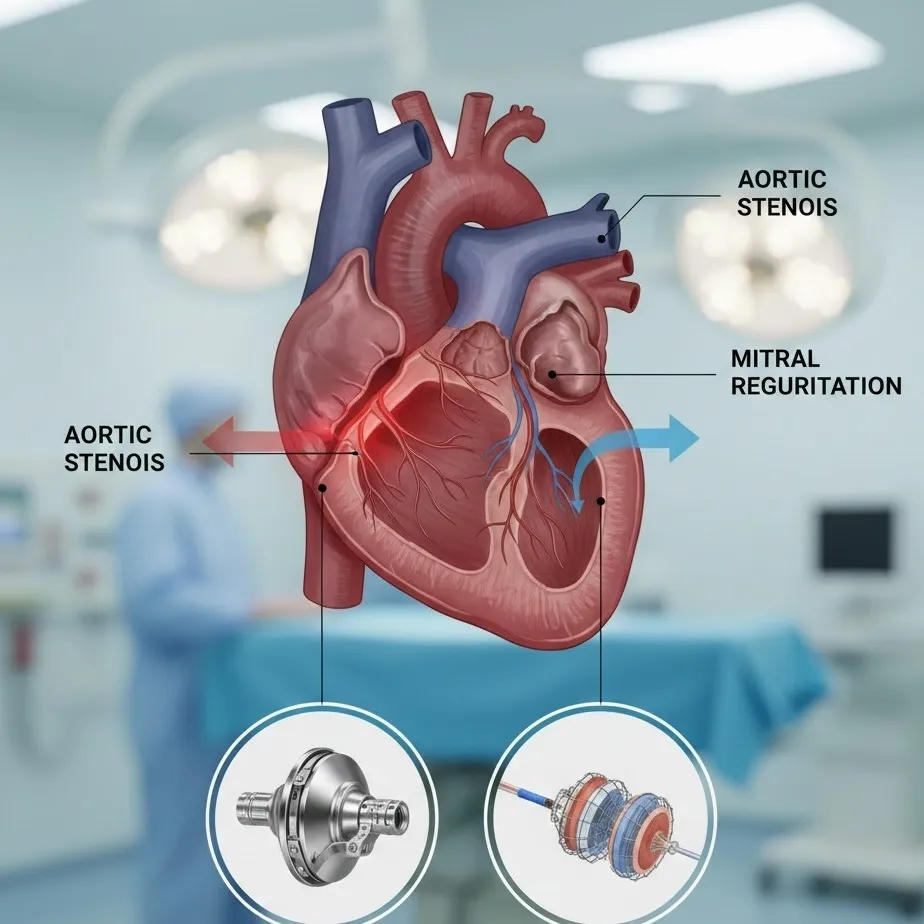
Aortic stenosis occurs when the aortic valve narrows, restricting blood flow from the left ventricle to the aorta. Over time, the valve leaflets may become stiffened by calcium buildup. Because the opening is smaller, the heart must exert immense pressure to push blood through, eventually leading to a thickened and weakened heart muscle.
2. Mitral Regurgitation: The Backward Leak
In contrast, mitral regurgitation occurs when the mitral valve does not close tightly enough. This allows blood to flow backward into the lungs instead of forward into the body. This "leakiness" causes volume overload, often resulting in shortness of breath and an enlarged heart.
Recognizing Valve Disease Symptoms
One of the most challenging aspects of valve disease is its "silent" nature. In the early stages, the body often compensates for decreased efficiency. However, as the condition progresses, valve disease symptoms become more pronounced:
- Shortness of Breath: Particularly during physical activity or when lying flat.
- Chest Pain (Angina): A feeling of pressure or tightness, especially with exertion.
- Fatigue: Feeling unusually tired despite getting enough rest.
- Lightheadedness or Fainting: Caused by a lack of oxygenated blood reaching the brain.
- Swelling (Edema): Specifically in the ankles, feet, or abdomen.
The Role of the Heart Murmur
Often, the first sign of a problem isn't a symptom felt by the patient, but a sound heard by a doctor. A heart murmur is an extra or unusual sound heard during a heartbeat. While many murmurs are "innocent," others are the tell-tale turbulent sound of blood rushing through a narrowed valve or leaking backward through a faulty one.
Breakthroughs in Treatment: From Open Surgery to TAVR
Historically, correcting a faulty valve required "cracking the chest" via open-heart surgery. While traditional surgery remains the gold standard for many, the last decade has seen a revolution in minimally invasive technology.
The TAVR Procedure
The TAVR procedure (Transcatheter Aortic Valve Replacement) has fundamentally changed the landscape for patients with severe aortic stenosis. Unlike traditional surgery, TAVR is performed through a small incision, usually in the groin (femoral artery).
A collapsible replacement valve is delivered via a catheter and guided to the site of the diseased valve. Once in place, the new valve is expanded, pushing the old valve leaflets out of the way and taking over the job of regulating blood flow.
Why TAVR is a Breakthrough:
- Reduced Recovery Time: Most patients return home within 24–48 hours.
- Lower Risk: It provides a viable option for patients who are too frail for open-heart surgery.
- Local Anesthesia: Many procedures can be done while the patient is awake or under light sedation.
Choosing Between Repair and Replacement
When a valve is severely damaged, doctors must decide whether to fix the existing tissue or install a new device.
Heart Valve Replacement
If a valve is too calcified or scarred to function, a heart valve replacement is necessary. Patients typically choose between two types of valves:
- Mechanical Valves: Made of durable materials like carbon or metal. They last a lifetime but require the patient to take blood-thinners indefinitely.
- Biological (Bioprosthetic) Valves: Made from cow or pig heart tissue. These do not require long-term blood thinners but may need to be replaced after 10–20 years.
Valve Repair
Whenever possible, surgeons prefer to repair the valve, especially in cases of mitral regurgitation. Repairing the patient’s own tissue reduces the risk of infection and preserves the heart's natural anatomy better than a full replacement.
The Importance of Early Intervention
Left untreated, advanced valve disease can lead to heart failure, stroke, or sudden cardiac death. Modern diagnostics, such as echocardiograms, allow cardiologists to monitor the heart with extreme precision.
If you have been told you have a heart murmur or are experiencing unexplained fatigue, a consultation with a structural heart team is essential. With the advent of the TAVR procedure and advanced repair techniques, heart valve disease is no longer a condition that necessitates a slow decline in quality of life.