Learn about arrhythmias like Afib, tachycardia, and bradycardia.
Arrhythmias Explained: When Your Heartbeat is Irregular
The human heart is an engineering marvel, a tireless pump that beats approximately 100,000 times a day to circulate blood through every inch of our bodies. However, this rhythm isn't just a mechanical action; it is governed by a complex and delicate heart's electrical system. When this system encounters a "short circuit" or a signal delay, the result is an irregular heartbeat, medically known as an arrhythmia.
While some heart flutters are harmless, others can be silent precursors to life-altering events. Understanding the nuances of heart rhythms—from the rapid racing of atrial fibrillation (Afib) to the sluggish pulse of bradycardia—is essential for proactive heart health.
The Symphony of the Heart: How the Electrical System Works
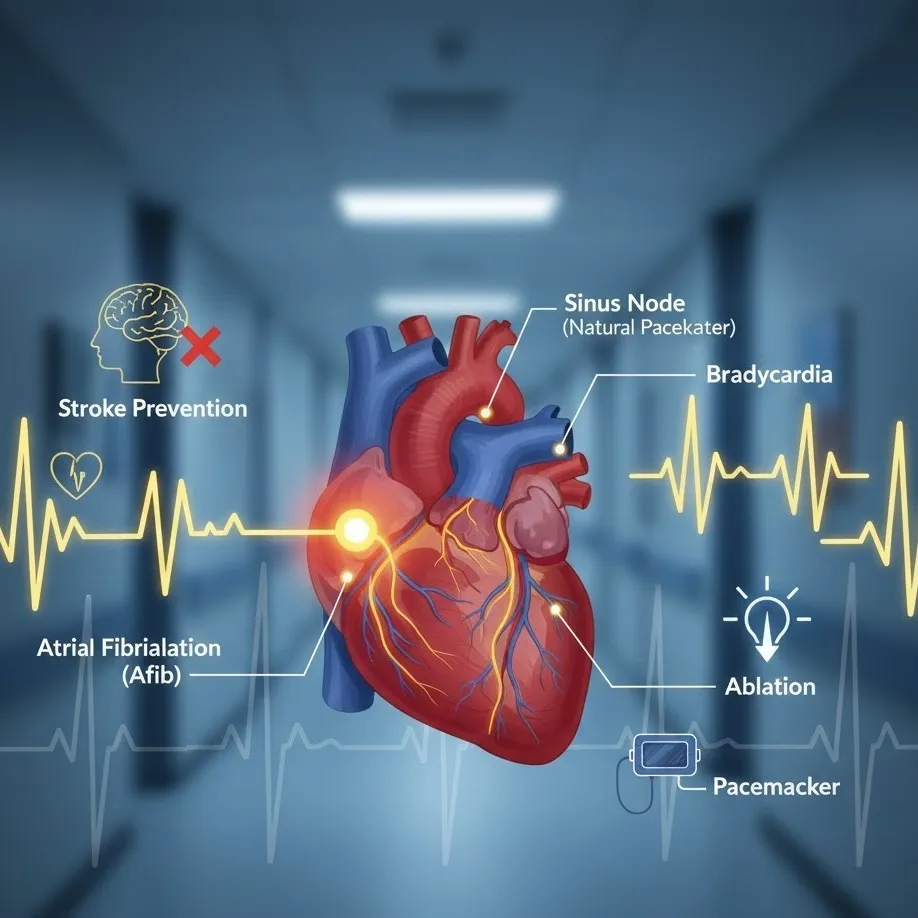
To understand why a heart beats out of sync, we must first look at its "metronome." The heart's electrical system begins in a small cluster of cells in the right atrium called the sinus node. This is the heart’s natural pacemaker.
- The Signal Starts: The sinus node generates an electrical impulse.
- Atrial Contraction: This impulse travels through the upper chambers (atria), causing them to contract and push blood into the lower chambers (ventricles).
- The Delay: The signal reaches the atrioventricular (AV) node—a gatekeeper that pauses the signal for a split second to allow the ventricles to fill with blood.
- Ventricular Contraction: The signal then travels to the ventricles, causing them to pump blood out to the lungs and the rest of the body.
When this sequence is interrupted, you may feel heart palpitations—the sensation that your heart is skipping a beat, fluttering, or thumping too hard.
Common Types of Arrhythmias
Arrhythmias are generally categorized by where they originate and the speed of the heart rate.
1. Atrial Fibrillation (Afib)
Atrial fibrillation (Afib) is the most common sustained heart rhythm disorder. In Afib, the heart's upper chambers receive chaotic electrical signals. Instead of contracting powerfully, the atria quiver or "fibrillate." This leads to an irregular heartbeat that is often fast and highly inefficient.
2. Tachycardia
Tachycardia refers to a resting heart rate that is too fast—typically over 100 beats per minute. This can occur in the upper chambers (Supraventricular Tachycardia) or the lower chambers (Ventricular Tachycardia). While some forms are benign, ventricular tachycardia can be life-threatening as it prevents the heart from filling with enough blood to support the body.
3. Bradycardia
On the opposite end of the spectrum is bradycardia, where the heart beats too slowly—usually fewer than 60 beats per minute. While a slow heart rate is common in elite athletes or during deep sleep, pathological bradycardia can lead to dizziness, fatigue, and fainting because the brain isn't receiving enough oxygenated blood.
The Hidden Risks of Afib: Why Rhythm Matters
Many people live with atrial fibrillation (Afib) for years without realizing it, dismissing symptoms as "getting older" or "stress." However, the risks are significant.
The Stroke Connection
The primary danger of Afib is not the irregular rhythm itself, but the blood stasis it causes. Because the atria are quivering rather than pumping, blood can pool in a small pouch of the heart called the left atrial appendage. Pooled blood tends to clot. If a clot is pumped out of the heart and travels to the brain, it causes an ischemic stroke.
Fact: People with Afib are five times more likely to suffer a stroke than those with a normal heart rhythm.
Heart Failure
Long-term tachycardia or untreated Afib can overwork the heart muscle. Over time, the heart weakens and loses its ability to pump effectively, leading to congestive heart failure.
Symptoms You Should Never Ignore
While some arrhythmias are "silent," many manifest through clear physical signs. If you experience the following, it is time to consult a cardiologist:
- Heart palpitations: Feeling like your heart is "flopping" like a fish or racing for no reason.
- Shortness of breath: Difficulty catching your breath during light activity.
- Chest pain: Any pressure or discomfort in the chest area.
- Lightheadedness: Feeling like you might pass out (syncope).
- Extreme fatigue: A sudden, inexplicable drop in energy levels.
Modern Treatment Options: Restoring the Rhythm
The goal of treating arrhythmias is twofold: managing symptoms and preventing complications like stroke.
Medication
Doctors often prescribe "rate control" drugs to slow down a fast heart or "rhythm control" drugs to keep the heart in a normal pattern. Additionally, blood thinners (anticoagulants) are frequently prescribed to patients with Afib to reduce the risk of stroke.
Catheter Ablation
For many, medication is not enough. Ablation is a minimally invasive procedure where a thin tube (catheter) is threaded through a vein to the heart. The cardiologist uses heat or extreme cold to destroy the tiny area of heart tissue that is sending out the faulty electrical signals. This "scars" the tissue, creating a barrier that blocks the chaotic impulses.
Pacemaker and ICDs
If the heart's electrical system is failing to send signals (bradycardia), a pacemaker may be necessary. This small, battery-operated device is implanted under the skin of the chest. It monitors the heart and sends electrical pulses to prompt the heart to beat at a normal rate.
For more dangerous rhythms, an Implantable Cardioverter Defibrillator (ICD) can be used. It acts like a pacemaker but also has the ability to deliver a life-saving shock if it detects a lethal arrhythmia like ventricular fibrillation.
Lifestyle Changes: Protecting Your Heart
- Manage Stress: Stress and anxiety can trigger tachycardia and heart palpitations.
- Limit Stimulants: Excessive caffeine, nicotine, and alcohol are notorious for disrupting the heart's rhythm.
- Monitor Electrolytes: Minerals like potassium, magnesium, and calcium are the "fuel" for your heart's electrical system.
- Exercise Wisely: While regular exercise strengthens the heart, extreme endurance training can actually increase the risk of Afib in some individuals.
Conclusion
An irregular heartbeat is a message from your body that your heart's electrical system needs attention. Whether it is the rapid flutter of atrial fibrillation (Afib) or the heavy thumping of heart palpitations, modern medicine offers a wide array of solutions—from life-saving pacemaker technology to curative ablation procedures.
By understanding the risks and acting early, you can protect your heart from complications like stroke and lead a full, active life.
``` Would you like me to provide the list of semantic and intent keywords separately for your SEO records?