Discover the best heart foods to lower blood pressure.
The Ultimate Heart-Healthy Diet Checklist: Your Guide to Longevity
Maintaining cardiovascular health is one of the most impactful decisions you can make for your long-term well-being. With heart disease remaining a leading cause of mortality globally, the food on your plate acts as your first line of defense.
This guide provides a comprehensive breakdown of The Essential Heart-Healthy Diet Checklist, focusing on the Mediterranean diet, the DASH diet, and the power of whole grains and plant-based eating.
The Foundations: Mediterranean and DASH Diets
When it comes to cardiovascular nutrition, two dietary patterns stand above the rest: the Mediterranean and DASH diets.
The Mediterranean Diet
The Mediterranean diet is less of a restrictive diet and more of a lifestyle. It emphasizes healthy fats—primarily monounsaturated fats from olive oil—and a high intake of fruits, vegetables, and legumes.
- Key components: Fatty fish (rich in Omega-3s), nuts, and a moderate intake of red wine.
- Heart Benefit: It is proven to reduce the risk of stroke and heart attack by managing bad LDL cholesterol levels.
The DASH Diet
DASH stands for Dietary Approaches to Stop Hypertension. The DASH diet was specifically designed to help individuals lower high blood pressure without medication.
- Key components: It focuses heavily on sodium limits, low-fat dairy, and lean proteins.
- Heart Benefit: By reducing salt and increasing potassium-rich foods, it helps relax blood vessels and lower pressure on arterial walls.
Heart Foods: What to Prioritize
A heart-healthy kitchen starts with a shift toward whole foods. These are foods that are as close to their natural state as possible, free from industrial refining.
Whole Grains
Swap white bread and pasta for whole grains. Unlike refined grains, whole grains contain the entire grain kernel—the bran, germ, and endosperm.
- Examples: Quinoa, barley, buckwheat, and oats.
- Why they matter: They are packed with fiber, which helps mop up cholesterol in the digestive tract before it enters the bloodstream.
Plant-Based Eating
You don't have to become a vegetarian to reap the benefits of plant-based eating. Simply shifting the star of your plate from meat to plants can significantly improve heart health.
- Legumes: Lentils, chickpeas, and black beans are excellent protein sources with zero cholesterol.
- Leafy Greens: Spinach and kale provide Vitamin K, which protects your arteries.
The Hidden Dangers: Sodium and Processed Foods
One of the hardest parts of heart health is navigating the modern food environment, which is designed for convenience rather than longevity.
Sticking to Sodium Limits
The American Heart Association recommends no more than 2,300 mg of sodium a day, with an ideal limit of 1,500 mg for those with hypertension.
- The Problem: Most sodium doesn’t come from your salt shaker; it’s hidden in processed foods.
- The Solution: Use herbs, spices, and citrus juices to flavor food instead of salt.
Identifying Processed Foods
Processed foods often contain The Unholy Trinity for heart health: sodium, added sugars, and trans fats.
- Avoid: Deli meats, frozen dinners, canned soups (unless labeled low-sodium), and sugary cereals.
- The Rule of Thumb: If a food has more than five ingredients or contains words you can’t pronounce, it’s likely highly processed.
Master the Art of Portion Control
Even healthy calories can lead to weight gain if not monitored, and excess weight puts a direct strain on the heart. Portion control is about eating until you are satisfied, not full.
- Vegetables: Should take up half your plate.
- Protein: Should be about the size of a deck of cards.
- Fats: Use thumb-sized portions for nuts or oils.
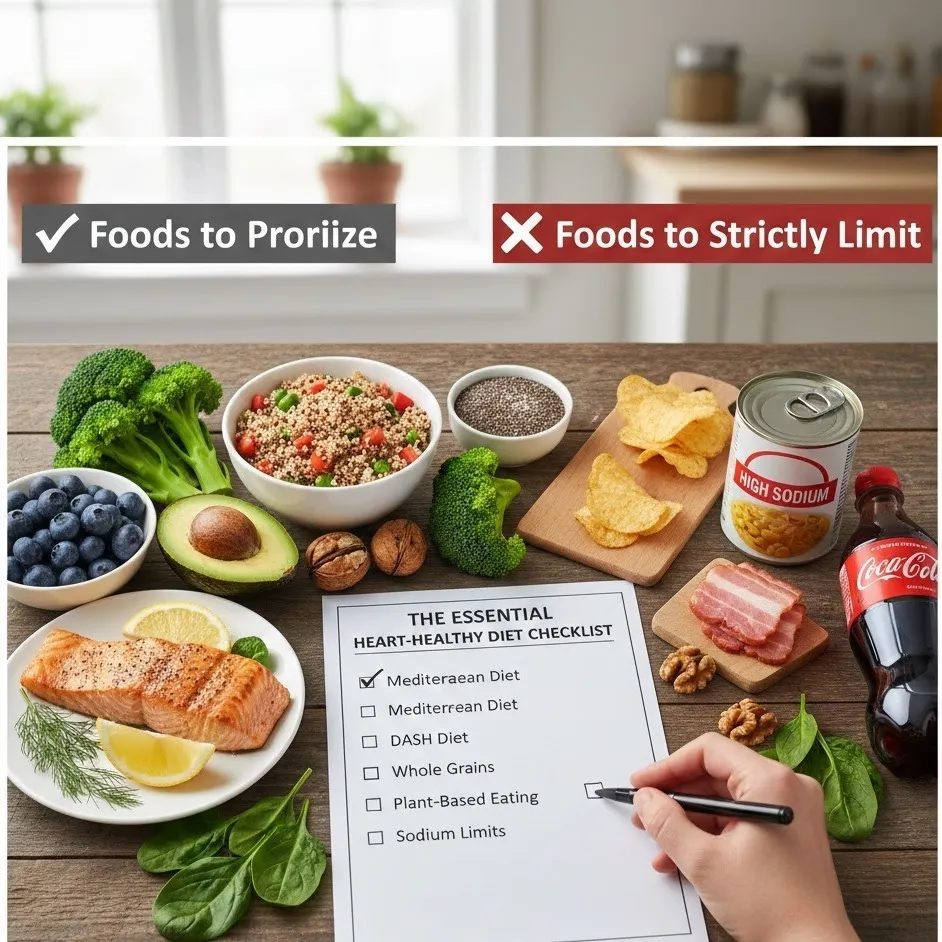
The Essential Heart-Healthy Checklist
Use this checklist as your daily guide for grocery shopping and meal prep.
Foods to Prioritize (The Always List)
| Category | Food Items |
|---|---|
| Proteins | Salmon, Mackerel, Lentils, Tofu, Skinless Poultry |
| Grains | Steel-cut Oats, Brown Rice, Quinoa, 100% Whole Wheat |
| Fats | Extra Virgin Olive Oil, Avocado, Walnuts, Chia Seeds |
| Produce | Berries, Spinach, Broccoli, Carrots, Citrus Fruits |
Foods to Strictly Limit (The Rarely List)
- Ultra-Processed Snacks: Chips, crackers, and packaged cookies.
- Red & Processed Meats: Bacon, sausage, pepperoni, and fatty cuts of beef.
- Sweetened Beverages: Soda, energy drinks, and fruit juices with added sugar.
- High-Sodium Condiments: Soy sauce, jarred salad dressings, and teriyaki sauce.
Practical Tips for Success
- Read the Labels: Look for Low Sodium (140mg or less per serving).
- Meal Prep: When you cook at home, you have 100% control over the salt and oil used.
- Hydrate: Sometimes thirst is mistaken for hunger. Drink water or herbal tea.
- The 80/20 Rule: Focus on heart-healthy choices 80% of the time to allow for occasional treats without guilt.