Learn how red light stimulates collagen & blue light treats acne
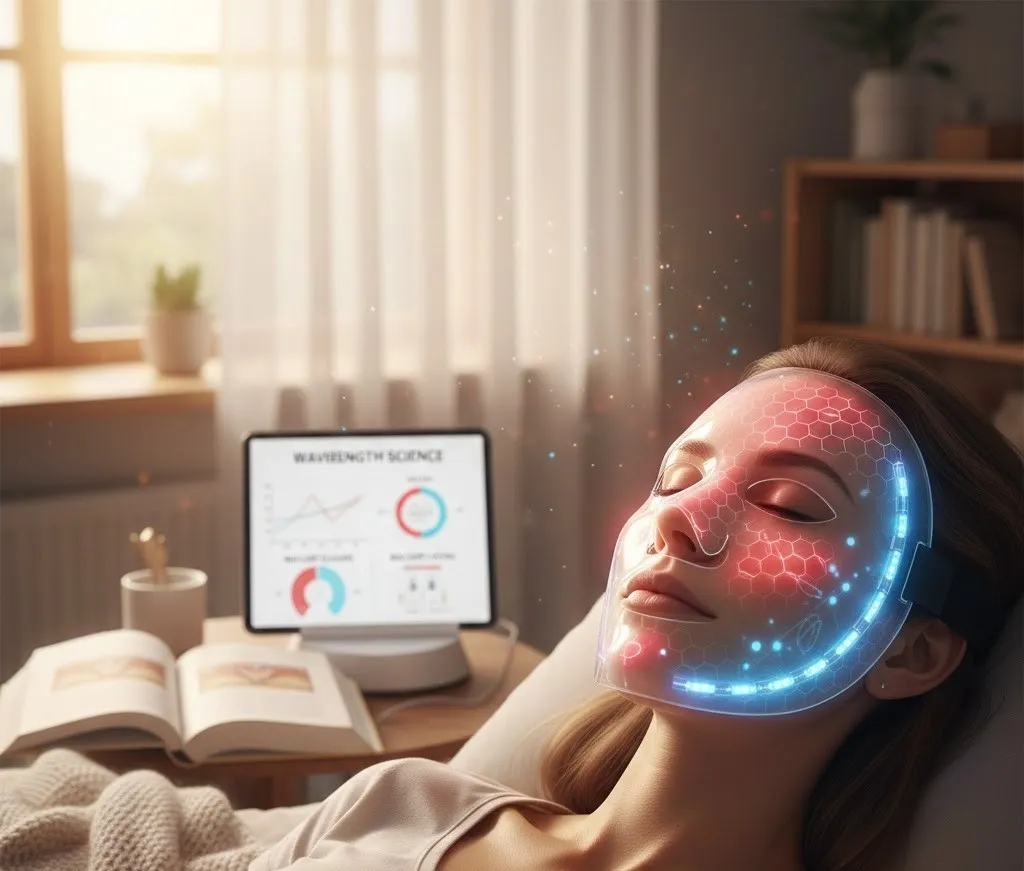
The quest for flawless, youthful skin has driven innovation in dermatology for decades. While professional treatments at a clinic or spa offer impactful results, the modern skincare landscape has been revolutionized by accessibility, specifically through non-invasive, convenient devices that bring advanced technology right to your vanity. At the forefront of this shift is LED light therapy, a treatment once exclusive to dermatologists' offices, now available for daily, personalized use in the form of an **at-home LED mask** or handheld device.
This comprehensive guide delves into the science and profound benefits of using these accessible devices, explaining the fundamental differences between the various light colors, exploring the critical role of **wavelength science**, and providing a practical **device review** of popular options to help you on your journey to radiant, healthy skin.
Understanding the Science: How LED Light Transforms Skin
LED stands for Light-Emitting Diode. In a therapeutic context, it's a non-invasive, painless skincare treatment that uses varying wavelengths (colors) of light to penetrate the skin at different depths. Unlike harmful UV light, LED therapy uses low-level light energy, a process known as **photobiomodulation (PBM)**, which triggers natural cellular reactions in your skin.
Imagine your skin cells as tiny batteries. As you age or when dealing with stressors like acne or sun damage, these batteries lose charge. LED light acts like a gentle recharge, stimulating the **mitochondria** (the powerhouse of the cell) to produce more Adenosine Triphosphate (ATP), which is the essential energy currency for cellular functions. This cellular boost enhances repair, regeneration, and the production of vital skin proteins.
The key to its efficacy lies in the precise **wavelength science**. Each color of light possesses a different wavelength, measured in nanometers (nm), and this dictates how deep it can penetrate the skin and what cellular target it affects.
- Shorter Wavelengths (e.g., **blue light therapy**): Penetrate the epidermis (outermost layer).
- Longer Wavelengths (e.g., Red and Near-Infrared Light): Penetrate deeper into the dermis and subcutaneous layers.
This targeted action allows different light colors to offer distinct therapeutic benefits, most notably the division between red light for anti-aging and blue light for treating breakouts.
The Power of Red Light Therapy: Anti-Aging and Healing
The most popular and widely researched form of at-home light treatment is red light therapy, which often includes near-infrared (NIR) light for an enhanced effect. This light is the gold standard for anti-aging and rejuvenation.
Red Light Benefits: The Collagen Connection
Red light, typically falling within the 630 to 700 nm range, penetrates the skin's dermis layer, the area responsible for structure and firmness. Here, it targets fibroblasts, the cells responsible for synthesizing **collagen** and elastin.
Collagen Stimulation:
Red light therapy acts as a direct stimulant for these fibroblasts, encouraging increased **collagen stimulation** and elastin production. Collagen is the most abundant protein in the skin, providing its structural framework. As we age, collagen production slows down, leading to wrinkles and sagging. By boosting new collagen, red light therapy helps to:
- Reduce fine lines and wrinkles, leading to a smoother complexion.
- Improve skin elasticity and firmness, promoting a more lifted and toned appearance.
Increased Circulation and Healing:
Red light also promotes vasodilation (the widening of blood vessels), increasing blood flow and oxygenation to the treated areas. This accelerated circulation brings more nutrients to the cells and helps clear away metabolic waste, which is why it's highly beneficial for:
- Reducing inflammation and redness associated with conditions like rosacea.
- Accelerating wound healing and recovery from other skincare procedures.
- Fading scars and evening out skin texture by promoting organized cellular repair.
The inclusion of Near-Infrared (NIR) light (around 800-1000 nm) in many advanced devices is crucial, as it penetrates the deepest, reaching muscle and joint tissues, offering significant anti-inflammatory and pain relief benefits, in addition to further supporting deep-level **collagen stimulation**.
The Clarity of Blue Light Therapy: A Focus on Acne
In stark contrast to the deep-reaching, regenerative effects of red light, **blue light therapy** is primarily an antimicrobial treatment. It operates at a shorter, shallower wavelength, typically around 400 to 495 nm, meaning its penetration is focused on the skin's surface: the epidermis.
Blue Light Therapy: The Acne Treatment Powerhouse
**Acne treatment** using blue light therapy relies on a highly specific biological mechanism:
- Targeting P. acnes Bacteria: The primary cause of inflammatory acne (papules and pustules) is the proliferation of *Propionibacterium acnes* (**P. acnes**) bacteria within the hair follicles. These bacteria naturally produce light-sensitive molecules called porphyrins.
- Bactericidal Action: When blue light is absorbed by these porphyrins, a chemical reaction occurs, creating free radicals that are lethal to the bacteria. In essence, the blue light causes the P. acnes to self-destruct.
- Reduced Sebum Activity: Some studies also suggest blue light may help regulate the activity of the sebaceous (oil) glands, which are often overactive in acne-prone skin, thereby reducing the oil that feeds the bacteria.
For comprehensive **acne treatment**, blue light is often combined with red light. The blue light destroys the bacteria, while the red light penetrates deeper to reduce the inflammation, redness, and swelling that characterize active breakouts. This synergistic approach treats both the cause (bacteria) and the symptoms (inflammation/scarring).
The At-Home Advantage: Convenience and Consistency
While in-office LED treatments use medical-grade devices with higher power output and are often more immediately impactful, they come with a high cost and require scheduled visits. The brilliance of the **at-home LED mask** is its convenience and consistency, which are the true keys to long-term skincare success.
Why Choose an At-Home LED Mask?
- Accessibility: You can perform treatments daily or multiple times a week from the comfort of your own home, making consistent use easy.
- Cost-Effectiveness: The initial investment in an accessible **at-home LED device review** shows a significant saving over the long-term cost of professional sessions.
- Zero Downtime: The treatment is non-invasive and painless. You can simply wear your mask while watching television or reading.
It's vital to manage expectations: **at-home LED mask** devices are generally lower-powered than clinical-grade equipment for safety in unsupervised use. This means you need more frequent, consistent treatments over a longer period to see comparable results. You'll likely use an at-home device for 10-20 minutes, 3-5 times a week, for several weeks before noticing significant changes.
Navigating Wavelength Science and Device Review
When selecting an **at-home LED device review** or mask, understanding the technical specifications is crucial. The quality of a device isn't just about the price tag; it's about the **wavelength science** and the power output (fluence).
Key Technical Considerations
| Feature | Red Light (630-700 nm) | Blue Light (400-495 nm) | Near-Infrared (800-1000 nm) |
|---|---|---|---|
| Primary Target | Fibroblasts, Mitochondria, Blood Vessels | P. acnes Bacteria, Sebaceous Glands | Deep Tissues, Muscles, Joints |
| Penetration Depth | Medium (Dermis) | Shallow (Epidermis/Skin Surface) | Deepest (Subcutaneous Tissue) |
| Key Benefits | Anti-aging, **Collagen Stimulation**, Anti-inflammatory, Healing | **Acne Treatment**, Killing Bacteria | Pain Relief, Healing, Deep Rejuvenation |
When reviewing accessible at-home LED devices, look for manufacturers who clearly state the nanometer (nm) wavelength and the total number of LEDs, as well as the power output (often measured in mW/cm² or Joules). Higher-quality masks often use **red light benefits** and blue light in combination, sometimes adding Near-Infrared (NIR) for comprehensive rejuvenation.
Device Review: Accessible At-Home LED Devices
The market for **at-home LED mask** devices is saturated, ranging from flexible, silicone masks to rigid, futuristic designs. The most effective devices balance safety, power, and coverage:
- Full-Face Masks: These provide broad coverage, ensuring even light distribution across the entire face. They are ideal for comprehensive anti-aging and widespread **acne treatment**. High-end options are often made of flexible silicone for maximum contact and comfort.
- Targeted Handheld Devices: These are smaller, portable units designed to target specific, smaller areas like fine lines around the eyes or stubborn acne spots. They are convenient for travel or quick touch-ups.
- Combined Wavelengths: Look for masks that offer both the **red light benefits** (for anti-aging/healing) and **blue light therapy** (for acne). Many of the best devices also include NIR light for superior performance.
User Experience: Comfort, fit, and ease of use are paramount for maintaining consistency. A comfortable, lightweight design that stays in place will encourage regular use, which is non-negotiable for achieving visible results.
Summary of Benefits and Future Outlook
The rise of the **at-home LED mask** has democratized advanced skincare. The benefits are clear and backed by decades of research, initially spearheaded by NASA for wound healing and tissue regeneration. Consistent use of these devices offers a powerful tool for proactively managing aging and treating common skin concerns without pain or downtime.
Whether you're harnessing **red light benefits** for deep **collagen stimulation** and a reduction in wrinkles, or utilizing **blue light therapy** for effective **acne treatment**, the core mechanism remains the same: a non-thermal, targeted delivery of light energy that boosts your cells' natural function. Understanding **wavelength science** empowers you to select the right device for your specific skin goals, transforming your skincare routine into a high-tech, highly effective experience. For anyone seeking long-term skin health, the addition of an accessible, quality LED device is a worthwhile investment.