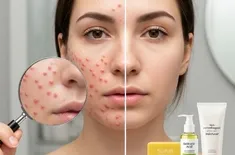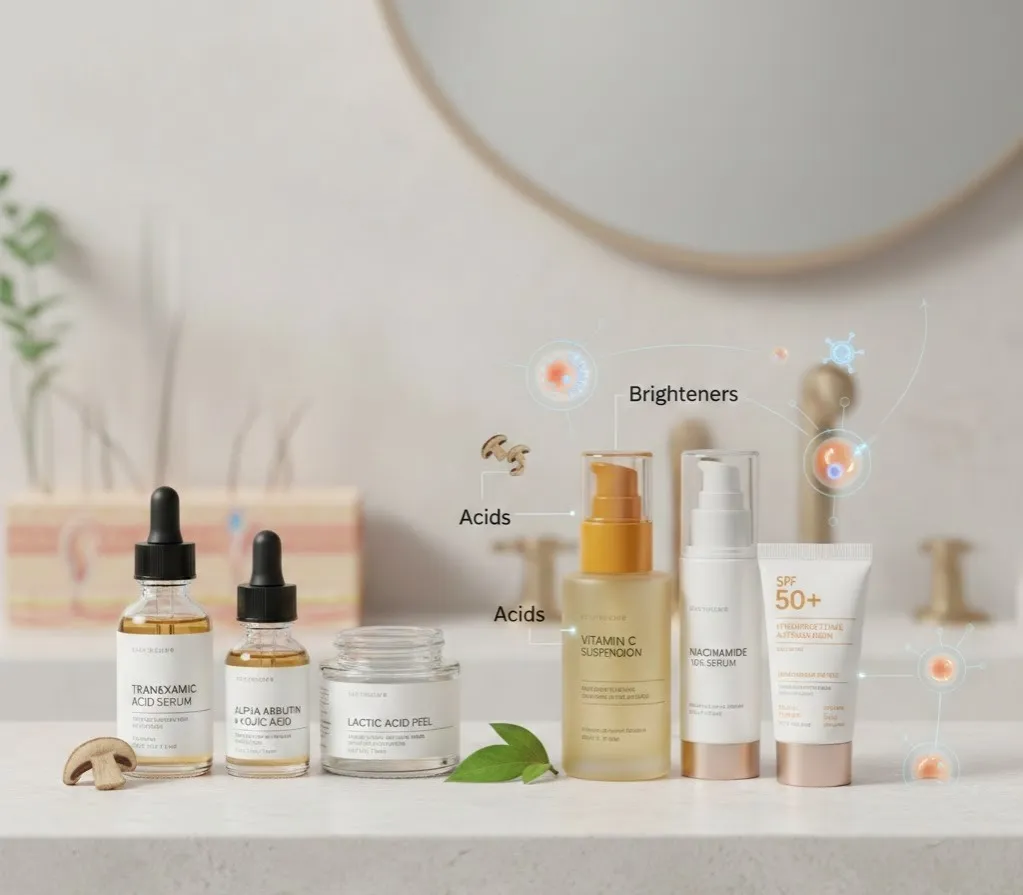
Compare the best dark spot treatment options.
The skincare market is currently abuzz with potent new players, such as the trendy tranexamic acid, but how do they stack up against time-tested classics like vitamin C? Understanding the distinct mechanisms of these two ingredient categories is crucial for effective dark spot treatment. This comprehensive guide breaks down the science behind acids and brighteners, offering a clear comparison to help you formulate a strategy for clearer, more radiant skin.
The Roots of the Problem: Melanin Production
To treat hyperpigmentation effectively, one must first understand its cause. All forms of discoloration are essentially an overproduction or uneven distribution of melanin production, the pigment responsible for giving our skin, hair, and eyes their color.
This process is initiated within specialized skin cells called melanocytes. When the skin is stressed by inflammation (from acne, injury, or aggressive treatments), hormones (in the case of melasma), or—most commonly—UV exposure, a cascade of signaling pathways is triggered. This leads to the activation of the enzyme tyrosinase, the rate-limiting step in melanin synthesis. The resulting excess pigment (melanin) is then packed into little capsules called melanosomes, which are transferred to the surrounding skin cells (keratinocytes) and ultimately rise to the skin's surface, creating the visible dark spot.
Effective hyperpigmentation ingredients, therefore, must work at one or more points in this complex process:
- Intervention Point 1: Preventing the initial trigger (antioxidants and sun protection).
- Intervention Point 2: Directly inhibiting tyrosinase and slowing melanin production (brighteners).
- Intervention Point 3: Speeding up the removal of the pigmented cells on the skin’s surface (exfoliating acids).
- Intervention Point 4: Blocking the transfer of melanosomes from melanocytes to keratinocytes (specific brighteners).
Acids: The Exfoliating & Inhibiting Powerhouses
The term "acids" in hyperpigmentation treatment encompasses two main groups: the exfoliating acids (AHAs/BHAs) and the non-exfoliating, pigment-inhibiting acids (like Azelaic or Tranexamic).
A. The Exfoliating Acids (AHAs & BHAs)
Alpha Hydroxy Acids (AHAs) like Glycolic Acid and Lactic Acid, and Beta Hydroxy Acids (BHAs) like Salicylic Acid, primarily tackle pigmentation by accelerating skin cell turnover. They work by dissolving the "glue" that holds dead, pigmented skin cells together, allowing them to shed faster.
- Mechanism: Increased cell turnover quickly removes the upper layers of skin containing accumulated pigment. This mechanical shedding is a fast way to reveal the fresh, non-pigmented skin underneath.
- Best For: Surface-level discoloration, general skin dullness, and improving overall skin texture. Lactic and Mandelic Acids are often preferred for sensitive or darker skin tones, as their larger molecular size ensures slower penetration, reducing the risk of inflammation that could lead to new PIH.
- The Caveat: If used too aggressively, the resulting irritation can ironically trigger more inflammation and worsen PIH, especially in deeper skin tones. This is why gentle, low-concentration formulas are key.
B. The Non-Exfoliating, Trendy Acid: Tranexamic Acid
Tranexamic acid (TXA) is the current star of dark spot treatment, and its mechanism is entirely different from that of exfoliating AHAs. It's a synthetic derivative of the amino acid lysine and has been used orally in medicine for years to prevent blood loss.
- Mechanism: TXA targets the root cause of certain stubborn hyperpigmentation, particularly melasma. It works by inhibiting the plasminogen/plasmin pathway in the skin. When the skin is exposed to UV light or inflammation, plasmin is activated, which then stimulates melanocytes to produce melanin. By inhibiting plasmin, tranexamic acid effectively acts as a switch-off signal, calming the melanocytes and suppressing the UV-induced overproduction of melanin production. TXA also has anti-inflammatory properties and helps to address the vascular component often seen in melasma (Source 2.3, 2.4).
- Best For: Stubborn, hormonal hyperpigmentation like melasma, and persistent, redness-associated PIH (Source 1.1).
- Tolerability: It is generally very well-tolerated and can be used twice daily, often layered with other actives, which makes it an excellent addition to any regimen.
Brighteners: The Antioxidant & Inhibitory Defenders
Brighteners are ingredients that work deeper within the skin, focusing on interfering with the melanin production pathway itself. They are primarily antioxidants or enzymatic inhibitors.
A. The Classic Defender: Vitamin C (Ascorbic Acid)
Vitamin C (L-Ascorbic Acid and its derivatives) is the gold standard of antioxidants in skincare. It is a multitasking workhorse that protects, brightens, and strengthens.
- Mechanism: As a potent antioxidant, vitamin C neutralizes free radicals generated by UV exposure and pollution, preventing the oxidative stress that triggers the initial steps of the melanin cascade (Intervention Point 1). Furthermore, it directly inhibits the tyrosinase enzyme (Intervention Point 2) and acts as a reducing agent to lighten existing melanin. Its secondary benefit is boosting collagen, which improves overall skin health.
- Best For: Overall skin brightness, fading mild dark spots, reducing the impact of daily UV damage, and achieving a "glow." It is best used in the morning to maximize its antioxidant and photoprotective benefits.
- The Challenge: L-Ascorbic Acid is highly unstable and can degrade quickly when exposed to light, air, or water. Derivatives (like Magnesium Ascorbyl Phosphate or Ascorbyl Glucoside) offer greater stability but may be less potent.
B. The Versatile Supporters: Niacinamide & Alpha Arbutin
These are critical hydroquinone alternatives that work through non-tyrosinase inhibition pathways.
- Niacinamide (Vitamin B3): This powerhouse ingredient works by preventing the transfer of melanosomes from the melanocytes to the keratinocytes (Intervention Point 4). By blocking this transfer, it prevents the pigment from reaching the skin's surface to form the visible dark spot (Source 3.1). It is also a potent anti-inflammatory agent, making it highly effective for treating PIH by calming the initial trigger.
- Alpha Arbutin/Kojic Acid: Both are considered safer, gentler alternatives to traditional heavy-hitters. Alpha Arbutin, derived from the bearberry plant, and Kojic Acid, derived from fungi, are both effective tyrosinase inhibitors, directly slowing the enzymatic production of melanin. They are staples in many combination dark spot treatment serums.
The Face-Off: Tranexamic Acid vs. Vitamin C
The biggest question in contemporary hyperpigmentation management is how to position the trendy new-guard ingredients against the classics. Tranexamic acid and vitamin C are often perceived as rivals, but they are, in fact, complementary.
| Feature | Tranexamic Acid (TXA) | Vitamin C (L-AA, Derivatives) |
|---|---|---|
| Primary Mechanism | Inhibits the plasminogen/plasmin pathway, calming melanocyte activation (Source 2.3). | Antioxidant that neutralizes free radicals and inhibits tyrosinase (Source 4.4). |
| Best Target | Stubborn, hormonally-driven melasma and post-acne redness/PIH. | Overall brightness, sun damage, mild dark spots, and daily protection. |
| Purity of Focus | Highly specific to pigment and inflammation (Source 1.2). | Multi-tasking (pigment, collagen, antioxidant defense). |
| Typical Use | Day and/or Night, especially at night for repair and fading. | Best used in the Morning for antioxidant protection. |
| Trendy vs. Classic | New, trendy favorite for stubborn pigmentation. | Gold-standard, time-tested classic. |
A comparison of the newest, trendy ingredients (like Tranexamic Acid) versus classics like Vitamin C for fading dark spots and melasma:
- For Melasma: TXA is the clear winner for difficult-to-treat melasma. Its unique ability to inhibit the plasmin pathway and address the underlying vascular component of melasma makes it a more targeted therapy for this specific type of hyperpigmentation (Source 2.3). While vitamin C is helpful, it often isn't powerful enough on its own for severe melasma.
- For Protection: Vitamin C reigns supreme as a daytime antioxidant. Used under sunscreen, it provides a crucial layer of defense against environmental damage that triggers melanin production. TXA offers anti-inflammatory benefits, which aids in prevention, but doesn't have the same free-radical-scavenging power as a pure antioxidant.
- For Post-Inflammatory Hyperpigmentation (PIH): Both are excellent. Tranexamic acid excels at calming the redness/inflammation associated with PIH, especially in deeper skin tones, preventing the spot from darkening further (Source 1.1). Vitamin C works well to fade the residual brown mark once the inflammation has subsided.
- The Optimal Strategy: The most effective approach is often to combine them. Use a vitamin C serum in the morning for protection and brightness, and use a tranexamic acid or multi-ingredient serum (containing TXA, Niacinamide, and Alpha Arbutin) at night to work on repair and active inhibition of pigment (Source 1.1).
The Search for Hydroquinone Alternatives
For decades, hydroquinone (HQ) has been the most potent topical agent for inhibiting tyrosinase and blocking melanin production. However, concerns about its side effects, including skin irritation, ochronosis (a blue-black discoloration of the skin with long-term use), and restricted availability in many regions, have driven a massive demand for potent yet safe hydroquinone alternatives.
The most effective alternatives work synergistically to cover the multiple steps of the pigmentation process that hydroquinone addresses alone:
| Hydroquinone's Action | Alternative Ingredient(s) | Mechanism of Action |
|---|---|---|
| Strong Tyrosinase Inhibitor | Azelaic Acid, Kojic Acid, Alpha Arbutin, Licorice Extract | Directly blocks the enzyme tyrosinase, slowing melanin synthesis. |
| Melanosome Transfer Blockade | Niacinamide | Prevents pigment from being dispersed to surface skin cells. |
| Anti-Inflammatory/Vascular | Tranexamic Acid, Azelaic Acid | Calms inflammation and reduces the vessel component of melasma, preventing the trigger. |
| Increased Cell Turnover | Retinoids (Retinol/Tretinoin), AHAs (Glycolic/Lactic Acid) | Speeds up the shedding of existing, pigmented cells. |
An ideal dark spot treatment formulation in the post-hydroquinone era is one that combines these powerful ingredients—a cocktail of tranexamic acid, niacinamide, and a gentle tyrosinase inhibitor like Kojic Acid—alongside consistent use of a potent vitamin C and a retinoid.
Building Your Custom Anti-Pigmentation Strategy
Choosing between "acids" and "brighteners" is not a binary decision; the most successful strategy involves integrating them strategically based on the type of discoloration you are treating.
Stage 1: Prevention is Paramount
No topical treatment will succeed without robust photoprotection. Melanin production is most potently stimulated by UV light. Use a broad-spectrum SPF 30 mineral sunscreen daily, reapply consistently, and limit direct sun exposure.
Stage 2: Addressing Inflammation (PIH)
If your primary concern is post-inflammatory hyperpigmentation (PIH)—the marks left after acne or injury—you must focus on calming the skin first.
- Priority Ingredients: Niacinamide (for anti-inflammatory action) and a non-exfoliating acid like Tranexamic Acid.
- Routine: Apply these to the affected area daily. Avoid harsh scrubbing or highly irritating peels until the inflammation has completely subsided, as this will only deepen the PIH.
Stage 3: Targeted Fading (Melasma & Sunspots)
For stubborn, established discoloration like melasma or long-standing sunspots, a multi-pronged attack is required.
- Inhibitors: Use a targeted pigment inhibitor like tranexamic acid or an Azelaic Acid/Kojic Acid blend at night.
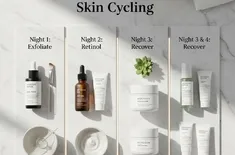
- Exfoliation/Renewal: Incorporate a gentle AHA (like Lactic Acid) or a retinoid a few nights a week to speed up the shedding of pigmented cells.
- Protection/Brightening: Apply a stable vitamin C serum every morning for defense and overall skin glow.
By understanding the difference between the strategic anti-inflammatory and pigment-inhibiting properties of modern acids like tranexamic acid and the broad-spectrum antioxidant and tyrosinase-inhibiting power of classics like vitamin C, you move beyond mere product application to true, informed skincare therapy. This synergistic approach, supported by effective hydroquinone alternatives and unwavering sun protection, is the most powerful path to successfully fading even the most persistent dark spot treatment challenges.