Discover prebiotic skincare and postbiotic fermented ingredients for optimal bacterial balance.
The world of skincare is continually evolving, moving beyond simple surface-level treatments to embrace a more holistic and biological approach. At the forefront of this revolution is the science of the skin microbiome—the unique ecosystem of trillions of microorganisms, including bacteria, fungi, and viruses, that live on your skin's surface. Maintaining a balanced and thriving microbiome is now understood as crucial for achieving true skin health benefits and resilience.
This new frontier focuses on ingredients that work with your skin's natural inhabitants, particularly prebiotic skincare and the potent derivatives known as postbiotics, moving beyond the formulation challenges often associated with live probiotics. By feeding and supporting the existing beneficial bacteria, these ingredients create a harmonious environment that leads to a visibly calmer, stronger, and more radiant complexion.
Understanding the Skin Microbiome and Its Importance
The skin microbiome is your body's first line of defense, acting as a protective shield against environmental stressors, pathogens, and pollution. This delicate community of microbes interacts constantly with your skin cells and immune system.
A State of Harmony: When the microbiome is in a state of balance, known as bacterial balance or eubiosis, the good bacteria outcompete the harmful ones. They help maintain the skin's slightly acidic pH (around 5.5), produce beneficial compounds, and reinforce the skin barrier function.
A State of Disruption: An imbalance, or dysbiosis, is a key factor in many common skin issues, including acne, eczema, rosacea, and sensitivity. Harsh cleansing, pollution, UV exposure, and even stress can disrupt this balance, leading to inflammation, redness, and a compromised barrier.
The Science of Prebiotic Skincare
Prebiotics are essentially the "food" for the beneficial bacteria (commensals) already residing on your skin. They are non-living, non-digestible ingredients—typically complex carbohydrates, fibers, or sugars—that selectively fuel the growth and activity of the existing good microorganisms. The goal of prebiotic skincare is not to introduce new bacteria (like probiotics) but to nourish and multiply the desirable strains that naturally protect you.
How Prebiotics Work to Support Beneficial Bacteria
- Selective Nourishment: Prebiotic ingredients are formulated to be metabolized preferentially by beneficial bacteria such as Staphylococcus epidermidis and Cutibacterium acnes (the good, non-pathogenic strains). By feeding these good microbes, prebiotics help them flourish and increase their population, effectively pushing out the opportunistic, harmful bacteria.
- Boosting Defense: When the beneficial bacteria are well-fed and thriving, they are better able to produce their own natural protective compounds, including antimicrobial peptides (AMPs). These AMPs act as the skin's natural defense mechanism, helping to neutralize potential pathogens.
- Strengthening the Barrier: A robust population of beneficial bacteria aids in the production of ceramides, natural moisturizing factors, and lipids, all of which are vital components of the skin barrier. A stronger barrier reduces transepidermal water loss (TEWL), leading to improved hydration and less sensitivity.
Key Prebiotic Ingredients in Skincare
- Alpha-Glucan Oligosaccharide (Alpha-GO): Derived from natural sugars, this is one of the most common and effective prebiotics, proven to help re-establish a balanced microbial community.
- Inulin and Fructooligosaccharides (FOS): Plant-derived fibers that serve as excellent fuel sources for specific beneficial strains.
- Oat Extract and Beta-Glucan: Polysaccharides that not only nourish the microbiome but also offer direct soothing formulas and anti-inflammatory effects.
Postbiotic Power: Fermented Ingredients
If prebiotics are the food, and beneficial bacteria (probiotics) are the diners, then postbiotics are the beneficial compounds produced during the dining process—the fermentation metabolites. The latest science shows that postbiotics offer the most direct, stable, and potent way to reap the benefits of a healthy microbiome.
Postbiotics are defined as "a preparation of inanimate microorganisms and/or their components that confers a health benefit on the host." This includes a broad range of bioactive substances like organic acids, peptides, enzymes, cell-free extracts, and more.
Why Postbiotics Are a Skincare Game-Changer
While probiotics (live bacteria) are challenging to formulate into stable, shelf-stable skincare products because they require specific conditions and can be killed by common preservatives, postbiotics—being non-living—are incredibly stable and deliver their benefits directly to the skin.
This stability and efficacy have led to a surge in products featuring postbiotic fermented ingredients. These are often listed as "ferments," "lysates," or "filtrates" on an ingredient list.
- Lysate: A solution resulting from the breaking apart of bacterial cells.
- Ferment/Filtrate: The liquid and non-viable components left over after a beneficial microbe has fermented a substrate (like a plant extract or sugar).
The Direct Action of Postbiotics on Skin
Postbiotics deliver targeted, multifunctional benefits directly to the skin cells:
| Postbiotic Compound | Source (Example Ferment) | Primary Skin Health Benefit |
|---|---|---|
| Lactic Acid | Lactobacillus ferment | Hydration, gentle exfoliation, and pH balance restoration. |
| Short-Chain Fatty Acids (SCFAs) | Various bacteria | Powerful anti-inflammatory action, strengthening the skin barrier, and supporting skin immunity. |
| Antimicrobial Peptides | Certain bacterial lysates | Directly inhibit the growth of pathogenic bacteria like P. acnes (acne) and S. aureus (eczema). |
| Enzymes & Peptides | Yeasts like Saccharomyces | Promote skin cell renewal, boost collagen production, and offer antioxidant protection. |
The Latest Science: A Symbiotic Relationship for Skin Health
The most advanced understanding of microbiome-friendly skincare involves using prebiotic and postbiotic ingredients in synergy to achieve optimal bacterial balance.
The goal is to cultivate the existing population on the skin (via prebiotics) and provide direct, immediate therapeutic benefits (via postbiotics).
Specific Mechanisms and Clinical Evidence
Targeting Inflammation and Sensitivity
Clinical studies have repeatedly shown the ability of soothing formulas containing specific postbiotic lysates (like Bifida ferment lysate) to significantly reduce skin reactivity, sensitivity, and redness. These postbiotics have an immunomodulatory effect, essentially training the skin's immune cells to have a calmer response to irritants. This makes them a hero ingredient for conditions like rosacea and eczema.
Strengthening the Skin Barrier Function
A critical function of the skin barrier is to prevent foreign invaders from entering and to retain moisture. The latest research confirms that the synergistic use of prebiotics and postbiotics strengthens this function in two ways:
- Prebiotics boost the beneficial microbes which produce essential lipids on the skin.
- Postbiotics (particularly SCFAs and specific peptides) are shown to directly support the production of structural proteins and ceramides in the skin cells. This dual action leads to visibly smoother, less flaky, and more resilient skin.
Acne and Clarification
Topical prebiotics can selectively support the growth of non-inflammatory Cutibacterium acnes strains, which naturally maintain a healthy skin environment, while inhibiting the overgrowth of inflammatory strains. Meanwhile, postbiotics like succinic acid, lactic acid, and antimicrobial peptides directly combat the pathogens responsible for breakouts, promoting clearer skin without the harsh stripping effects of traditional acne treatments.
Anti-Aging and Skin Renewal
Beyond balance, the metabolites in postbiotic fermented ingredients offer notable anti-aging benefits. Specific postbiotic peptides can stimulate the production of collagen and elastin, improving skin elasticity and firmness. The gentle exfoliating and pH-balancing properties of organic acids like lactic acid also encourage healthier cell turnover, resulting in a brighter, more refined complexion.
Incorporating Biotics into Your Routine
Integrating prebiotic and postbiotic ingredients is a non-negotiable for modern prebiotic skincare.
- Cleansing: Choose a pH-balanced cleanser with mild surfactants to avoid stripping the natural oils and beneficial flora. Look for formulations with postbiotic ferments to gently clean while maintaining barrier integrity.
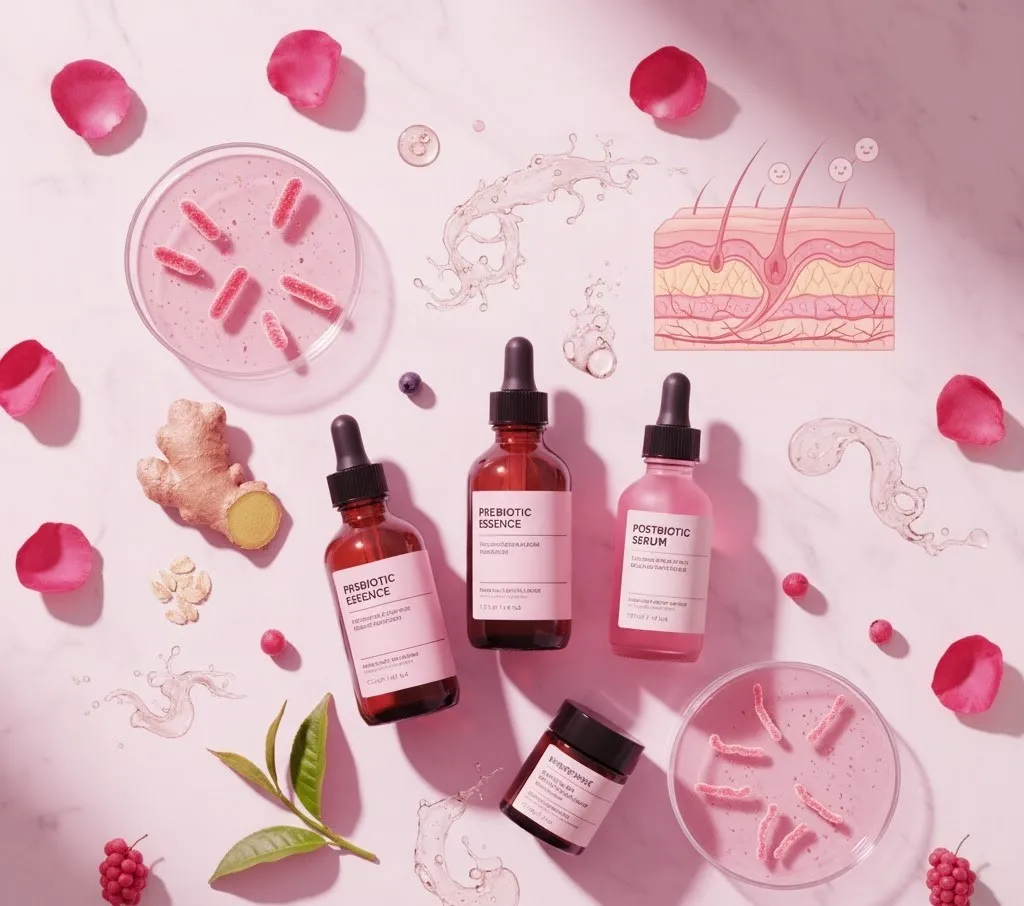
- Targeted Treatment: Serums and essences are ideal for delivering a concentrated dose of both prebiotics and postbiotics. Look for ingredients like inulin (prebiotic) combined with Lactococcus or Bifida ferment lysates (postbiotics) to maximize symbiotic effects.
- Moisturizing: Finish with a moisturizer featuring these ingredients to lock in the beneficial compounds and support the newly strengthened skin barrier. A consistent routine is key, as it takes time to stabilize the complex ecosystem of the skin's microbiome.
By embracing this science-backed approach, you move beyond temporary fixes, choosing products that truly work with your biology to cultivate long-lasting, resilient, and beautiful skin health benefits. The era of the microbiome has officially made **prebiotic and postbiotic skincare** the gold standard for anyone seeking calmer, more balanced, and incredibly strong skin.