Discover the rise of Coolcations and icescape travel.
The White Revolution: The Rise of 'Icescapes' and Coolcations
As global temperatures continue their relentless ascent, the very definition of a desirable vacation is undergoing a dramatic transformation. The traditional allure of sun-drenched beaches and scorching Mediterranean cities is being tempered by an uncomfortable reality: the discomfort, and sometimes danger, of extreme summer heat. In response, a powerful new travel trend has emerged: the Coolcations. These are not just trips to avoid the heat; they are purposeful pilgrimages to the world's most dramatic and tranquil cold-weather locations, giving rise to a new appreciation for the icescape travel experience.
The allure of the North—and the far South—is no longer a niche pursuit for intrepid explorers; it is becoming a mainstream movement. Travelers are actively seeking out destinations characterised by cold, peaceful, and visually dramatic environments, offering a sublime escape from rising global heat. This shift is a direct response to climate change, transforming bucket lists from tropical paradises to frosty frontiers.
The Genesis of Coolcations: Escaping the Heat
The term Coolcations, a portmanteau of "cool" and "vacations," perfectly encapsulates this burgeoning trend. For millions, the primary motivator is simple: escaping the heat. Record-breaking summer temperatures, coupled with the phenomena of overtourism in traditional hot spots, have made a sweltering summer city break or a crowded Mediterranean beach feel less like a holiday and more like an endurance test.
Travelers are now re-evaluating the value of their vacation time and money. Why endure overcrowded streets in 40°C heat when one can experience the crisp air, pristine wilderness, and profound solitude of a cooler locale? This pragmatic, climate-conscious choice is driving a fundamental redirection of tourism dollars towards Northern Europe, the Arctic, and the Southern Hemisphere's winter playgrounds.
The Allure of 'Icescapes' and Serene Winter Destinations
While Coolcations broadly refers to any cooler holiday, the Icescapes trend focuses on the most visually dramatic, ice-dominated environments. These are places where ice, snow, and dramatic light define the landscape, creating an unparalleled sense of awe and serenity.
1. The Arctic: The Frontier of Extreme Climate Tourism
The Arctic region—encompassing destinations like Norway, Sweden, Finland, Iceland, Greenland, and parts of Canada and Alaska—is the undisputed heart of icescape travel. This is where travelers engage in extreme climate tourism, seeking out environments that demand preparation but reward with once-in-a-lifetime experiences.
- Norway's Fjords and Northern Lights: The Norwegian coast and the far north, such as Tromsø and Svalbard, offer staggering beauty. Snow-capped mountains plunge into deep fjords, creating scenes of profound, silent drama. Winter here is defined by the ethereal dance of the Aurora Borealis, an experience that embodies the serene winter destinations appeal.
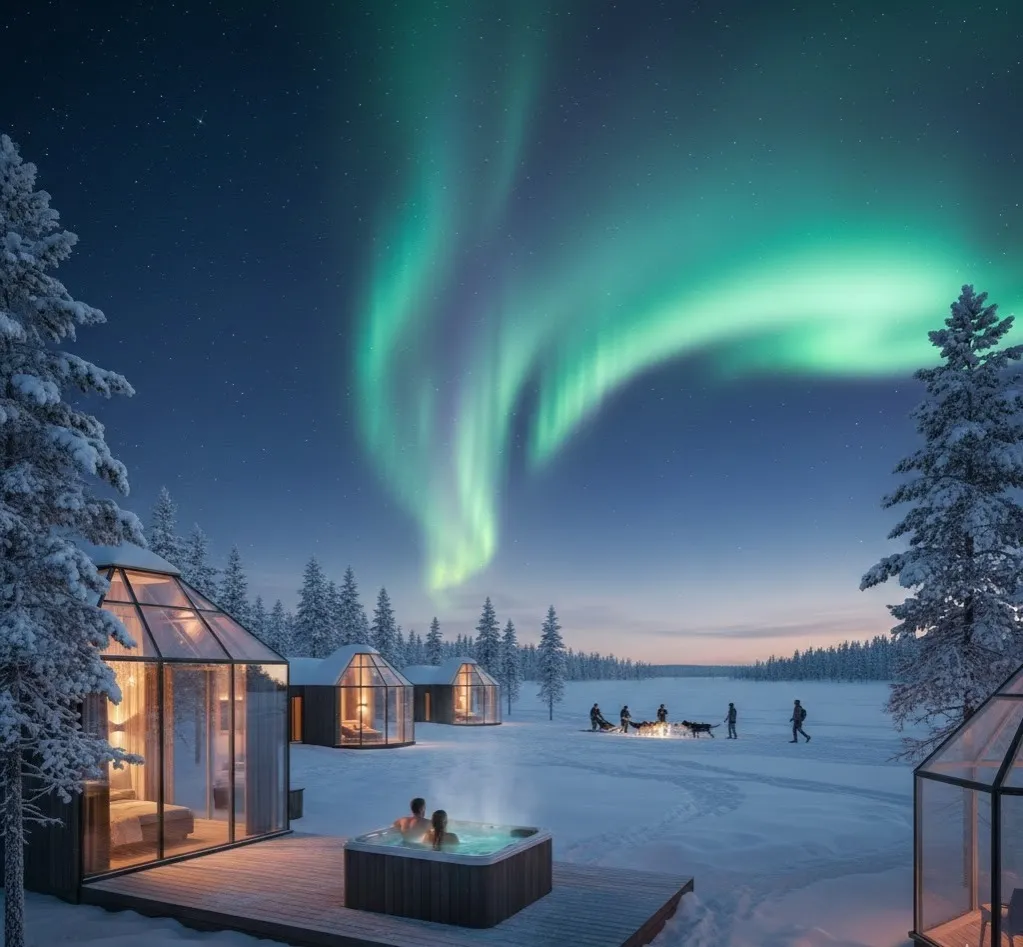
- Finnish Lapland's Winter Wonderland: Rovaniemi, the official home of Santa Claus, and the wider Lapland region offer activities like reindeer and husky sledding, snowmobiling, and staying in glass-roofed igloos designed for Northern Lights viewing. This is adventure infused with quiet magic.
- Iceland's Fire and Ice: Iceland remains a perennial favourite. Here, massive glaciers meet volcanic heat, providing unique experiences like exploring blue ice caves and soaking in geothermal lagoons, such as the famous Blue Lagoon or the quieter Sky Lagoon, all while surrounded by a dramatic, icy landscape.
2. Antarctica and Patagonia: The Ultimate Icescape
For the truly adventurous seeking the most definitive icescape travel experience, the Antarctic Peninsula and the southern tip of South America offer the ultimate challenge.
- Antarctic Expeditions: Luxury expedition cruises to Antarctica offer encounters with colossal icebergs, massive colonies of penguins, and majestic whales. This is arguably the pinnacle of extreme climate tourism, a journey to the earth's purest, coldest continent that leaves an indelible mark.
- Patagonia's Glaciers: In South America, Chilean and Argentinian Patagonia (e.g., Torres del Paine, Los Glaciares National Park) offer vast glacial fields and stunning mountain ranges like the Matterhorn-like peaks of the Fitz Roy range. Hiking here is challenging, yet the rewards are the absolute silence and the majestic scale of the icy wilderness.
The Evolution of Accommodation: Arctic Luxury Lodges
The rise of Coolcations has been paralleled by an evolution in accommodation, moving beyond rustic cabins to offer unparalleled comfort and access. The emergence of arctic luxury lodges has made extreme climate tourism accessible to high-end travelers, blending raw wilderness exposure with five-star amenities.
- Designer Cold-Weather Retreats: Modern arctic luxury lodges are architectural marvels, often built with sustainability in mind, offering panoramic views of the Northern Lights or the endless Arctic tundra. Think of treehouse hotels in Sweden's Lapland, or the insulated, futuristic 'pods' of White Desert in Antarctica, which offer unparalleled comfort in the planet’s most hostile environment.
- Ice and Snow Hotels: Iconic structures like the Icehotel in Jukkasjärvi, Sweden, or the Sorrisniva Igloo Hotel in Norway, offer an immersive, one-of-a-kind overnight experience. These hotels, rebuilt annually from snow and ice, perfectly embody the icescape travel fantasy, providing a temporary, glittering refuge from the cold.
- Wellness and Hygge: These modern lodges often incorporate Scandinavian concepts of 'hygge' (cosiness and contentment) and focus on wellness. Hot tubs under the stars, world-class saunas, and locally sourced fine dining have become standard, ensuring the journey to a serene winter destination is as comfortable as it is adventurous.
Travel Types and Experiences in Icescapes
The experiences offered by Coolcations are fundamentally different from traditional warm-weather holidays, focusing on deep connection with nature, adventure, and solitude.
1. Quiet Adventure & Solitude
Many travelers are actively seeking the quietude that defines these serene winter destinations. The snow acts as a natural sound-dampener, creating an environment of almost unbelievable silence.
- Winter Hiking and Snowshoeing: Exploring vast, silent forests or national parks on snowshoes or cross-country skis offers a meditative experience, a true respite for the mind. Destinations like the Canadian Rockies (Banff, Jasper) or the Swiss Alps in their quieter shoulder seasons offer this tranquil solitude.
- Digital Detox: The remote nature of many icescape travel locations, combined with the all-consuming spectacle of the environment, makes them ideal for a digital detox, forcing travelers to be present in the dramatic landscape.
2. Unique Natural Phenomena
The draw of the North is inextricably linked to its unique light conditions.
- Aurora Hunting: The search for the Northern Lights is a prime motivator. This requires traveling to the far north (or south for the Aurora Australis) during the dark winter months, turning the vacation into a quest for one of nature's greatest light shows.
- Polar Night and Midnight Sun: Experiencing the *Kaamos* (Polar Night) in mid-winter, a period of perpetual twilight, or the Midnight Sun in the summer, where the sun never sets, fundamentally changes one's perception of time and day.
3. Cold-Water Wellness
The wellness industry has fully embraced the benefits of cold exposure.
- Ice Swimming and Plunges: Following local traditions in places like Finland and Russia, the invigorating experience of a cold plunge or ice swim, often followed by an intense sauna session, has become a sought-after wellness ritual in extreme climate tourism. This is seen as a way to boost circulation, reduce inflammation, and achieve mental clarity.
The Future: Sustainability and Ethical Coolcations
As the Coolcations trend accelerates, driven by the desire to avoid the heat, a critical ethical dimension comes into play: many of these fragile icy landscapes are the most vulnerable to climate change. The irony of seeking an icescape travel destination to escape the heat, while simultaneously contributing to the emissions that damage that very environment, is not lost on the tourism sector.
The future of extreme climate tourism must be rooted in sustainability. Tour operators are increasingly focusing on:
- Low-Impact Travel: Promoting smaller group sizes, using eco-friendly transportation (like electric snowmobiles), and adhering to strict "leave no trace" policies, especially in pristine areas like Antarctica.
- Supporting Local Communities: Ensuring tourism revenue directly benefits the indigenous and local populations who are the true stewards of these environments, such as the Sami in Scandinavia.
- Education: Incorporating conservation and climate change education into the travel experience, turning tourists into advocates for the preservation of these magnificent, yet vulnerable, serene winter destinations.
The rise of the Coolcations phenomenon marks a significant inflection point in global travel. It reflects a growing recognition that true luxury in the modern world may be defined not by excess, but by comfort, authenticity, and the breathtaking rarity of a pristine, temperate environment. As travelers continue to seek refuge and wonder in the world's most dramatic cold spots, the era of icescape travel has officially dawned, redefining the ultimate getaway as one defined by a profound, cool, and unforgettable silence.