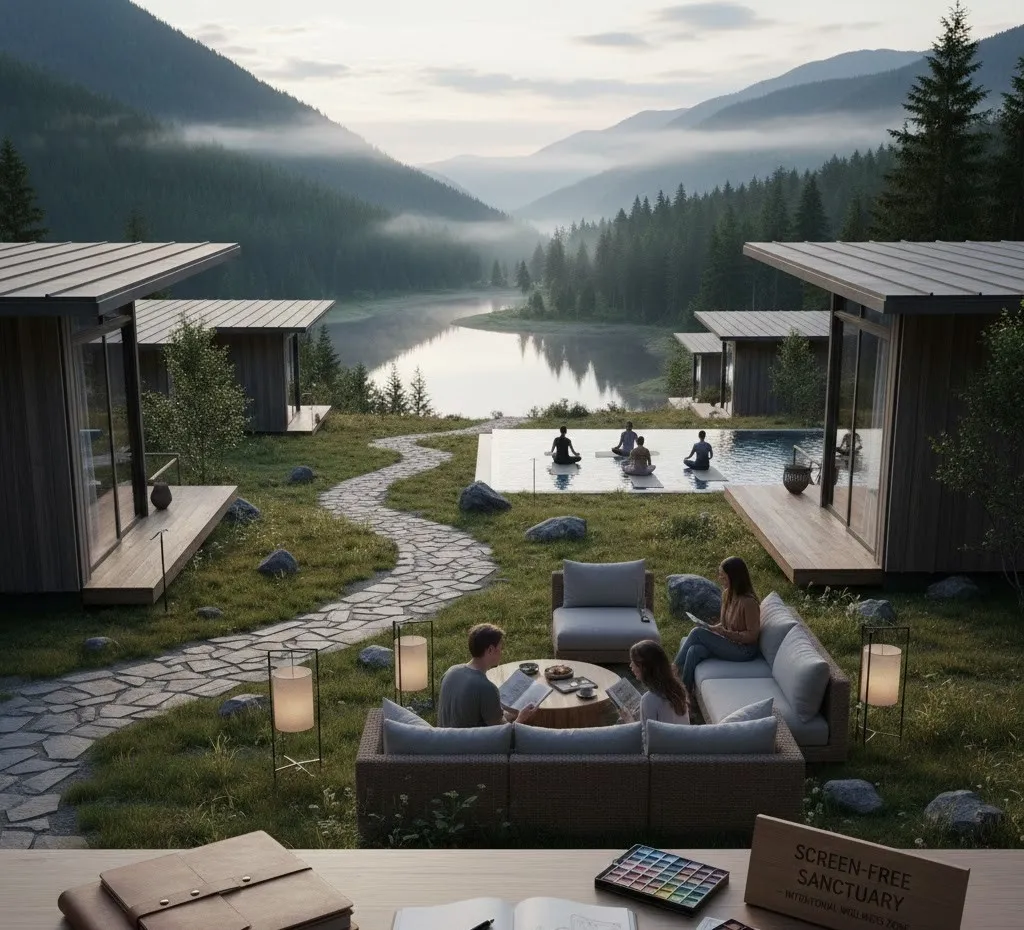
Discover the rise of luxury calmcations and digital detox retreats.
In an era defined by hyper-connectivity, the greatest commodity is no longer material wealth, but uninterrupted attention. The constant barrage of notifications, the infinite scroll of social media, and the relentless pull of professional email have transformed our high-tech devices from tools of liberation into shackles of perpetual demand. This pervasive digital noise has created a profound societal need: a desire to disconnect, to reclaim mental clarity, and to reset the weary mind.
This need is not a niche request but a burgeoning, high-value market. The traditional idea of a luxury vacation—a mere change of scenery—is no longer sufficient. Today's elite traveler seeks a deeper, more transformative escape. This new paradigm has given rise to a movement of luxury calmcations—meticulously crafted environments designed not just for relaxation, but for profound, intentional disengagement. These are the digital detox sanctuaries, the high-end resorts and dedicated disconnection retreats that define the new gold standard of modern luxury travel.
The Architecture of Disconnection: High-End Resorts Redefining Retreat
The most compelling aspect of this trend is the proactive and sophisticated approach taken by high-end resorts. They are not merely offering remote locations; they are creating controlled, tech-free environments that cater specifically to mental health and the need to disconnect. This is a crucial distinction. It removes the burden of self-control from the guest, turning the act of unplugging from a test of will into an effortless, luxurious default setting.
These resorts have architected their entire guest experience around the absence of screens. The design is deliberate, often incorporating natural elements, minimalist aesthetics, and tranquil spaces that encourage contemplation rather than consumption.
The Check-In Ritual:
In many of these ultra-exclusive sanctuaries, the digital detox begins at the front desk. Guests are often invited, and sometimes required, to surrender their smartphones, tablets, and laptops. They are provided with an "analogue survival kit" which might include a high-quality journal, premium art supplies, physical books, or a map for exploring the grounds. For emergency contact, a single, designated, and monitored landline or an old-school 'dumb phone' is often provided, ensuring peace of mind without the daily stressor of the infinite internet.
Creating True Screen-Free Zones:
The concept of screen-free zones extends beyond a simple request. Public spaces—the fine dining restaurants, the library, the thermal spa, and the communal lounges—are strictly enforced as areas where technology is simply not permitted. This shifts the focus back to genuine human connection, deep conversation, and the appreciation of the present moment. The lack of glowing screens ensures that every guest contributes to a collective atmosphere of serenity and presence, a form of communal intentional wellness.
The removal of Wi-Fi is perhaps the boldest commitment. No-Wi-Fi escapes are a core promise, moving beyond the simple 'lack of signal' in a remote area to a deliberate engineering choice. The resort may choose to either block the signal entirely or simply not install it, making it impossible for the guest to fail at their detox. This structural commitment to disconnection is the ultimate act of luxury—a service that liberates the guest's mental bandwidth.
The Deep Why: Mental Health and the Attention Economy
The demand for disconnection retreats is a direct response to the documented mental health crisis spurred by the attention economy. Researchers have linked excessive screen time to increased anxiety, depression, poor sleep quality, and a diminished attention span. The constant flow of information puts the brain in a state of continuous low-grade stress, spiking cortisol levels and preventing the "rest and digest" parasympathetic nervous system from engaging.
A luxury digital detox offers a powerful remedy:
- Restoring the Nervous System: By eliminating the micro-stressors of notifications, the resorts allow the nervous system to finally downshift. The silence and the focus on nature-based activities naturally lower cortisol and blood pressure.
- Enhancing Sleep Quality: Without the blue light from screens suppressing melatonin production in the hours before bed, guests report experiencing deeper, more restorative sleep—one of the most immediate and profound benefits of a screen-free zone.
- Fostering Genuine Connection: The absence of devices forces guests to engage more fully with their companions, fellow retreat-goers, and the staff, leading to more meaningful, authentic interactions that combat the loneliness often bred by social media consumption.
This intentional focus on mental and emotional restoration elevates the luxury calmcation far beyond a standard hotel stay. It is an investment in self-regulation, cognitive function, and long-term well-being.
Programming the Pause: Intentional Wellness and Mindful Travel
To fill the void left by technology, these retreats have curated rich, immersive programming centered on intentional wellness. The activities are designed to engage the body and mind in non-digital ways, encouraging a return to analogue pleasure and sensory awareness.
The programming highlights of these disconnection retreats often include:
- Forest Bathing (Shinrin-Yoku): Guided, silent walks through pristine, often private, natural environments. The focus is on engaging all five senses with the forest atmosphere, a scientifically proven method for reducing stress hormones.
- Art and Creative Workshops: Clay sculpting, watercolour painting, journaling, and mindful photography (using an analogue camera) provide a flow state that digital activity rarely offers.
- Holistic Movement: Daily schedules are anchored by practices such as restorative yoga, Tai Chi, breathwork (Pranayama), and guided meditation sessions, all specifically designed to cultivate present-moment awareness and aid the digital detox.
- Gourmet, Mindful Dining: Meals are savoured in screen-free zones, often featuring locally sourced, nutrient-dense cuisine. Guests are encouraged to practice mindful eating, focusing on the textures, smells, and flavours of the food, thus transforming a routine necessity into a moment of deep presence.
This commitment to mindful travel transforms the vacation into a period of personal growth and re-calibration. Guests leave not just rested, but equipped with new coping mechanisms and a healthier, more intentional wellness mindset that they can integrate back into their daily lives.
Beyond the Retreat: Integrating Analog Living
The true measure of a successful luxury calmcation is not how well the guest disconnected at the resort, but how effectively they maintain the newfound clarity upon returning home. The best disconnection retreats understand this and incorporate a crucial final stage: re-entry programming.
Before departure, guests often participate in workshops focused on creating sustainable, healthy boundaries with technology. These sessions teach practical skills:
- Creating Tech-Free Zones at Home: Designating the bedroom and the dining table as screen-free zones.
- The Intentional Check-In: Learning to schedule specific times for email and social media, rather than being reactive to notifications.
- Analog Anchor Activities: Re-committing to analogue hobbies like reading, gardening, playing musical instruments, or hands-on crafts to cultivate a more balanced life rooted in intentional wellness.
The experience is framed not as a temporary denial, but as a practice in mindful living and mindful travel that extends indefinitely. The guest is taught that a life of deep engagement and attention is not something to be sought on a remote island, but a personal choice to be exercised daily, even amidst the presence of Wi-Fi.
Conclusion: The Future of Luxury is Silence
The digital detox sanctuary is more than just a trend; it is a vital, necessary evolution of the hospitality industry. By providing no-Wi-Fi escapes and luxurious screen-free zones, high-end resorts are offering the modern traveler the one thing they cannot buy: stillness.
In a world that demands constant availability, the true luxury calmcations give their guests the permission—and the controlled environment—to be fully unavailable. It is a powerful act of self-reclamation. As the noise of the digital world grows louder, the promise of quiet, restorative disconnection will only become more coveted, securing the digital detox sanctuary’s place as the pinnacle of intentional wellness and mindful travel for years to come.