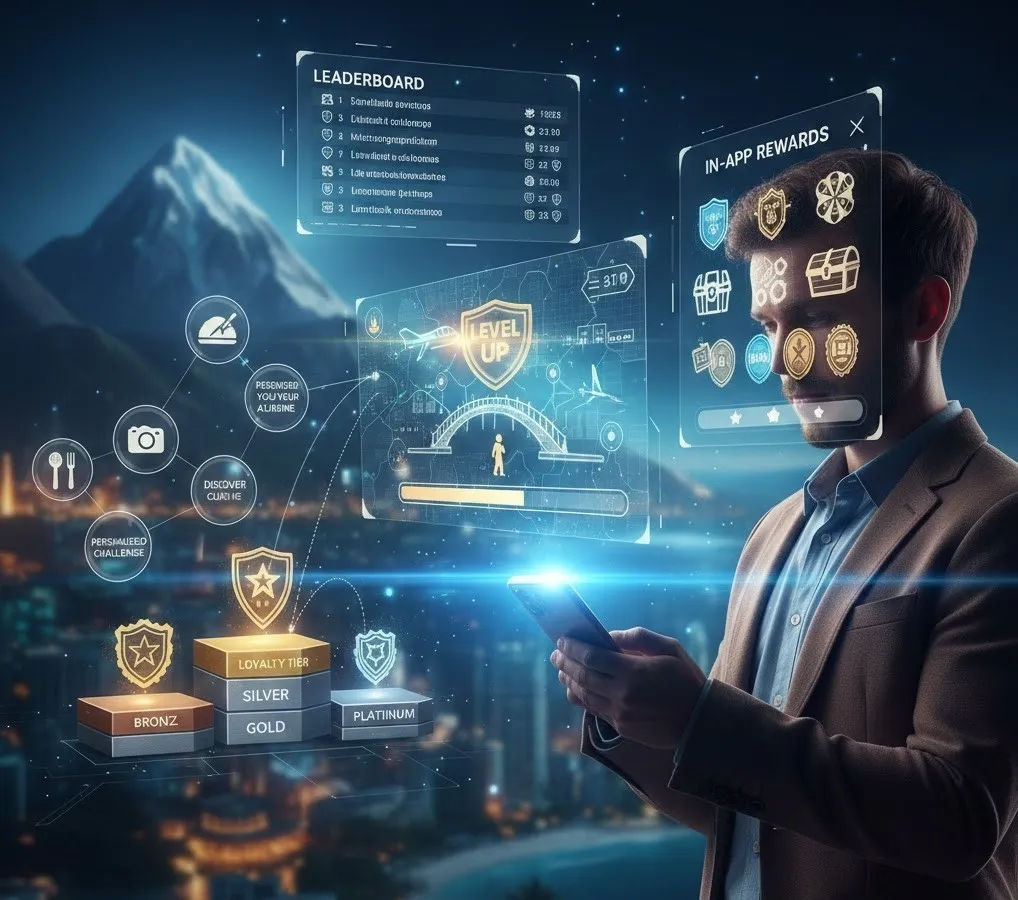
Master your points redemption strategy and key engagement metrics.
Level Up Your Journey: The Gamification of Loyalty and Travel
In the fiercely competitive landscape of the travel and hospitality industries, traditional points-based loyalty programs are increasingly failing to cut through the noise and foster genuine customer connection. Modern travelers, especially younger generations, are seeking more than just transactional rewards; they crave experiences, recognition, and engagement. This shift has given rise to one of the most powerful marketing trends of the decade: The Gamification of Loyalty and Travel.
Gamification is the strategic application of game design elements and principles—such as points, badges, leaderboards, and challenges—to non-game contexts, specifically to motivate and engage customers. In the travel world, this means using these engaging mechanics to motivate travelers to engage more deeply with a brand or explore new offerings for rewards, transforming a simple transaction into an exciting, ongoing adventure.
The Core Mechanics of Travel Gamification
Travel gamification transcends the standard "earn and burn" model of loyalty. It’s about leveraging human psychology—our innate desire for achievement, status, and competition—to drive desired behaviors, whether it's booking a flight, leaving a review, or exploring a new destination.
1. Loyalty Reward Tiers: Status as the Ultimate Prize
Tiered structures have always been the backbone of loyalty programs, but gamification amplifies their appeal. By framing tiers as levels in a game, brands tap into the player's desire for progress and status.
Clarity and Progression:
A gamified tier system clearly outlines the specific actions needed to "level up"—for example, reaching 'Gold' status after booking five trips or accumulating 20,000 miles. Progress bars are often used to visually represent a member's proximity to the next status, serving as a powerful motivator.
Aspirational Rewards:
Each new tier (e.g., Bronze, Silver, Gold, Platinum) unlocks a set of increasingly exclusive perks, creating a highly coveted sense of accomplishment. These perks often extend beyond simple discounts to include priority boarding, exclusive lounge access, or dedicated customer service, making the elevated loyalty reward tiers a true status symbol.
The Power of Recognition:
Reaching a new tier isn't just about the benefits; it’s about public recognition. Digital badges, titles like "Global Explorer," or featured spots on an in-app leaderboard satisfy the human need for acknowledgment, reinforcing the sense of belonging and community.
2. Personalized Challenges: Driving Behavior with Purpose
The move from passive earning to active participation is driven by personalized challenges. These are micro-quests designed to encourage specific, high-value customer actions.
Behavioral Nudges:
Challenges can be simple, such as "Book a weekend getaway" to earn 500 bonus points, or more complex, like "Visit three different cities in Europe this quarter" to unlock a special badge and a flight upgrade voucher. This mechanism is crucial for steering customers toward new products or services they might not have otherwise considered.
Data-Driven Customization:
Effective gamification relies heavily on data. By analyzing past booking history, preferred destinations, and platform interactions, brands can issue highly personalized challenges. For instance, a customer who frequently travels to Asia might be challenged to "Discover Southeast Asia" by booking a hotel in a new country, maximizing the relevance and completion rate of the challenge.
Time-Sensitive Missions:
Introducing an element of urgency through limited-time missions—such as a "Flash Quest" to earn double points on hotel stays booked within the next 48 hours—can be exceptionally effective at driving immediate conversions and improving engagement metrics.
The Reward Ecosystem: Points Redemption Strategy and In-App Rewards
A compelling gamified experience requires a multifaceted reward system that goes far beyond generic points. The rewards need to be tangible, desirable, and immediately gratifying.
3. Points Redemption Strategy: Creating Meaningful Value
While points remain the currency of loyalty, a smart points redemption strategy makes them feel like much more than a discount.
Experiential Redemptions:
The most engaging redemption options aren't just flights or hotel rooms; they are unique experiences. Think redeeming points for a private cooking class at a resort, a guided local tour, or a surprise room upgrade. This transforms the points from a monetary value into a memory.
Tiered Redemption Costs:
Just as tiers create status in earning, they can be applied to redemption. Higher-tier members may get access to "secret stores" or "exclusive auctions" where they can bid their points on premium, limited-edition rewards, adding an element of prestige and competition to the act of spending.
"Hybrid" Currency:
The system can employ points for standard transactions and digital "gems" or "tokens" for game-specific rewards like avatars, special badges, or entries into a sweepstakes. This separation ensures that the core loyalty program remains intact while offering an engaging, low-cost parallel reward stream.
4. In-App Rewards and Instant Gratification
The mobile application is the primary battleground for travel gamification. It's the hub where travelers engage, track progress, and receive instant feedback.
Digital Collectibles and Badges:
Digital badges are perhaps the most popular and low-cost gamification element. They serve as virtual trophies for completing challenges, like the "Frequent Flyer" badge for their 50th flight or the "Eco-Warrior" badge for choosing carbon-offsetting options. These in-app rewards provide immediate gratification and are designed to be highly shareable on social media, acting as free marketing for the brand.
Spin-to-Win and Surprise Bonuses:
Introducing elements of chance and surprise—like a "Spin-the-Wheel" feature upon checking into a hotel or a surprise in-app reward pop-up after a flight—taps into the excitement of unpredictability. The reward might be a small points bonus, a free coffee voucher, or a discount code, but the thrill of the chase drives daily app logins and engagement.
Leaderboards and Competition:
Leaderboards—whether for highest points earned, most reviews submitted, or most challenges completed—tap into the core human desire for competition and social comparison. They provide clear visibility into performance relative to peers, motivating top customers to maintain their position and others to strive for a higher rank.
Measuring Success: Engagement Metrics and Business Impact
Gamification is not just a marketing gimmick; it is a data-driven strategy that yields measurable business results. Tracking the right engagement metrics is critical to proving its ROI and optimizing the experience.
Key Performance Indicators (KPIs) for Gamification
- Active Participation Rate: This metric tracks the percentage of loyalty members who are actively participating in gamified features (e.g., challenges, quizzes, badge collection) versus those who are only performing transactional activities. A high rate indicates the features are successfully driving non-purchase behavior.
- Challenge Completion Rate: This measures the success of the personalized incentives. A high completion rate for a challenge like "Book a trip to a new destination" demonstrates the system's effectiveness in driving product discovery and new revenue streams.
- Time Spent in App/on Site: Gamified elements like quizzes, interactive maps, and virtual tours naturally increase the dwell time on a brand's digital platforms, leading to greater brand affinity and higher potential for spontaneous bookings.
- Redemption Rate of Gamified Rewards: Tracking how frequently players redeem their points or in-app rewards for experiences or unique items, rather than just discounts, confirms that the reward system is perceived as highly valuable and differentiating.
- Customer Lifetime Value (CLV): The ultimate measure of success. By driving deeper engagement and fostering an emotional connection, a successful gamified program increases the frequency of purchases, the average spend, and the overall duration of the customer relationship, leading to a demonstrable increase in CLV
The Future of Travel: Beyond Transactions
The gamification of loyalty and travel is not a passing fad; it is the evolution of the customer relationship. It answers the modern traveler's demand for a reciprocal, engaging, and personalized relationship with the brands they choose. By strategically applying game design elements, travel companies are successfully transforming the act of traveling and interacting with their brand from a series of passive transactions into an exciting, achievement-driven journey.
This strategy ensures that the brand remains top-of-mind not just when the traveler needs to book, but in the periods between trips, which is the industry's single greatest challenge. By offering points for non-transactional behaviors—like participating in quizzes about future destinations, sharing travel content on social media, or referring friends—brands foster a continuous, rewarding loop of engagement. The competitive advantage lies in making the process of earning status and rewards enjoyable, creating a powerful, emotional bond that turns customers into loyal, enthusiastic brand advocates. The game is on, and the prize is enduring customer loyalty.