Master content repurposing across TikTok, Reels, & YouTube Shorts.
The Ultimate Repurposing Guide: Mastering Cross-Platform Content for Maximum Reach
In the modern digital landscape, the phrase "work smarter, not harder" is the mantra of successful content creators. The key to massive scale and consistent audience growth is not an endless output of new content, but the strategic distribution and transformation of your best ideas. This is the art of Cross-Platform Repurposing.
The core challenge for any creator is taking a single, high-effort piece of content—such as a viral video from one platform—and adapting it for another without incurring the dreaded algorithmic penalty for being a simple, unoptimized repost. We will explore the framework for this, focusing on how to build a powerful content bank and master the vertical video ecosystem of Reels, YouTube Shorts, and TikTok, all while ensuring your content remains clean, professional, and free of distracting platform branding (no watermark discussion for ethical/legal reasons).
The Three Pillars of Cross-Platform Repurposing
A successful repurposing strategy rests on three foundational pillars: Creation, Adaptation, and Cross-Promotion.
Pillar 1: The Creation of Core Assets (Building Your Content Bank)
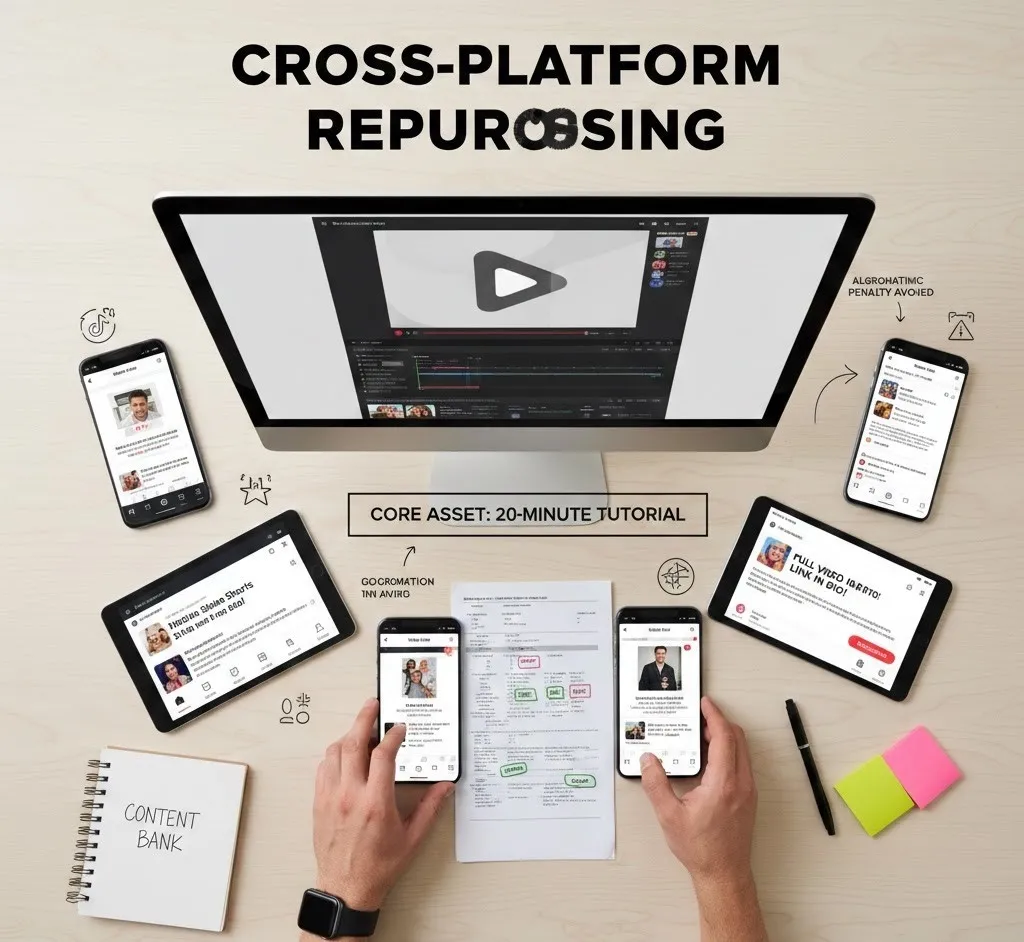
The most efficient repurposing starts with the creation of a "Core Asset"—a single, high-value piece of content that can be broken down into many smaller pieces. This becomes the foundation of your content bank.
1. Start Long-Form, Go Short-Form
The most powerful Core Assets are long-form videos (like a YouTube tutorial or podcast episode) or an in-depth blog post. These assets are rich in data, quotes, and visual material that can be easily atomized.
-
Long-Form Video: A 20-minute YouTube video can be sliced into 20-30 different short clips suitable for Reels, TikTok, and YouTube Shorts. Each clip should cover a single, compelling point.
-
Blog/Article: A 3000-word guide can generate hundreds of quote graphics, list-based carousels for Instagram/LinkedIn, and short video scripts for tips.
2. The Content Bank Mindset
Your content bank is not just a folder on your desktop; it’s a living repository of raw, unedited, high-quality assets.
-
Raw Footage: Always film your core content in a high-resolution, vertical format (9:16 aspect ratio) if it is intended for short-form, or ensure you capture plenty of B-roll and alternative camera angles that are easy to re-crop.
-
Transcript Repository: Every piece of video or audio content should be immediately transcribed. The transcript is the engine of repurposing, allowing you to quickly pull quotes, identify key moments, and generate captions/scripts for other platforms.
-
Zero-Branding Rule: When downloading or exporting your original content, ensure the file is clean. This means filming and editing the content outside of platform-specific editors (like the TikTok or Reels app) whenever possible. This ensures the foundational file for your content bank is clean, high-resolution, and has no watermark or branded overlays.
Pillar 2: The Art of Platform-Native Adaptation
The biggest mistake in repurposing is simply reposting. Each platform—TikTok, Instagram Reels, and YouTube Shorts—has a unique audience, algorithm, and creative toolset. Successful repurposing requires respecting these differences.
1. Avoiding the Algorithmic Penalty
Platforms actively promote content that is created on their app and will often de-prioritize or restrict the reach of content that clearly originates from a competitor. This is the algorithmic penalty.
-
The Watermark Issue: When a video downloaded directly from one platform (like TikTok) is uploaded to another (like Reels or Shorts), the competitor's watermark is a clear signal to the algorithm that the content is a repost. The algorithm will then actively suppress its visibility.
-
The Ethical Solution: Your workflow must bypass platform-specific exports for the initial file. The ideal workflow involves:
-
Create and edit the core vertical video in an external video editor (e.g., CapCut, Premiere Rush, DaVinci Resolve).
-
Upload this clean, master file to TikTok, utilizing its unique sounds/effects.
-
Upload the same clean, master file to Reels, utilizing its unique sounds/effects.
-
Upload the same clean, master file to YouTube Shorts, utilizing its unique sounds/effects.
-
Crucially, you must use the native text overlay, popular music, and editing features on the platform itself after upload. This signals to the algorithm that you are an active, native creator.
-
2. Platform-Specific Optimization
| Platform | Key Focus & Optimization |
| TikTok | Trends & Sound: Heavily relies on trending sounds and hashtag challenges. Content should feel spontaneous, quick, and highly digestible. |
| Instagram Reels | Visual Appeal & Shareability: Often focuses on aesthetics, tutorials, and relatable comedy. Strong Call-to-Actions (CTAs) to save/share the post are key. |
| YouTube Shorts | Searchability & Subscription: Benefit from YouTube's massive search engine. Use strong keywords in the title and description. Primary CTA is often to drive views to a long-form video or subscribe to the channel. |
Pillar 3: Maximizing Reach with Strategic Cross-Promotion
Content repurposing is about getting the most out of your ideas; cross-promotion is about getting the most out of your audience. This strategy links your platform channels together to create a cohesive ecosystem.
-
The "Hub-and-Spoke" Model: Designate one platform as your "Hub" (e.g., your YouTube channel for long-form video or your website/newsletter). All other social channels ("Spokes") are repurposed content designed to drive traffic back to the Hub.
-
Integrated CTAs: Your repurposed content must have clear, platform-native CTAs.
-
In a Short: A short clip on TikTok about a new business strategy should end with a text overlay saying, "Full breakdown on my latest YouTube video!"
-
In a Reel: A quick recipe Reel should use the caption to say, "The complete ingredients list and step-by-step photos are in my Link in Bio/Blog Post!"
-
-
The Power of Link-in-Bio Tools: Use a single, powerful link tool in your bio to direct traffic from short-form videos to all other relevant places: the full article, the corresponding long-form video, or a lead magnet. This is the ultimate tool for converting short-form viewers into long-term audience members.