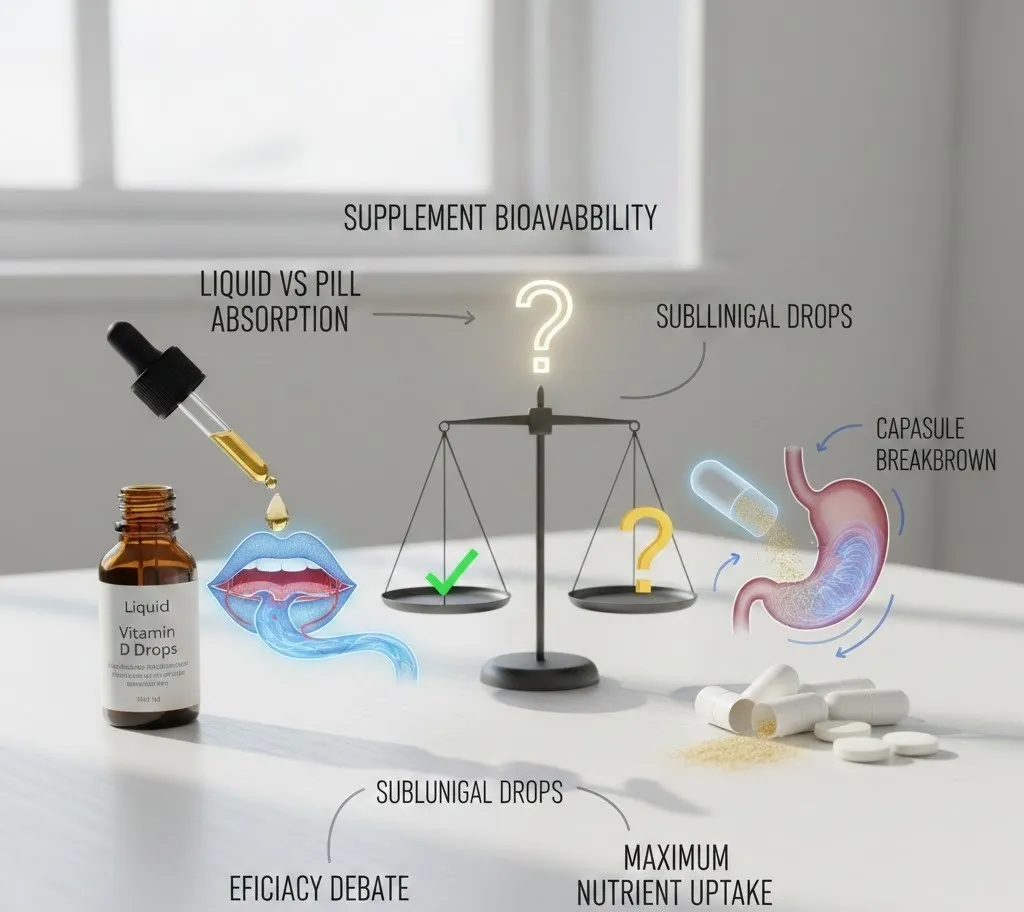
We compare supplement bioavailability, liquid vs pill absorption rates
The health and wellness market is saturated with options for nearly every nutrient imaginable, but one of the most persistent debates centers on delivery method: are liquid vitamins truly superior to traditional capsules and tablets? Highly-marketed liquid supplements—such as Vitamin B12 or Vitamin D drops—often promise faster and greater absorption. To truly understand which form is "better," we must delve into the science of how our bodies process these nutrients, specifically focusing on supplement bioavailability and the journey from ingestion to the bloodstream.
The Core Concept: Supplement Bioavailability
Bioavailability is arguably the most crucial factor in the efficacy debate of supplements. It refers to the degree and rate at which an active drug or nutrient is absorbed from a drug product and becomes available at the site of physiological activity. Simply put: it's the percentage of the nutrient you consume that your body can actually use.
A supplement with high bioavailability means a greater portion of the active ingredient enters your systemic circulation. A poor bioavailability, conversely, means most of the nutrient passes through your digestive system without being utilized, regardless of the dosage listed on the bottle.
Factors that influence a supplement’s bioavailability include:
- The physical form of the supplement (liquid, capsule, tablet, powder).
- The presence of excipients (binders, fillers, coatings).
- Individual physiological factors (age, gut health, stomach acid levels).
- Interactions with food or other medications.
Comparing the Delivery Systems: Liquid vs. Pill Absorption
The central argument for liquid vitamins rests on their immediate, pre-dissolved state, which bypasses a critical, time-consuming step required by solid supplements. This is the heart of the liquid vs pill absorption argument.
The Capsule Breakdown Process
When a person swallows a traditional tablet or capsule breakdown begins in the digestive tract. This process involves several mechanical and chemical steps:
- Disintegration: The outer shell of the capsule or the compressed structure of the tablet must first break apart in the stomach acid. This can take anywhere from a few minutes for a simple capsule to a significantly longer time for a hard-pressed, coated tablet.
- Dissolution: Once disintegrated, the raw nutrient powder must dissolve into a liquid solution. Only in a dissolved state can the nutrient molecules be absorbed through the gut lining.
- Absorption: The dissolved nutrients are then transported across the intestinal wall into the bloodstream.
The key drawback here is the sheer effort and time the body must expend before the nutrient even becomes available. Furthermore, the presence of fillers, binders, and coatings (known as excipients) necessary to create and stabilize a pill form can sometimes hinder both disintegration and dissolution, potentially lowering the final bioavailability.
The Liquid Absorption Advantage
Liquid supplements, by contrast, are already in the necessary dissolved or suspended form. The stomach and intestines don't have to work as hard, or as long, to prepare the nutrient for uptake.
- Faster Rate: Absorption can begin almost immediately upon ingestion and continues rapidly as the liquid moves through the upper digestive tract.
- Higher Potential Percentage: Because the need for capsule breakdown and complex dissolution is removed, liquid forms often boast a higher theoretical absorption rate. This is particularly beneficial for individuals with compromised digestive function, such as those with low stomach acid (common in older adults), or those who have undergone certain gastrointestinal surgeries.
Some liquid formulations, like those utilizing nanoemulsions or liposomal technology, are engineered to further protect the nutrient from degradation in the harsh environment of the stomach, potentially boosting the supplement bioavailability even higher.
Sublingual Drops: Bypassing the Digestive Tract
A specialized category within liquid delivery is the use of sublingual drops (or sprays), most commonly seen with Vitamin B12.
- Mechanism: These drops are held under the tongue, where the active ingredients are absorbed directly into the rich network of capillaries beneath the mucosa, entering the bloodstream almost immediately.
- Advantage: This method bypasses the entire gastrointestinal tract, sidestepping the issues of stomach acid degradation, interaction with digestive enzymes, and the need for intrinsic factor (a protein required for the typical absorption of B12 in the small intestine). For individuals with pernicious anemia or other malabsorption issues, sublingual drops can be a highly effective delivery system, making them a clear winner in the liquid vs pill absorption contest for specific use cases.
Efficacy Debate: B12, Vitamin D, and Clinical Reality
While the theoretical benefits of liquids are compelling, the practical efficacy debate comes down to whether these differences in absorption rate translate to measurably better health outcomes for the average, healthy individual.
Comparing Liquid B12 vs. Capsule B12
For Vitamin B12, the comparison is complex:
- Pill Efficacy: Standard oral B12 tablets (often at very high doses, e.g., 1000 mcg) rely on a mechanism called "passive diffusion," which doesn't require the problematic intrinsic factor. Studies show that these high-dose oral pills can be as effective as B12 injections for treating deficiency in most people, provided the dosage is high enough to force passive absorption.
- Liquid/Sublingual Efficacy: As mentioned, sublingual drops are excellent for those with intrinsic factor deficiency or severe malabsorption, offering a rapid and reliable delivery route.
- Conclusion: For a healthy person, a high-dose oral capsule often works due to passive diffusion. For someone with a known absorption issue, the liquid or sublingual drops offer a clear, clinically validated advantage in supplement bioavailability.
Comparing Liquid Vitamin D vs. Capsule Vitamin D
Vitamin D is a fat-soluble vitamin. Its absorption is influenced by dietary fat intake.
- Traditional Formulations: Both capsule (gel cap) and tablet forms of Vitamin D rely on the presence of fat or oil in the formulation, or the individual's diet, for efficient uptake.
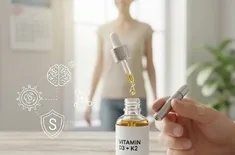
- Liquid Formulations: Liquid Vitamin D often comes in an oil-based drop, which is essentially an already-dissolved, fat-rich solution. Some advanced liquid forms use nanoemulsion technology to create microscopic droplets of the vitamin suspended in liquid. This is believed to increase the surface area and potentially improve absorption even without a fatty meal.
- Clinical Evidence: While the liquid form appears theoretically advantageous due to its pre-emulsified nature, clinical studies comparing high-quality, oil-based gel capsule breakdown versus liquid drops often show comparable results in raising serum Vitamin D levels (the measure of effectiveness). The difference is often negligible in healthy populations, but once again, the liquid may offer a slight edge in speed or consistency, or for those with bile production or other fat-digestion issues.
The Verdict: It Depends on Your Needs
The answer to whether liquid vitamins actually better is not a simple "yes" or "no." It is a nuanced answer that depends on individual health status, the specific vitamin, and personal preferences.
For the average, healthy person taking a well-formulated, high-quality capsule, the practical differences in long-term efficacy debate are often minimal. The body is typically efficient enough to break down a quality capsule and absorb the required nutrients.
However, the advantages of liquid supplements become significant for specific demographics or needs:
- For Malabsorption Issues: People with digestive tract conditions (Crohn's, Celiac), reduced stomach acid, or those who have had gastric bypass surgery may find liquid forms, especially sublingual drops for B12, to be substantially more reliable.
- For Swallowing Difficulty (Dysphagia): Liquid supplements provide an essential, pain-free alternative to swallowing pills, which can improve compliance.
- For Speed and Consistency: Liquids offer the fastest absorption rate, which some users prefer for specific, immediate needs or when consistency is paramount.
Ultimately, the maximum nutrient absorption is achieved through the supplement that is taken consistently and works best with your body's unique physiology. While the science behind liquid supplements clearly demonstrates a faster liquid vs pill absorption rate and often a higher theoretical supplement bioavailability, a well-researched capsule or tablet from a reputable brand can be just as effective and more practical for many consumers. The choice should be a thoughtful one, ideally guided by a healthcare professional who can assess your nutritional needs and absorption profile.