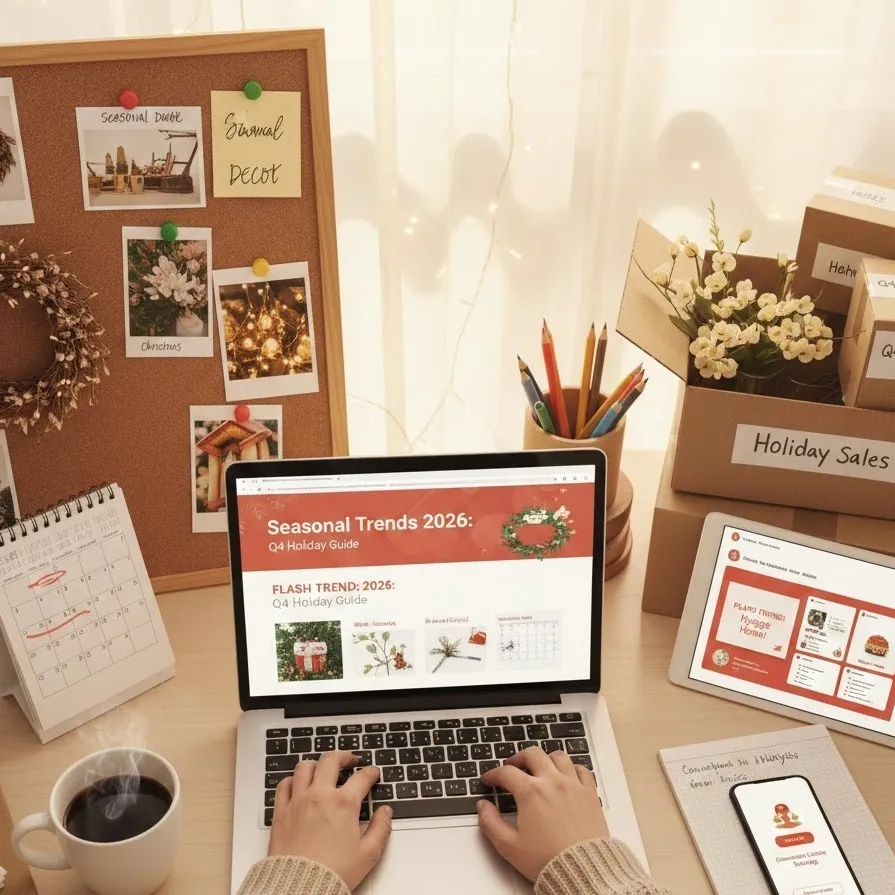
Learn how inventory planning and timely content drive traffic to your seasonal decor and Q4 categories.
Defining the Power of Trend-Jacking
Trend-jacking occurs when a brand "borrows" the momentum of a popular topic, holiday, or cultural event to boost its own visibility. Unlike evergreen content, which aims for steady, long-term performance, seasonal content is designed to exploit a flash trend—a rapid, intense burst of interest that can result in a significant traffic windfall.
The beauty of trend-jacking lies in relevance. When a user searches for seasonal decor in early October, they aren't just browsing; they are signaling a high-intent "buying" state. By positioning your content in their path, you bypass the awareness stage and move straight to conversion.
Navigating the Seasonal Spectrum: Holidays vs. Micro-Seasons
To drive traffic effectively to your Shop categories, you must distinguish between the "Big Rocks" and the "Micro-Moments."
Major Holidays: The Heavy Hitters
These are the predictable, high-volume dates like Black Friday, Christmas, and Mother’s Day. Success here requires early inventory planning and a robust content calendar.
The Strategy: Create dedicated landing pages for holiday sales at least 45–60 days in advance. This gives search engines time to index your pages before the search volume peaks.
Micro-Seasons: The Secret Weapon
Micro-seasons are shorter, more focused windows of time that resonate emotionally with specific niches.
- "Back to School": A transition period that affects parents, students, and teachers.
- "Cozy Vibes": The early autumn shift (hygge) where people look for comfort, blankets, and warm beverages.
- "Spring Refresh": The post-winter urge to organize and clean.
How to Quickly Create Timely Content
Speed is the currency of trend-jacking. If you take three weeks to produce a blog post about a flash trend, the moment will likely have passed. Here is how to streamline your production:
Step 1: Utilize Templates for Visuals Have pre-designed social media and blog templates ready. When the "Cozy Vibes" aesthetic starts trending on TikTok or Pinterest, you should be able to swap in your product photos and go live within hours.
Step 2: Curated "Shop the Look" Categories Instead of creating new products, re-categorize existing ones. Create a temporary category on your site titled "The Autumn Edit" or "Dorm Room Essentials." This allows you to provide timely content without altering your core site structure.
Step 3: Leverage User-Generated Content (UGC) During holiday sales, your customers are already sharing photos of their purchases. Curate these into "Gift Guides" or "Real-Life Seasonal Decor" galleries. This provides social proof and authentic content with minimal production effort.
Strategic Inventory Planning for Q4 Sales
Nothing kills the momentum of a successful trend-jacking campaign faster than a "Sold Out" sign. Inventory planning is the backbone of a successful Q4 sales period.
- Analyze Historical Data: Look at which products spiked during the previous year's sales.
- Identify Complementary Trends: If you sell kitchenware and "homemade sourdough" is a trend, ensure you have relevant accessories in stock.
- Safety Stock for "Virality": Keep a small buffer of inventory for items you plan to push heavily through social media.
Driving Traffic to Shop Categories
The goal of your content is to act as a bridge. Use these three methods to ensure your timely content leads to revenue:
- Direct Internal Linking: Every blog post or social caption should link directly to a filtered shop category. Don’t link to the homepage; link to the specific "Seasonal Decor" collection.
- Countdown Timers: Use these on your site and in emails to emphasize the "flash" nature of the trend. This triggers the "Fear of Missing Out" (FOMO).
- Sticky Banners: Use a site-wide banner that changes with the micro-season (e.g., "Free Shipping on all Back to School orders").
Summary Table: The Trend-Jacking Checklist
| Phase | Action Item | Keyword Focus |
|---|---|---|
| Research | Identify upcoming micro-seasons and flash trends. | Timely content |
| Preparation | Finalize stock levels and shipping logistics. | Inventory planning |
| Execution | Launch curated shop categories and "Gift Guides." | Seasonal decor |
| Promotion | Run time-sensitive ads and email blasts. | Holiday sales |
| Analysis | Review conversion rates to prepare for next year. | Q4 sales |
By treating the calendar as a roadmap for consumer psychology, you can transform your marketing from reactive to proactive. Whether it's a major holiday or a fleeting viral aesthetic, the power of trend-jacking ensures your brand is always part of the conversation.