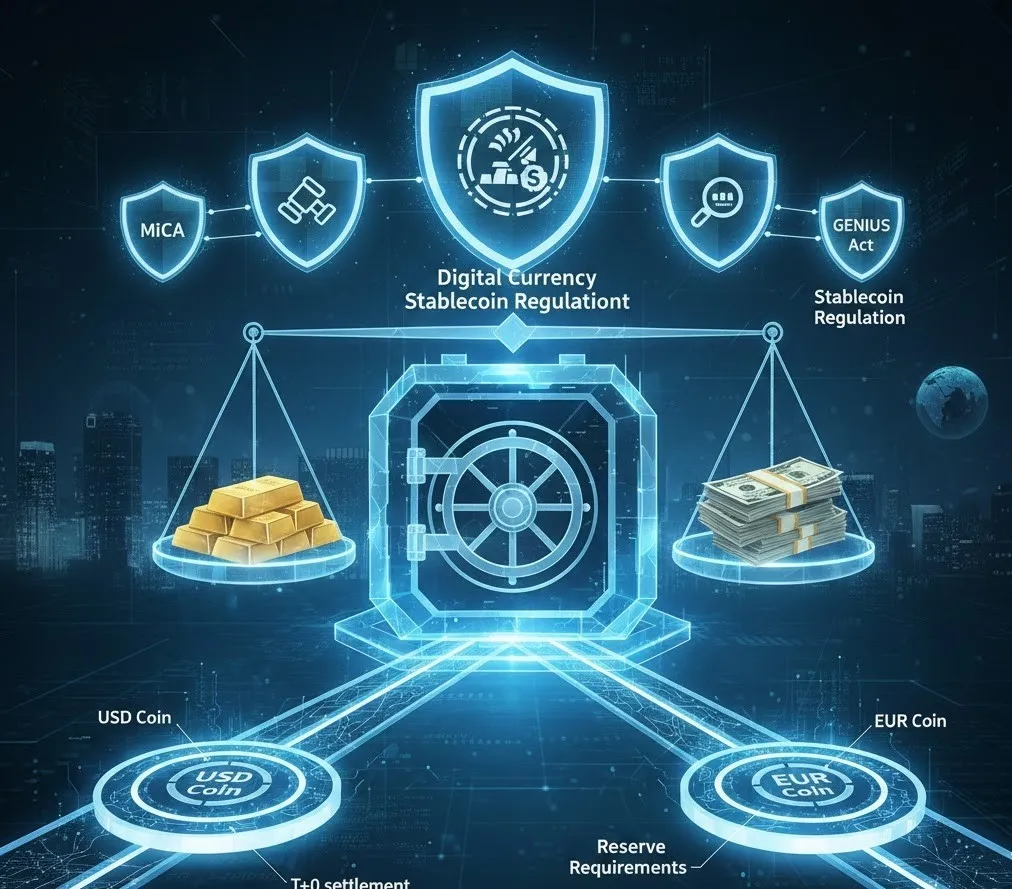
Explore Stablecoin regulation mechanics, reserve requirements, and the push for transparent asset backing to ensure payment stability
The Mechanics and Risks of Stablecoin Regulation: A Path to Financial Stability
The rapid ascent of stablecoins—digital currencies designed to maintain a stable value, typically pegged to a fiat currency like the US dollar—has fundamentally shifted the landscape of digital finance. Positioned as a bridge between the volatile world of cryptocurrencies and the traditional financial system, stablecoins promise enhanced efficiency, speed, and lower costs, particularly for cross-border payments and the burgeoning decentralized finance (DeFi) ecosystem. However, this promising innovation is shadowed by significant and systemic risks, necessitating a robust and coordinated global Stablecoin regulation framework.
The core challenge lies in the dual nature of stablecoins: they operate on decentralized, high-speed blockchain infrastructure yet aim to replicate the stability of traditional money. The recent collapse of major algorithmic stablecoins has served as a stark, global reminder that stability is not guaranteed and that a lack of transparency and regulatory digital currency oversight poses a clear threat to market integrity and broader financial stability. This comprehensive analysis will explore the mechanics that govern stablecoins, the critical risks they present, and the regulatory push for transparent and securely asset backing to prevent systemic contagion.
The Mechanics of Stability: Classification and Backing
Stablecoins are generally classified into three primary types based on their stabilization mechanisms. Understanding these mechanics is the first step in appreciating the regulatory challenges.
1. Fiat-Collateralized Stablecoins (Centralized)
These are the most common and dominant type, such as USDT and USDC. Their stability mechanism is straightforward: one token is purportedly backed by one unit of fiat currency (e.g., US dollar) or highly liquid, safe assets held in reserve by a central issuer.
- Core Mechanism: The issuer maintains reserve requirements—a pool of assets—that is supposed to equal or exceed the total value of stablecoins in circulation.
- Asset Backing: The quality and liquidity of this backing are paramount. Regulators are demanding that these reserves consist only of the safest and most liquid assets, such as cash, short-term US Treasury bills, and bank deposits. This ensures that in the event of a "run" or mass redemption, the issuer can honor its payment stability promise of 1:1 redemption on demand.
- The Regulatory Imperative: The primary focus of Stablecoin regulation here is mandating 100% reserve requirements, regular third-party audits, and full public transparency regarding the composition of the reserve assets. The failure of an issuer to honor a redemption request could lead to a loss of public confidence, a run, and a fire sale of reserve assets, potentially disrupting short-term funding markets.
2. Crypto-Collateralized Stablecoins (Decentralized)
These stablecoins are backed by a reserve of other cryptocurrencies (like Ether) and are managed through smart contracts on a blockchain. To counteract the volatility of the underlying crypto assets, they are typically over-collateralized.
- Core Mechanism: A user locks up a greater value of crypto-assets (e.g., $150 worth of Ether) to mint a lower value of the stablecoin (e.g., $100). If the value of the collateral falls below a certain threshold, the smart contract automatically liquidates the collateral to maintain the peg.
- Asset Backing: The backing is on-chain and transparent, but the risk lies in the extreme volatility of the collateral and the potential for rapid cascade liquidations during a crypto market crash.
- Regulatory Focus: While decentralized, their growing interconnectedness with the broader crypto market means regulators must consider the potential for rapid, market-wide contagion.
3. Algorithmic Stablecoins
These aim to maintain their peg purely through an algorithmic mechanism that adjusts the stablecoin's supply based on demand, often involving a secondary, volatile cryptocurrency (a 'seigniorage' model).
- Core Mechanism: If the price rises above the peg, the algorithm increases supply (creating new coins) to push the price down. If the price falls below the peg, the algorithm reduces supply (burning coins) or issues an incentive to holders of the secondary token to absorb the price change.
- Asset Backing: They often have minimal or no fiat or high-quality asset backing. Stability relies entirely on the soundness of the algorithm and market confidence.
- Regulatory Conclusion: The spectacular, systemic collapse of one of the largest algorithmic stablecoins in 2022 demonstrated their inherent fragility and existential risk to investors and market confidence. Regulators have largely concluded that this type of stablecoin poses unacceptable risks to payment stability and may require outright prohibition or treatment as high-risk securities.
The Regulatory Push: Mitigating Systemic Risk
The regulatory push is driven by the consensus that while stablecoins offer potential benefits, the risks associated with inadequate digital currency oversight are too substantial to ignore. The goal is to apply the principle of "same activity, same risk, same rules," ensuring that stablecoins performing the function of money or payments are subjected to prudential standards similar to those applied to banks or payment providers.
1. Ensuring Robust Reserve Requirements and Asset Backing
The lack of transparency regarding reserve requirements has been a major point of contention. Early stablecoin issuers faced intense scrutiny over whether their tokens were truly backed 1:1 by cash and cash equivalents. The regulatory response has been to mandate strict rules on the composition and custody of the reserve pool:
- Quality of Reserves: Issuers must hold only highly liquid, low-risk assets (e.g., short-term government bonds, deposits at regulated banks). Holding commercial paper, corporate debt, or illiquid assets is increasingly being restricted or prohibited to maintain a stable, accessible asset backing.
- Custody and Segregation: Reserves must be legally segregated from the issuer's operational funds and held in safekeeping by a regulated third-party custodian. This protects the stablecoin holders' assets in the event of the issuer’s insolvency—a key measure to prevent contagion.
- Transparency and Audits: Mandated, frequent, and public disclosures of reserve composition, certified by independent, registered public accounting firms, are becoming the global standard. This ensures digital currency oversight and allows the market to verify the true extent of the asset backing.
2. Addressing the Risk of a 'Run' and Systemic Contagion
The biggest fear is a "run" on a globally adopted stablecoin, akin to a bank run. If confidence is lost, mass redemptions could force the issuer to liquidate billions in reserve assets rapidly, triggering a fire sale that could destabilize the entire short-term funding market.
- Systemic Risk Designation: Regulators like the Financial Stability Oversight Council (FSOC) in the U.S. have the authority to designate large, globally significant stablecoin arrangements as "systemically important," subjecting them to heightened prudential regulation.
- Resolution and Liquidity: The regulatory framework must include clear resolution plans for a failing stablecoin issuer, ensuring an orderly wind-down that protects consumers and prevents a chaotic asset liquidation. This includes requirements for robust liquidity risk management.
3. Promoting Payment Stability and Efficiency
Stablecoins' greatest utility is in making payments faster, cheaper, and more accessible. The regulatory framework aims to preserve this innovation while ensuring payment stability and interoperability.
- T 0 Settlement: The inherent nature of blockchain-based stablecoins allows for T 0 settlement (Trade-date plus zero days), meaning transactions are settled instantly. This is a massive improvement over traditional payment rails, which can take days (T 2 or longer), especially for cross-border transactions. Regulation must maintain this efficiency.
- Interoperability: New frameworks, such as the EU’s Markets in Crypto-Assets (MiCA) regulation, emphasize technical standards for interoperability, preventing the stablecoin market from fragmenting into disconnected, proprietary silos that would undermine the efficiency gains of T 0 settlement.
4. Combating Illicit Finance and Maintaining Financial Integrity
The pseudonymity and cross-border nature of stablecoin transactions raise concerns about money laundering (AML) and financing of terrorism (CFT).
- AML/CFT Compliance: Issuers are now required to implement stringent 'Know Your Customer' (KYC) and AML programs, tracking and reporting suspicious activity. This ensures that the digital currency ecosystem adheres to the same financial integrity standards as the traditional banking system.
Regulatory Landscape and Key Global Frameworks
The global response to the need for Stablecoin regulation has been swift and is converging on core principles:
- United States (U.S.): Legislative efforts, such as the proposed GENIUS Act, aim to establish a clear federal framework for "payment stablecoins." Key provisions include mandatory 1:1 asset backing with high-quality liquid assets, stringent reserve requirements, and designation of the Comptroller of the Currency as the federal regulator for nonbank issuers.
- European Union (EU): The landmark MiCA regulation provides a comprehensive framework, classifying stablecoins as E-Money Tokens (EMTs) or Asset-Referenced Tokens (ARTs). It imposes strict rules on issuance, governance, reserve requirements, and redemption rights, making it one of the most proactive and detailed systems for digital currency oversight.
- International Bodies: The Financial Stability Board (FSB) and the Bank for International Settlements (BIS) are leading efforts to establish common international standards, emphasizing the "same activity, same risk, same rules" approach for globally adopted stablecoins.
Conclusion
The evolution of stablecoins represents a critical juncture for the global financial system. They offer a potent technology for realizing the promise of digital finance, exemplified by the efficiency of T 0 settlement, yet they harbor risks rooted in the instability of their reserves and the lack of comprehensive digital currency oversight. The current regulatory environment, spearheaded by frameworks like MiCA and the proposed GENIUS Act, is an essential endeavor to address these risks head-on. By mandating robust reserve requirements and transparent asset backing, regulators are building a necessary foundation to ensure that stablecoins mature into a safe, reliable, and non-systemic component of the future economy, ultimately securing financial payment stability for users globally.