Explore Decentralized Insurance (DeInsure), utilizing smart contract insurance
The multi-trillion-dollar insurance industry is being radically reimagined by Decentralized Insurance (DeInsure) Protocols. Moving beyond the slow, opaque, and intermediary-heavy model of traditional carriers, DeInsure platforms leverage blockchain technology to offer pooled, automated insurance products where claims are handled by code, not human adjusters.
This revolutionary approach strips away bureaucratic friction, dramatically lowers operational costs, and, most importantly, instills a level of transparency previously unheard of in the world of risk management. DeInsure isn't just a new product; it's a structural disruption, democratizing access to protection and transforming policyholders into stakeholders.
The Core Mechanisms of DeInsure
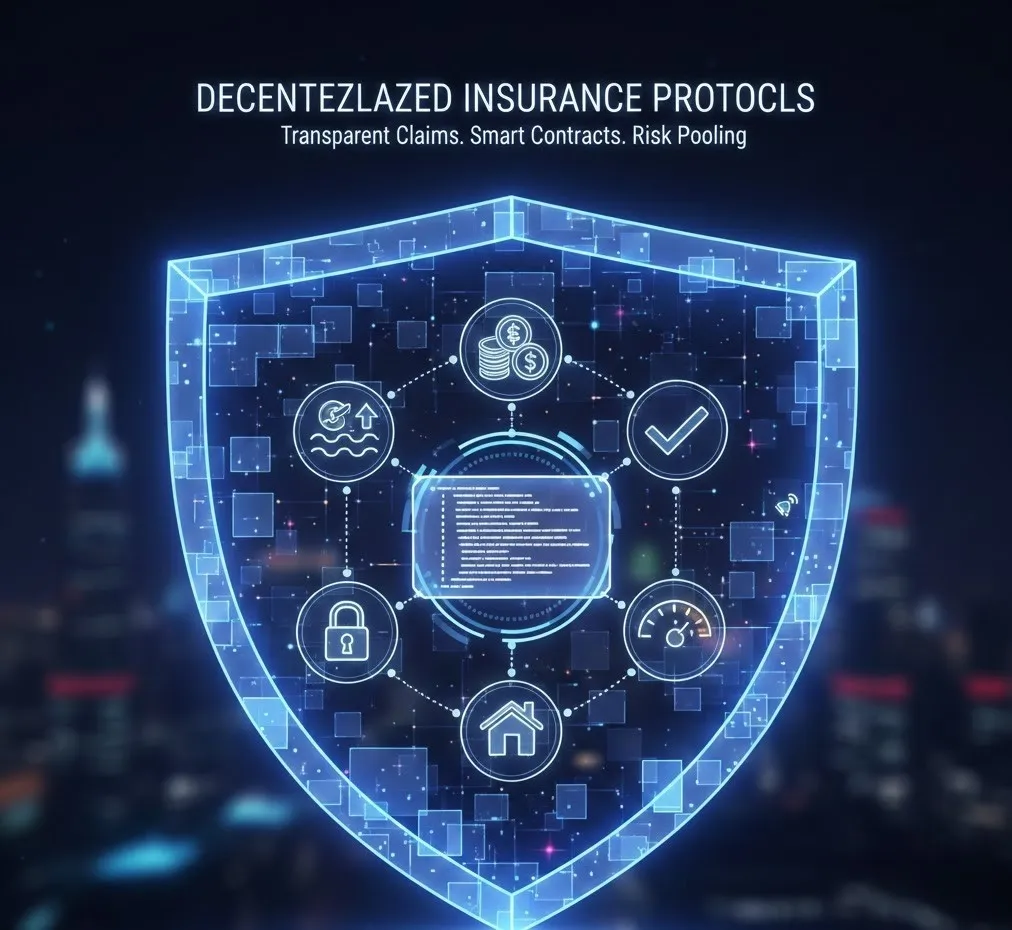
The foundation of decentralized insurance is the smart contract insurance model. Smart contracts—self-executing code stored on a blockchain—form the policy itself. These digital agreements automatically trigger payouts when predefined conditions are met, eliminating the need for manual claims assessment, which is a major source of delay and dispute in traditional insurance.
Risk Pooling and Mutualization
In traditional insurance, a large corporation's balance sheet underwrites the policies. DeInsure, conversely, relies on risk pooling through a decentralized, peer-to-peer (P2P) or mutual model.
How it Works:
Users, often referred to as capital providers or members, stake cryptocurrency into a common pool for a specific risk category (e.g., smart contract hacks, stablecoin de-pegs).
Benefits:
This pool acts as the collective collateral. In exchange for staking, capital providers earn a portion of the premiums paid by policyholders. This structure aligns incentives, as the capital providers are effectively the new 'underwriters' and are incentivized to ensure the protocol is robust. The collective nature of the pool means risk is diversified and shared across thousands of users globally.
Parametric Insurance: The Automation Key
While DeInsure can cover a variety of risks, its most common and efficient form is parametric insurance. Unlike indemnity insurance, which pays out based on the actual value of a loss (requiring lengthy assessment), parametric insurance pays out a fixed amount based on whether a predefined event occurred.
The 'If/Then' Logic:
The policy is structured around a simple logical statement: "IF the price of asset X drops below $Y at time Z, THEN smart contract automatically sends Z payment to policyholder."
The Oracle's Role:
For this automation to work, the smart contract needs reliable, tamper-proof, real-world data—a job handled by Oracles. For example, a flight delay insurance protocol would use an oracle to feed authenticated flight data into the contract. If the data confirms a delay past the agreed-upon threshold, the payout is instant and automatic. This objectivity is central to removing human bias and speeding up claims.
The Technology Driving the Revolution
Blockchain Underwriting: Code-Driven Risk Assessment
In the decentralized model, blockchain underwriting shifts the process from human judgment to algorithmic modeling. Instead of an actuary assessing an individual's history, the protocol's code evaluates the objective risk parameters of the digital asset or event being insured.
For instance, when insuring a DeFi protocol against a smart contract exploit, the underwriting process is based on:
- The code audit history of the protocol.
- The total value locked (TVL) in the protocol.
- The length of time the contract has been operating safely.
The premium is calculated by an open, transparent algorithm, ensuring fair and non-discriminatory pricing. Anyone can contribute capital to underwrite the risk they deem acceptable, completely bypassing traditional insurer gatekeepers.
Transparent Claims and Decentralized Governance
The most significant pain point in traditional insurance is the claims process, often criticized for being slow and opaque. DeInsure protocols solve this with transparent claims adjudication, utilizing a decentralized governance model.
Claims Assessment:
When a claim is filed, it is often not reviewed by a centralized claims adjuster. Instead, it is assessed by a decentralized autonomous organization (DAO) of community members (often token holders) who vote on the validity of the claim based on the evidence presented and the terms of the smart contract.
Accountability:
Because all claims, supporting evidence, votes, and payouts are recorded immutably on the public blockchain, the process is fully auditable by anyone. This inherent transparency ensures a higher degree of trust and accountability for both the insurer (the pool) and the policyholder.
Market Landscape and Future Trends
The decentralized insurance market is experiencing explosive growth, projected to rise from billions to over a hundred billion dollars in the next decade. Protocols are rapidly expanding their scope beyond simply covering smart contract exploits to include:
- Yield Protection: Insuring against the failure of DeFi lending protocols.
- Custodian Risk: Protection against centralized exchange (CEX) hacks.
- Real-World Asset (RWA) Coverage: Using parametric models for crop insurance (based on rainfall data) or travel insurance (based on flight data).
The future of DeInsure is one of greater integration—embedding insurance directly into DeFi products—and expansion into underserved global markets where traditional carriers are non-existent or prohibitively expensive.